Assam Assembly passes UCC Bill 2026; law to take effect within 6 months
Synopsis
Assam has passed its own Uniform Civil Code — banning polygamy, mandating live-in registration, and unifying personal law across religions. With presidential assent the only remaining hurdle, CM Sarma says full enforcement is three to six months away, making Assam the second BJP-governed state after Uttarakhand to push UCC into law.
Key Takeaways
The Assam Legislative Assembly passed the Uniform Civil Code Bill, 2026 on 27 May 2026 .
The Bill now requires assent from Governor Lakshman Prasad Acharya and President Droupadi Murmu before enforcement.
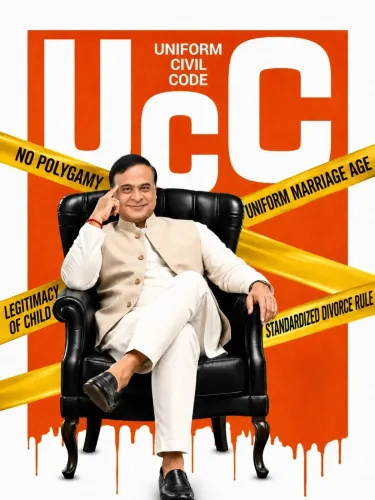
Key provisions include a ban on polygamy and mandatory registration of live-in relationships .
CM Himanta Biswa Sarma estimates full implementation will take 3–6 months after presidential assent.
Six to seven implementing rules — already drafted — require Cabinet notification post-assent.
Opposition parties and civil society groups have raised concerns over certain provisions and exemptions.
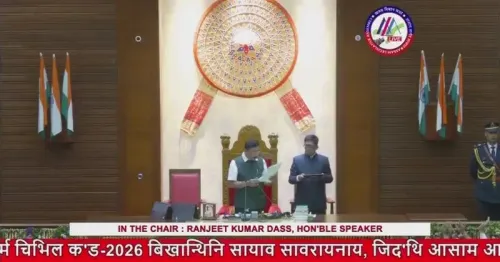
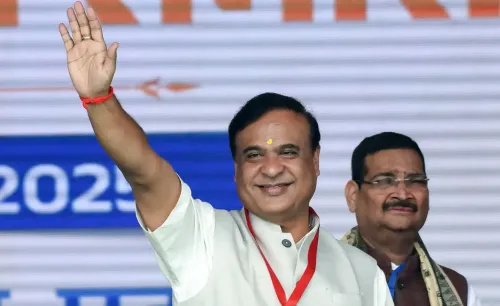
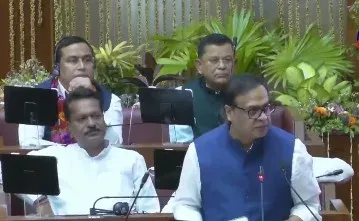
The Assam Legislative Assembly on Wednesday, 27 May 2026 passed the Uniform Civil Code (UCC) Bill, 2026, making Assam one of the first states in India to legislate a common civil framework covering marriage, divorce, inheritance, succession, and live-in relationships across all religions. Chief Minister Himanta Biswa Sarma said the Bill will now travel to Governor Lakshman Prasad Acharya and then to President Droupadi Murmu for final assent before it can be enforced.
What the UCC Bill Covers
The legislation seeks to establish a uniform legal framework on personal matters — marriage, divorce, inheritance, succession, and live-in relationships — irrespective of an individual's religion. Two of its most significant provisions are a ban on polygamy and a mandatory registration requirement for live-in relationships. The Bharatiya Janata Party (BJP)-led state government has positioned the Bill as a measure to ensure equality and social justice.
What Sarma Said After the Vote
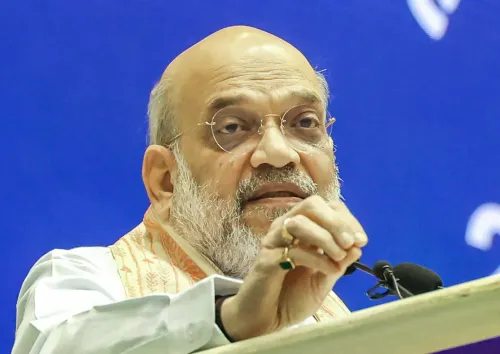
Speaking to reporters outside the Assembly, Chief Minister Sarma called the passage a 'historic' moment and credited all members of the House for their support. 'Today, the Assam Legislative Assembly has passed the Uniform Civil Code Bill, 2026. I am deeply privileged, and I express my gratitude to all members of the Assembly for adopting this historic legislation,' he said.
On the implementation timeline, Sarma was candid about the procedural steps that remain. 'There are six to seven rules related to the implementation of the law, which will require Cabinet approval and notification. The rules are already prepared, but they cannot be notified unless we receive assent to the Bill,' he explained. He estimated the full process — from presidential assent to active enforcement — could take between three and six months.
What Happens Next
Once the Governor forwards the Bill to Raj Bhavan and subsequently to Rashtrapati Bhavan, the clock starts on presidential assent. After assent is received, the Assam Cabinet will need to formally notify six to seven implementing rules before the law can take operational effect. Sarma indicated these rules are already drafted and awaiting clearance, suggesting the government anticipates a relatively smooth post-assent process.
Opposition and Civil Society Concerns
The passage has not been without friction. Opposition parties and several civil society organisations have reportedly raised concerns over specific provisions and exemptions within the legislation, though the details of those objections were not elaborated upon by the government. Critics argue that the scope of the Bill — particularly the live-in registration mandate and polygamy ban — could disproportionately affect certain communities, and have called for broader consultations.
Broader Significance
This comes amid a wider national debate on UCC, with Uttarakhand having enacted its own version in 2024 — the first state to do so. Assam's move signals that the BJP-governed states are advancing UCC implementation ahead of any potential central legislation. The political stakes are high: the UCC has been a long-standing plank of the BJP's ideological agenda, and Assam's passage ahead of the next electoral cycle carries clear political signalling.
Point of View
Enacted in 2024, has moved slowly on the ground, with several rules still pending operationalisation. Assam's six-to-seven-rule framework suggests a similar lag risk. More critically, the absence of detailed exemption disclosures — particularly for tribal communities, who have historically been shielded from such codes — leaves a significant legal grey zone that courts are likely to be asked to resolve.
NationPress
19 Sept 2026
Frequently Asked Questions
What is the Assam Uniform Civil Code Bill 2026?
The Assam Uniform Civil Code Bill, 2026 is a legislation passed by the Assam Legislative Assembly on 27 May 2026 that establishes a common civil framework for marriage, divorce, inheritance, succession, and live-in relationships for all residents of Assam, regardless of religion. It also bans polygamy and makes registration of live-in relationships mandatory.
When will the Assam UCC come into effect?
The law will come into effect only after it receives presidential assent, following which the state Cabinet must notify six to seven implementing rules. Chief Minister Himanta Biswa Sarma has estimated the entire process will take between three and six months.
Who needs to approve the Assam UCC Bill before it becomes law?
The Bill must first be sent to Assam Governor Lakshman Prasad Acharya, who will then forward it to President Droupadi Murmu for final assent. Only after presidential approval can the state government notify the implementing rules and enforce the law.
What are the key provisions of the Assam UCC Bill?
The Bill bans polygamy, mandates registration of live-in relationships, and creates a uniform legal framework for marriage, divorce, inheritance, and succession across all religious communities in Assam. It applies irrespective of an individual's faith or personal law tradition.
Why are opposition parties opposing the Assam UCC Bill?
Opposition parties and several civil society organisations have reportedly raised concerns over specific provisions and exemptions in the Bill, arguing that certain clauses could disproportionately affect particular communities. They have called for broader consultations, though the government has not publicly addressed the specific objections in detail.