CM Himanta's Assam Passes UCC Bill in Assembly
Synopsis
Assam Chief Minister Himanta Biswa Sarma announced the passage of the Uniform Civil Code Bill in the state assembly on 27 May 2026, making Assam one of India's earliest states to enact a common personal law framework and extending the BJP's state-level UCC legislative push beyond Uttarakhand.
Key Takeaways
The Assam Legislative Assembly passed the Uniform Civil Code Bill on 27 May 2026 .
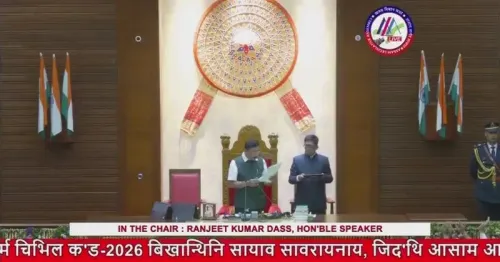
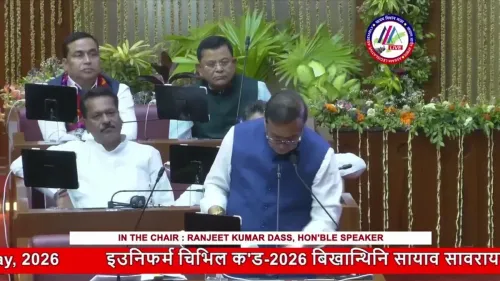
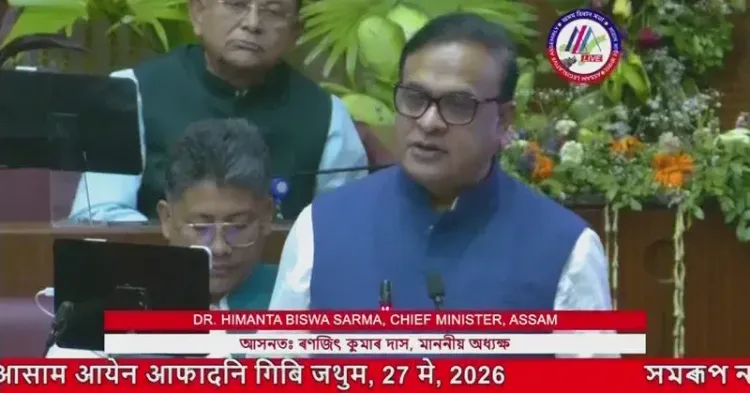
Chief Minister Himanta Biswa Sarma personally addressed the Vidhan Sabha during the Bill's passage.
Uttarakhand was the first Indian state to pass a UCC law, in February 2024 ; Assam follows as a second mover.
The UCC proposes a single framework for marriage, divorce, inheritance, and adoption across all religious communities.
Possible conflict with Sixth Schedule protections for tribal customary laws in Assam remains a key legal question.
Implementation rules, tribal exemptions, and potential court challenges are the immediate next steps to watch.
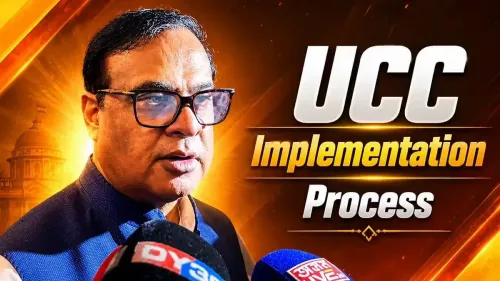
Assam Chief Minister Himanta Biswa Sarma announced on Wednesday, 27 May 2026 that the Assam Legislative Assembly had passed the Uniform Civil Code (UCC) Bill, marking what he described as the state beginning 'a new innings.' Sarma also confirmed he was personally addressing the Vidhan Sabha on the Bill at the time of posting.
Context
Assam joins Uttarakhand — which became the first Indian state to pass a UCC law in February 2024 — as one of the few states to legislatively enact a common personal law code. The UCC seeks to replace religion-specific laws governing marriage, divorce, inheritance, and adoption with a single framework applicable to all citizens regardless of faith.
Chief Minister Sarma, a senior Bharatiya Janata Party (BJP) leader and convenor of the North-East Democratic Alliance (NEDA), has been among the most vocal proponents of social-sector reform legislation in the Northeast. His address to the Assembly underscored the political weight the ruling party attaches to this passage.
Policy Backdrop
Article 44 of the Indian Constitution places a Uniform Civil Code among the Directive Principles of State Policy, directing the State to 'endeavour to secure' such a code for all citizens. The BJP has included the UCC as a core electoral commitment in both its 2019 and 2024 general election manifestos.
Uttarakhand's legislation in early 2024 provided a legislative template and signalled that state governments need not wait for a central law. Assam's passage continues this state-level push and is likely to be cited by the party as evidence of manifesto delivery ahead of future electoral cycles.
Stakeholders and Impact
Women's rights advocates have broadly supported UCC proposals, arguing a common code would equalise protections across communities on matters such as divorce and inheritance. Religious minority groups have raised concerns about the erosion of community-specific personal laws, while tribal communities in Assam — several of whom enjoy protections under the Sixth Schedule of the Constitution — have questioned whether customary laws governing land and family matters will be affected.
The Northeast's tribal belt presents a particularly sensitive dimension. Sixth Schedule provisions grant Autonomous District Councils legislative authority over customary law, and any overlap with a state UCC will likely face close legal scrutiny. The precise scope of exemptions, if any, built into the Assam Bill has not been independently confirmed at the time of publication.
What's Next
Attention will now shift to the drafting and notification of implementation rules, the extent of any carve-outs for Sixth Schedule tribal areas, and the likelihood of constitutional challenges before the Gauhati High Court or the Supreme Court of India. Opposition parties and civil society groups are expected to scrutinise the Bill's provisions closely once the full text is made public.
If Assam's UCC withstands legal challenges, it could embolden other BJP-governed states to accelerate similar legislation and intensify pressure on the central government to introduce a national framework.
Point of View
State-by-state strategy to normalise a Uniform Civil Code ahead of any central legislation. By personally speaking on the Bill in the Assembly, CM Sarma is signalling ownership of what the party frames as a historic reform rather than a routine legislative exercise. The move carries particular political weight in the Northeast, where Sixth Schedule protections and diverse customary laws make UCC implementation far more constitutionally complex than in other states. How the Assam government navigates tribal exemptions will set a precedent that other BJP-ruled states — and eventually the Centre — will study closely.
NationPress
11 Oct 2026
Frequently Asked Questions
What is the Assam UCC Bill?
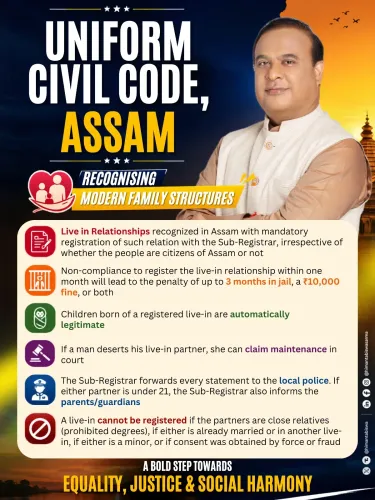
The Assam Uniform Civil Code Bill proposes a single set of personal laws governing marriage, divorce, inheritance, and adoption for all citizens of Assam, irrespective of their religion, replacing existing religion-specific personal law frameworks.
Which was the first Indian state to pass a UCC law?
Uttarakhand was the first Indian state to pass a Uniform Civil Code law, doing so in February 2024. Assam is among the earliest states to follow with its own UCC legislation.
Will the Assam UCC apply to tribal communities?
This remains a key legal question. Several tribal communities in Assam are protected under the Sixth Schedule of the Indian Constitution, which grants Autonomous District Councils authority over customary law. The extent of any exemptions in the Assam UCC Bill has not been confirmed at the time of publication.
What does Article 44 of the Indian Constitution say about UCC?
Article 44 is a Directive Principle of State Policy that directs the State to endeavour to secure a Uniform Civil Code for all citizens across India, though it is not a justiciable right.
What happens after the Assam UCC Bill is passed?
After passage, the government must notify implementation rules, clarify any exemptions for tribal areas, and the law may face constitutional challenges before the Gauhati High Court or the Supreme Court of India.