CM Himanta Biswa Sarma Says Assam Backs UCC After Assembly Session
Synopsis
Assam Chief Minister Himanta Biswa Sarma declared public support for a state Uniform Civil Code after the May 27 Assembly session, advancing Assam's push to follow Uttarakhand as the second BJP-ruled state to legislate common personal laws.
Key Takeaways
CM Himanta Biswa Sarma stated after the 27 May 2026 Assam Assembly session that the public supports the state's proposed Uniform Civil Code .
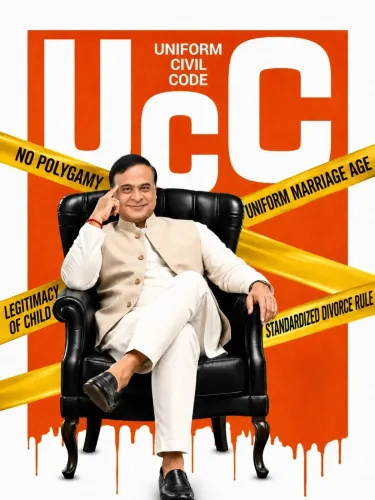
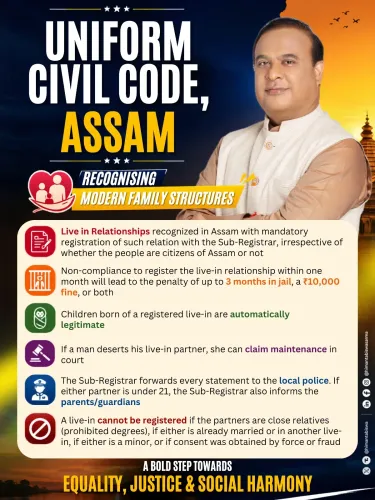
The UCC would establish common personal laws on marriage, divorce, inheritance, and adoption for all citizens regardless of religion.
Uttarakhand became the first Indian state to enact a UCC statute in 2024 , serving as a legislative reference point for Assam.
Article 44 of the Indian Constitution provides the constitutional basis for a Uniform Civil Code as a directive principle.
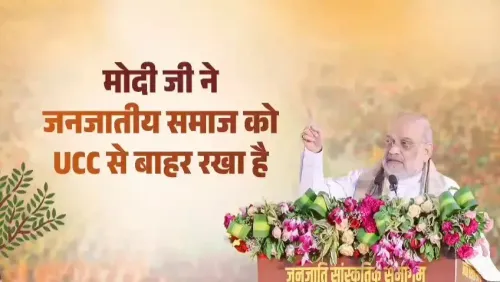
Key stakeholders include women, religious minorities, and tribal communities , with tribal customary law exemptions expected to be a central drafting challenge.
Parallel UCC deliberations are ongoing in Gujarat and Madhya Pradesh , reflecting a broader BJP-governed states pattern.
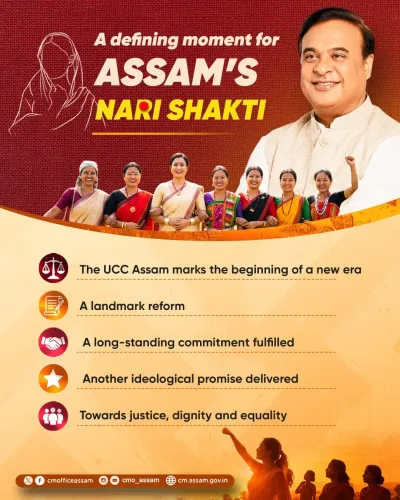
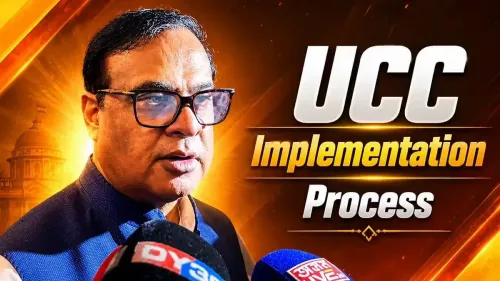
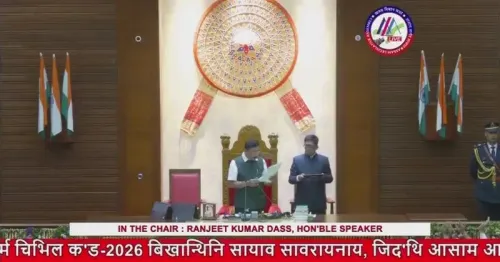
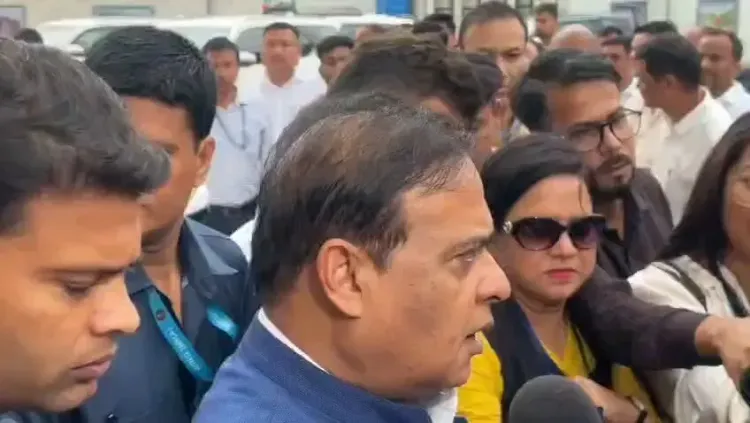
The Chief Minister's Office of Assam announced on Wednesday, 27 May 2026 that Chief Minister Dr. Himanta Biswa Sarma addressed the media following the day's Assam Legislative Assembly session, stating that the people of Assam are extending their support to the proposed Uniform Civil Code (UCC) for the state.
Context
Speaking to reporters after the Assembly session, CM Himanta Biswa Sarma said the public sentiment in the state is in favour of the reform. The Chief Minister's remarks signal that the government is actively gauging popular backing before advancing the legislation. The UCC proposes a common set of personal laws governing marriage, divorce, inheritance, and adoption applicable to all citizens regardless of religion.
Policy Backdrop
Article 44 of the Indian Constitution (1950) directs the State to endeavour to secure a Uniform Civil Code for all citizens, making it a long-standing directive principle. In 2023, the Assam government announced it would constitute an expert committee to examine and draft a state-specific UCC. Uttarakhand became the first Indian state to pass and notify a UCC statute in 2024, providing a legislative template that BJP-governed states have since studied closely.
Assam's path to a UCC is shaped by its distinct demographic profile, including a significant tribal population with codified customary laws, religious minorities, and the broader socio-legal context established by the NRC-CAA framework. Parallel UCC discussions are also under way in other BJP-ruled states such as Gujarat and Madhya Pradesh.
Stakeholders and Impact
The reform, if enacted, would directly affect women, religious minorities, and tribal communities across the state. Women's rights advocates have generally supported a uniform personal law as a step toward gender equality in matters of marriage and inheritance. Tribal councils and indigenous groups, however, have historically sought exemptions to protect customary practices, making their consultation a critical part of any drafting process.
Religious minority groups have raised concerns about the potential overriding of personal law traditions, a debate that has accompanied every UCC discussion at the national and state levels. The government's emphasis on public support suggests it is building a political case ahead of formal legislative proceedings.
What's Next
Observers will watch for the release of a draft UCC bill for Assam, the scheduling of public consultations with tribal councils and religious bodies, and any announcement of a timeline for the bill's introduction in a future Assembly session. The government's framing of the reform as enjoying popular support could accelerate the legislative calendar. How Assam addresses tribal customary law exemptions — a question Uttarakhand also navigated — will be a defining test of the final draft.
Point of View
Framing public opinion as a mandate rather than waiting for legislative debate to shape it. Assam's UCC push fits squarely within the BJP's national Article 44 agenda, but the state's tribal demography and customary law traditions make it a more complex test case than Uttarakhand. The government's emphasis on 'support' rather than a specific legislative timeline suggests the drafting process is still in early stages and that stakeholder consultations — particularly with tribal councils — remain unresolved. How Assam balances uniform personal law with constitutionally protected tribal customs will set a precedent for other demographically diverse states watching closely.
NationPress
10 Oct 2026
Frequently Asked Questions
What is the Uniform Civil Code in Assam?
The Uniform Civil Code in Assam refers to a proposed state law that would establish a common set of personal laws on marriage, divorce, inheritance, and adoption applicable to all citizens of Assam regardless of their religion, replacing separate personal law systems currently in use.
Has Assam passed the Uniform Civil Code?
As of the 27 May 2026 Assembly session, Assam has not yet passed a UCC law. Chief Minister Himanta Biswa Sarma has stated that public support exists for the reform, but a draft bill had not been tabled as of this announcement.
Which was the first state to implement UCC in India?
Uttarakhand was the first Indian state to pass and notify a Uniform Civil Code statute, doing so in 2024 after a dedicated drafting committee process.
Will the UCC affect tribal communities in Assam?
Tribal communities in Assam follow distinct customary laws, and their potential exemption from or inclusion in any UCC framework is expected to be a central issue during the drafting and consultation process.
What does Article 44 of the Indian Constitution say about UCC?
Article 44 is a Directive Principle of State Policy that directs the State to endeavour to secure a Uniform Civil Code for all citizens across India, providing the constitutional basis for both central and state-level UCC initiatives.