CM Himanta Proposes UCC in Assam Assembly, Exempts Tribal Communities
Synopsis
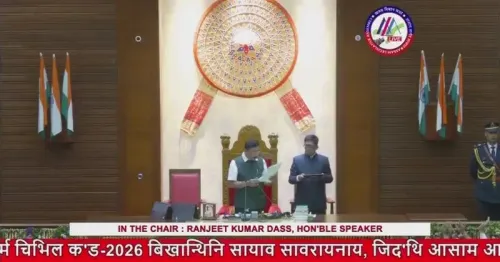
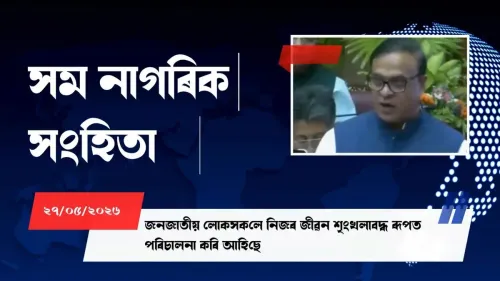
Assam Chief Minister Himanta Biswa Sarma proposed a Uniform Civil Code in the state assembly on 25 May 2026, crediting PM Modi and Home Minister Amit Shah, while explicitly shielding tribal communities and their customary practices from the code's ambit.
Key Takeaways
Assam CM Himanta Biswa Sarma proposed a Uniform Civil Code (UCC) in the Assam Legislative Assembly on 25 May 2026 .
Tribal communities and their customary practices have been explicitly exempted from the proposed UCC's scope.
The move follows the Uttarakhand UCC (2024) , which set a precedent for tribal exemptions in state-level UCC legislation.
The proposal is framed as being in the national interest under the leadership of PM Narendra Modi and guidance of HM Amit Shah .
Assam's significant Scheduled Tribe population is constitutionally protected under the Sixth Schedule , making the exemption both legally and politically significant.
As NEDA convenor, CM Sarma could use this move to spur similar legislative action in other Northeast states.
Assam Chief Minister Himanta Biswa Sarma announced on Monday, 25 May 2026 that a Uniform Civil Code (UCC) has been proposed in the Assam Legislative Assembly, with an explicit carve-out ensuring tribal communities and their customary practices remain outside the code's purview.
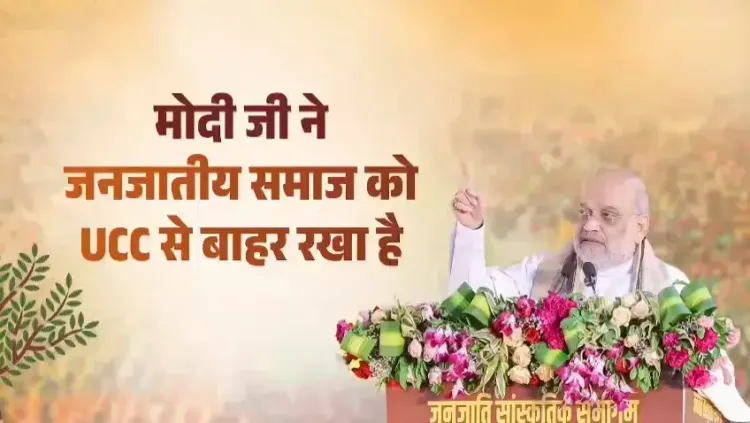
Posting in Hindi on X, CM Sarma stated: 'असम में भी जनजातीय समाज और उनकी रीतियों-नीतियों को UCC के दायरे से बाहर रखा गया है' ['In Assam too, tribal communities and their customs and practices have been kept outside the ambit of the UCC']. He credited the move to the leadership of Prime Minister Narendra Modi and the guidance of Union Home Minister Amit Shah, framing it as a step taken in the national interest.
Context
The Uniform Civil Code refers to a common set of laws governing personal matters — marriage, divorce, inheritance, and adoption — applicable to all citizens regardless of religion, as envisaged under Article 44 of the Indian Constitution. The BJP has carried the UCC as a manifesto commitment since at least 2014, and the Assam proposal represents a significant state-level push toward that goal in the country's Northeast.
Assam is home to a substantial Scheduled Tribe population, many of whom live in areas governed under the Sixth Schedule of the Constitution, which grants autonomous district councils the authority to legislate on customary law. The explicit exclusion of tribal communities from the proposed UCC is therefore both a constitutional necessity and a political signal.
Policy Backdrop
Goa has operated a common civil code since the era of Portuguese administration, retained after its 1961 integration with India, making it the only state with such a framework in place. Uttarakhand became the first state in independent India to enact a fresh UCC through legislation in 2024, and that law similarly included exemptions for Scheduled Tribe communities — a template that Assam appears to be following.
Earlier discussions in Gujarat and Madhya Pradesh also incorporated tribal exemption clauses, reflecting a pattern in which the BJP simultaneously advances legal uniformity for the general population while preserving constitutional safeguards for indigenous groups. This dual approach has helped the party navigate complex demographic realities, particularly in the Northeast where tribal identity is closely tied to customary personal law.
Stakeholders and Impact
For Assam's tribal communities — including groups in the Bodoland Territorial Region and hill districts — the exemption means their customary laws on marriage, inheritance, and land rights would remain untouched. Civil society organisations and tribal bodies across the Northeast have historically been sensitive to any perceived encroachment on these practices, making the carve-out a critical element of the proposal's political viability.
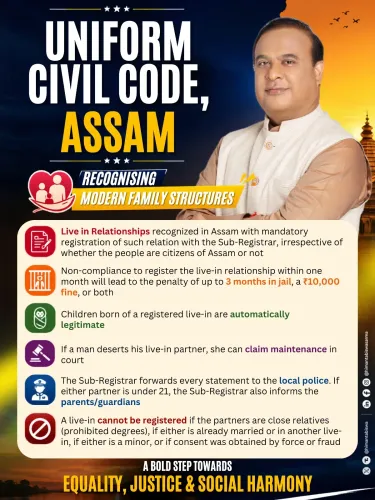
For the non-tribal population of Assam, the proposed UCC would, if enacted, replace religion-specific personal law codes. Muslim personal law, Hindu law, and other community-specific frameworks would give way to a single civil standard — a change with wide-ranging implications for family law disputes, property succession, and marriage registration.
What's Next
The immediate question is whether the Assam Legislative Assembly will pass the proposed UCC resolution or bill, and on what timeline a drafting committee — if constituted — would present a finalised text. CM Sarma, as convenor of the North-East Democratic Alliance (NEDA), may also use this move to encourage parallel legislative action in other BJP and NEDA-aligned states in the region. The Assam proposal adds fresh momentum to the national UCC debate ahead of future electoral cycles, and its tribal exemption architecture could serve as a model for other states with significant indigenous populations.
Point of View
Suggesting the BJP has standardised a tribal-exemption model to make state-level UCC politically viable in diverse, indigenous-heavy states. By anchoring the announcement to PM Modi and Amit Shah, CM Sarma reinforces the centrally coordinated character of this legislative push rather than presenting it as a state-driven initiative. The move carries particular weight coming from the NEDA convenor, as it signals to other Northeast states that UCC adoption is an expected step for alliance members. The tribal carve-out, while constitutionally prudent, will face scrutiny over where exactly the line between 'customary practice' and civil law is drawn in any final draft.
NationPress
9 Oct 2026
Frequently Asked Questions
What is the UCC proposed in Assam Assembly?
The Uniform Civil Code proposed in the Assam Assembly on 25 May 2026 is a common set of personal laws covering marriage, divorce, inheritance, and adoption that would apply to all residents of Assam, replacing religion-specific personal law codes, while explicitly exempting tribal communities and their customary practices.
Are tribal communities in Assam exempt from UCC?
Yes. CM Himanta Biswa Sarma specifically stated that tribal communities and their customs and practices in Assam have been kept outside the ambit of the proposed UCC, in line with constitutional protections under the Sixth Schedule.
Which states in India have a Uniform Civil Code?
Goa has had a common civil code since the Portuguese era, retained after 1961. Uttarakhand became the first state in independent India to enact a fresh UCC through legislation in 2024. Assam is now among the states where a UCC has been formally proposed.
What is the Sixth Schedule of the Indian Constitution?
The Sixth Schedule provides for autonomous district councils in certain tribal areas of the Northeast — including parts of Assam — empowering them to legislate on customary law, land management, and social practices, which is why tribal communities are typically exempted from UCC proposals.
What role did PM Modi and Amit Shah play in Assam's UCC proposal?
CM Sarma credited PM Narendra Modi's leadership and Home Minister Amit Shah's guidance for the UCC proposal in Assam, indicating that the move is part of a centrally coordinated BJP policy push rather than an independent state initiative.