CM Himanta Keeps Assam Tribes Outside UCC Ambit
Synopsis
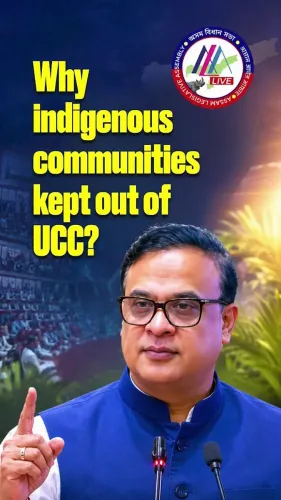
Chief Minister Himanta Biswa Sarma informed the 16th Assam Legislative Assembly on 27 May 2026 that the state government has decided to keep tribal communities outside the ambit of the Uniform Civil Code, affirming constitutional protections for customary tribal laws.
Key Takeaways
Himanta Biswa Sarma addressed the 16th Assam Legislative Assembly on 27 May 2026 on the Uniform Civil Code.
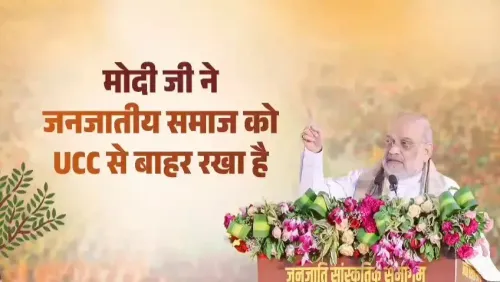
The state government has decided that tribal communities of Assam will remain outside the ambit of the Uniform Civil Code .
The decision aligns with Sixth Schedule constitutional protections that safeguard tribal customary laws in northeastern India.
Uttarakhand became the first Indian state to enact a UCC in 2023 , with tribal exemptions also featuring in that debate.
Further assembly debates and possible draft legislation on Assam's UCC framework are expected to follow the announcement.
The move is consistent with a broader pattern across BJP-governed northeastern states of balancing legal uniformity with tribal autonomy.
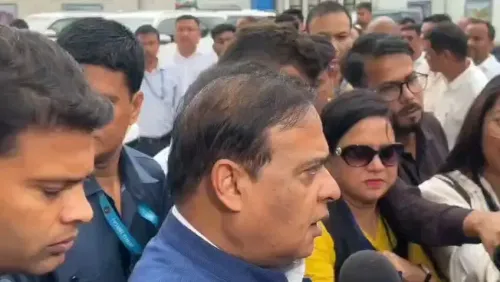
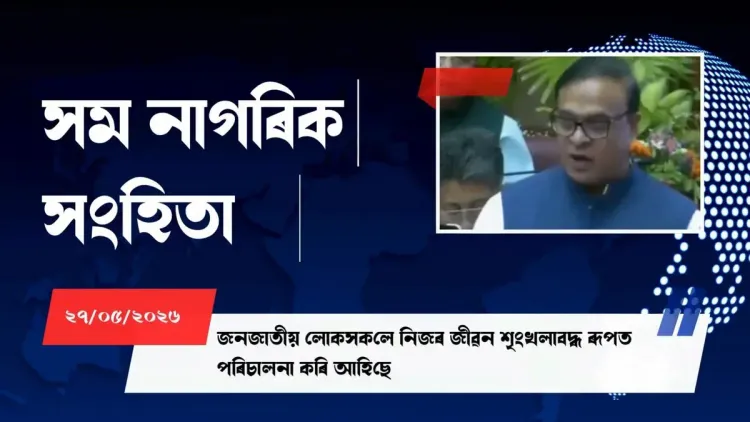
The Chief Minister's Office of Assam announced on Wednesday, 27 May 2026 that Chief Minister Dr. Himanta Biswa Sarma addressed the 16th Assam Legislative Assembly, informing it of the state government's decision to keep tribal communities of Assam outside the ambit of the Uniform Civil Code (UCC).
Context
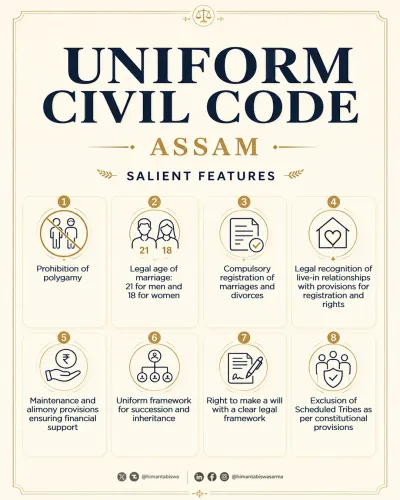
Speaking on the floor of the assembly, Dr. Sarma outlined the government's position that the UCC, which proposes common personal laws covering marriage, divorce, inheritance, and adoption, would not apply to the tribal communities of Assam. The announcement signals that the state intends to pursue any UCC framework with an explicit carve-out protecting tribal customary laws and practices.
Assam is home to substantial tribal populations whose personal and community laws are governed by long-standing customs. Many of these communities fall under the protections of the Sixth Schedule of the Indian Constitution, which grants autonomous governance rights to tribal areas in the Northeast.
Policy Backdrop
The Uniform Civil Code has been a stated policy objective of the BJP since at least its 2014 national manifesto, with the party advocating for a single set of personal laws applicable to all citizens regardless of religion or community. In 2023, Uttarakhand became the first Indian state to enact a UCC, though debates around tribal exemptions featured prominently in that legislative exercise as well.
Across BJP-governed northeastern states, the approach has consistently involved balancing the push for legal uniformity with the constitutional and political imperative to protect tribal ethnic autonomies. Dr. Sarma's declaration in the assembly formalises Assam's position within this broader pattern, affirming that the state will not override customary tribal laws through any UCC legislation.
Stakeholders and Impact
Tribal communities across Assam — including those represented through autonomous district councils and other bodies under the Sixth Schedule — stand as the primary stakeholders in this decision. For these groups, the exemption preserves their customary practices on matters such as marriage, inheritance, and community land rights, which differ significantly from mainstream personal laws.
Non-tribal residents of Assam and civil society groups advocating legal uniformity will watch closely to see how any draft UCC legislation defines the boundary of the tribal exemption. The announcement is also likely to resonate across other northeastern states, where similar questions about the UCC's applicability to tribal populations remain unresolved.
What's Next
The assembly address is expected to be followed by further legislative debates on the contours of Assam's UCC framework, including the precise definition of which communities qualify for the exemption. Tribal autonomous councils and civil society organisations are likely to engage with the process as any draft legislation takes shape.
Parallel developments in neighbouring northeastern states and at the national level — where a Law Commission review of the UCC remains an ongoing exercise — will shape the broader policy environment within which Assam's decisions unfold.
Point of View
The government signals both seriousness about UCC implementation and sensitivity to the region's ethnic pluralism. This positions Assam as a potential template for other northeastern BJP governments grappling with the same tension. The broader implication is that any national UCC framework, if it materialises, will likely need to accommodate similarly differentiated exemptions for tribal communities across the country.
NationPress
10 Oct 2026
Frequently Asked Questions
Will Assam's tribal communities be covered under the Uniform Civil Code?
No. Chief Minister Himanta Biswa Sarma announced in the Assam Legislative Assembly on 27 May 2026 that tribal communities of Assam will be kept outside the ambit of the Uniform Civil Code, preserving their customary personal laws.
What is the Uniform Civil Code and why does it matter for Assam?
The Uniform Civil Code proposes a single set of personal laws — covering marriage, divorce, inheritance, and adoption — applicable to all citizens regardless of religion or community. For Assam, the question is significant because the state has large tribal populations with distinct customary laws protected under the Sixth Schedule of the Constitution.
Which Indian state first enacted the Uniform Civil Code?
Uttarakhand became the first Indian state to enact a Uniform Civil Code in 2023, though debates around exemptions for tribal and other communities were part of that legislative process as well.
What constitutional protection do Assam's tribal communities have?
Many tribal communities in Assam are covered by the Sixth Schedule of the Indian Constitution, which grants them autonomous governance rights and protects their customary laws from being overridden by general legislation.
What happens next after CM Himanta's UCC announcement in the assembly?
Further legislative debates on the contours of Assam's UCC framework are expected, including defining which communities qualify for the tribal exemption. Tribal autonomous councils and civil society groups are likely to engage as any draft legislation is developed.