CM Himanta Explains UCC Assam Tribal Exemption
Synopsis
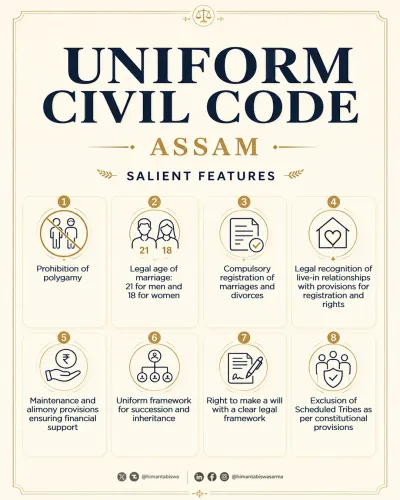
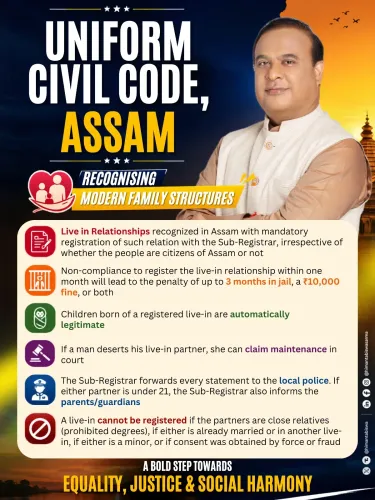
Assam CM Himanta Biswa Sarma confirmed that the state's Uniform Civil Code excludes Scheduled Tribe communities notified under Article 342, recognising their customary self-regulation. The move mirrors Uttarakhand's 2024 precedent and reflects BJP-ruled states' approach of balancing UCC goals with tribal constitutional protections.
Key Takeaways
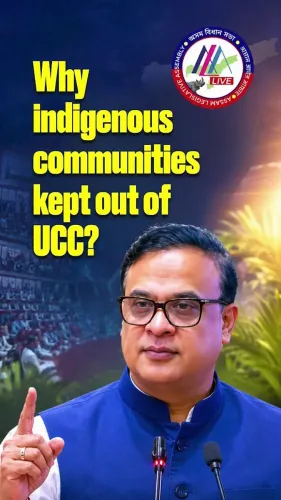
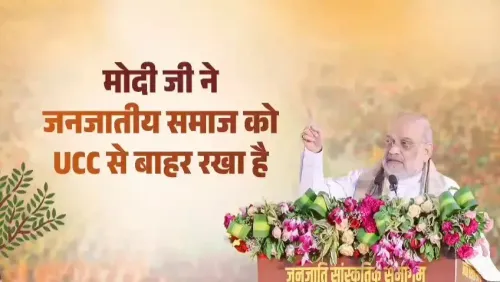
Assam CM Himanta Biswa Sarma confirmed that UCC Assam excludes Janjatiya (tribal) communities notified under Article 342 of the Constitution.
The exemption is justified on grounds that tribal communities 'practice self regulation' and social evils are 'rarely recorded' among them.
The approach mirrors Uttarakhand 's state-level UCC enacted in February 2024 , which also exempted Scheduled Tribes.
The constitutional basis for the exclusion is Article 342 , which grants the President power to notify Scheduled Tribes.
The final UCC Assam draft is yet to be published; formal tribal council consultations and Assam Assembly proceedings are anticipated.
BJP-ruled states have consistently paired UCC advancement with tribal customary-law protections, especially in the Northeast.
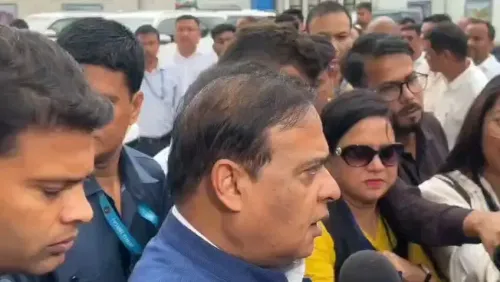
Assam Chief Minister Himanta Biswa Sarma clarified on Wednesday, 27 May 2026 that the state's Uniform Civil Code explicitly excludes Scheduled Tribe communities notified under Article 342 of the Constitution, citing their strong tradition of self-regulation and the near-absence of recorded social evils among them.
Context
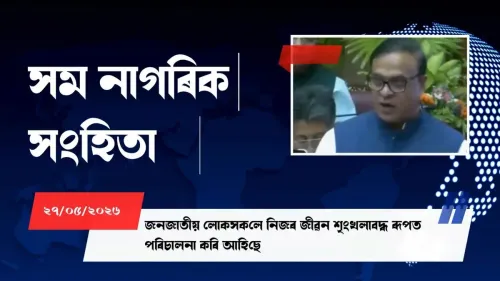
Responding to a query on the #UCCAssam framework, CM Sarma stated that Janjatiya (tribal) communities 'practice self regulation and occurrence of social evils is rarely recorded,' and that the state government 'realise these facts and regard their customs.' The exemption, he underlined, is a deliberate policy choice rather than an oversight.
Article 342 of the Constitution empowers the President to notify communities as Scheduled Tribes, conferring specific constitutional protections. By anchoring the exclusion to this provision, the Assam government has given the tribal carve-out a firm constitutional footing.
Policy Backdrop
The push for a Uniform Civil Code draws on Article 44 of the Constitution, a Directive Principle that has urged common personal laws on marriage, divorce, inheritance and adoption since 1950. The 21st Law Commission revisited the issue with a consultation paper in 2018, but no central legislation followed.
Uttarakhand became the first state to pass a state-level UCC law in February 2024. That legislation also carved out exemptions for Scheduled Tribes, establishing a precedent that Assam appears to be following. BJP-governed states have consistently balanced the party's uniformity agenda with constitutional protections for tribal communities, particularly in the Northeast where customary law is deeply embedded in daily life.
Stakeholders and Impact
The exemption directly benefits the large Scheduled Tribe population of Assam, which includes communities such as the Bodos, Mishings, Karbis and others whose personal and social affairs are governed by centuries-old customary practices. These communities had expressed concern that a blanket UCC could override their traditional norms on inheritance and marriage.
Non-tribal residents of Assam would fall within the UCC's ambit once the legislation is enacted. Civil society groups and legal scholars have noted that defining the boundary between tribal and non-tribal applicability will be a key implementation challenge for the state administration.
What's Next
The final draft of the UCC Assam code is yet to be made public, and formal consultations with tribal councils and community bodies are expected before the bill is introduced in the Assam Legislative Assembly. The outcome will be closely watched by other northeastern states that face similar demographic and constitutional considerations.
How Assam navigates the legislative process — particularly the precise scope of the tribal exclusion and any potential legal challenges — could serve as a template for other BJP-ruled states with significant Scheduled Tribe populations.
Point of View
The Assam government insulates the UCC from the most likely legal challenges while reassuring the Northeast's influential tribal constituencies. This mirrors a broader BJP pattern of pursuing civil-code uniformity selectively, preserving customary protections where the political and constitutional cost of overriding them is highest. The move also positions Assam as a model for other northeastern states deliberating similar legislation. Whether tribal councils accept this framing, or push for broader safeguards in the final bill, will determine the political durability of the exemption.
NationPress
10 Oct 2026
Frequently Asked Questions
Why are tribal communities excluded from UCC Assam?
Assam CM Himanta Biswa Sarma stated that tribal communities notified under Article 342 of the Constitution are excluded because they practice self-regulation and social evils are rarely recorded among them, making a statutory code unnecessary for their personal affairs.
Which article of the Constitution covers the tribal exemption in UCC Assam?
The exemption is anchored to Article 342 , which empowers the President to notify communities as Scheduled Tribes and confers specific constitutional protections on them.
Is Assam the first state to implement a Uniform Civil Code?
No. Uttarakhand passed India's first state-level Uniform Civil Code in February 2024 . Assam is working on its own version, UCC Assam , with tribal exemptions built in from the outset.
What communities are called Janjatiya in the context of UCC Assam?
'Janjatiya' is the Hindi and Assamese term for Scheduled Tribes — communities officially notified under Article 342 of the Constitution. In Assam these include groups such as the Bodos, Mishings and Karbis, among others.
What happens next for UCC Assam?
The final draft of UCC Assam is expected to be released for public and stakeholder consultation, including formal engagement with tribal councils, before a bill is introduced in the Assam Legislative Assembly .