CM Himanta Defends Tribal Exemption in Assam UCC
Synopsis
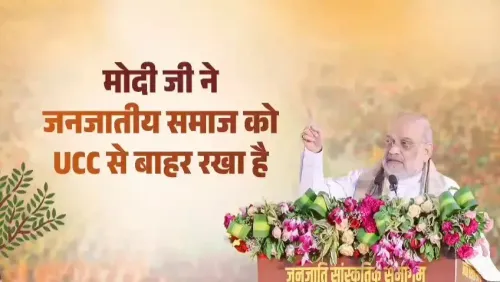
Assam Chief Minister Himanta Biswa Sarma has defended the exclusion of tribal communities from the state's proposed Uniform Civil Code, saying their customary systems have long protected women's dignity. The move follows a template set by Uttarakhand's 2024 UCC, which also exempted Scheduled Tribes.
Key Takeaways
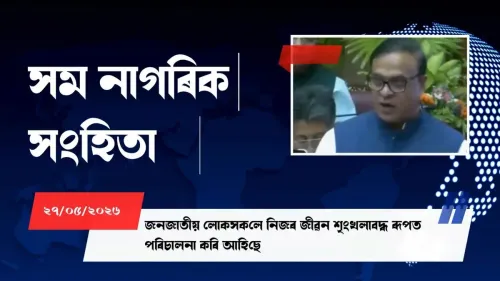
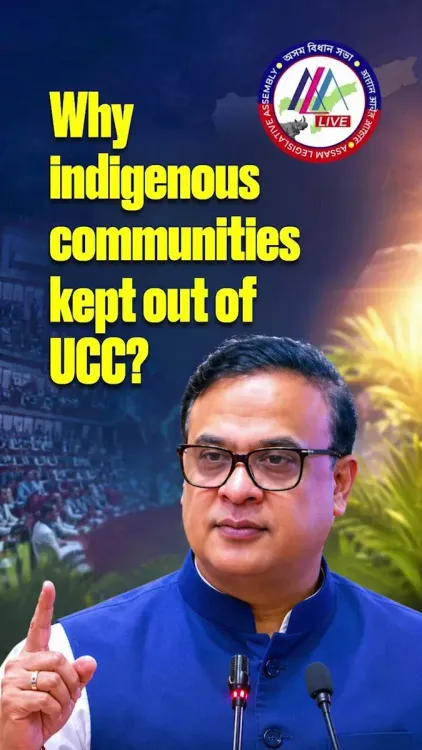
Assam CM Himanta Biswa Sarma publicly justified the exclusion of tribal communities from #UCCAssam on 27 May 2026 .
He argued that tribal communities uphold women's dignity through 'strong customary systems and collective social responsibility.' Assam's tribal communities are protected under the Sixth Schedule of the Constitution, which grants autonomous district councils authority over customary personal law.
Uttarakhand set the precedent in 2024 by passing India's first state-level UCC with an explicit Scheduled Tribe exemption .
BJP -governed states have consistently paired UCC advancement with tribal carve-outs under the Sixth Schedule and Article 371 .
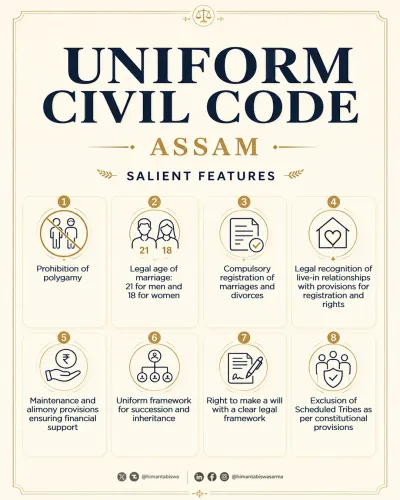
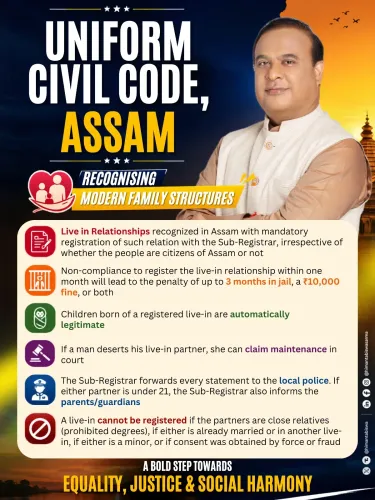
Full details of Assam's UCC draft bill and its exemption clauses are yet to be made public.
Assam Chief Minister Himanta Biswa Sarma on Wednesday, 27 May 2026, responded publicly to questions about why the state's proposed Uniform Civil Code excludes tribal communities, arguing that indigenous groups in Assam have long upheld women's dignity through robust customary systems and collective social responsibility.
Context
The Chief Minister's post came in direct response to public debate over the tribal exemption written into #UCCAssam. Sarma stated plainly: 'Our tribal communities have long protected and upheld the dignity of women through strong customary systems and collective social responsibility. There's a lot to learn from them.' The remarks signal that the exemption is a deliberate policy choice, not an oversight or a concession under pressure.
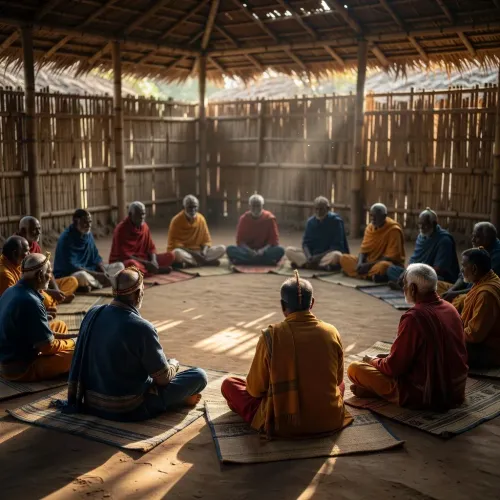
Assam's tribal communities — spread across the hills and plains of the state — are governed by customary laws on personal matters including marriage, inheritance, and land. Many of these communities fall under the Sixth Schedule of the Constitution, which grants autonomous district councils the power to legislate on such matters and shields customary practices from uniform national or state civil law.
Policy Backdrop
Uttarakhand became the first Indian state to pass a state-level Uniform Civil Code in 2024, and its legislation explicitly exempted Scheduled Tribes from its provisions — establishing a template that other BJP-governed states appear to be following. Assam's approach mirrors this model, balancing the party's ideological commitment to legal uniformity with the constitutional and political realities of the Northeast.
The broader pattern across BJP-ruled states has been one of incremental UCC advancement paired with carve-outs for tribal communities under the Sixth Schedule and Article 371. This allows governments to pursue reform without triggering conflict with deeply entrenched customary systems that also carry significant electoral weight in tribal constituencies.
Stakeholders and Impact
The exemption directly affects the tribal communities of Assam, who retain their traditional social frameworks under the proposed code. For women within these communities, the Chief Minister's framing positions customary systems as protective rather than restrictive — a characterisation that is likely to be scrutinised by women's rights advocates and legal scholars.
Non-tribal residents of Assam would fall under the UCC's provisions once enacted, affecting personal law on marriage, divorce, inheritance, and adoption irrespective of religion. The dual framework — uniform code for some, customary law for others — reflects the constitutional complexity of legislating civil matters in a state as diverse as Assam.
What's Next
The specifics of Assam's UCC draft — including the precise exemption clauses and the scope of communities covered — are yet to be made public in full detail. An Assam Legislative Assembly debate on the bill is expected to test both the legal architecture of the exemption and the political consensus behind it. Observers will also watch whether other Northeast Democratic Alliance (NEDA) states announce similar legislation or parallel exemptions, potentially creating a regional pattern for UCC implementation in tribal-majority areas.
Chief Minister Sarma's public framing of tribal customary law as a model worth emulating — rather than a gap to be filled — suggests the exemption will be defended on normative grounds, not merely as a legal necessity.
Point of View
Suggesting a coordinated BJP strategy to nationalise UCC rollout while insulating it from Northeast-specific political risk. The rhetorical move of praising tribal customary law as a model for women's protection is significant: it shifts the debate from 'why are tribals excluded' to 'what can others learn from them,' closing off the most obvious line of criticism. Whether that framing holds under legislative scrutiny — particularly from women's rights groups who may dispute the record of customary systems on gender equity — will define the political durability of this exemption.
NationPress
10 Oct 2026
Frequently Asked Questions
Why are tribal communities excluded from Assam's UCC?
Assam CM Himanta Biswa Sarma says tribal communities are excluded because their customary systems have long upheld women's dignity and collective social responsibility. Constitutionally, many Assam tribes are also protected under the Sixth Schedule, which shields customary personal law from uniform state legislation.
Which was the first Indian state to pass a Uniform Civil Code?
Uttarakhand was the first Indian state to pass a Uniform Civil Code, doing so in 2024. Its legislation explicitly exempted Scheduled Tribes from the code's provisions, a model Assam appears to be following.
What is the Sixth Schedule of the Indian Constitution?
The Sixth Schedule provides for autonomous district councils in certain tribal areas of Northeast India, granting them legislative powers over customary practices including marriage, inheritance, and land. Communities covered by it can retain traditional laws separate from general state or national legislation.
What does Assam's UCC cover?
Assam's proposed Uniform Civil Code is expected to govern personal law matters — marriage, divorce, inheritance, and adoption — for non-tribal residents of the state irrespective of religion. The full draft bill and its exact provisions have not yet been made public.
Will other Northeast states follow Assam's UCC model?
It is being closely watched whether other states in the North-East Democratic Alliance, which Sarma convenors, announce similar UCC legislation with comparable tribal exemptions. No formal announcements from other Northeastern states have been confirmed yet.