CM Himanta Backs Assam UCC, Cites Women Empowerment
Synopsis
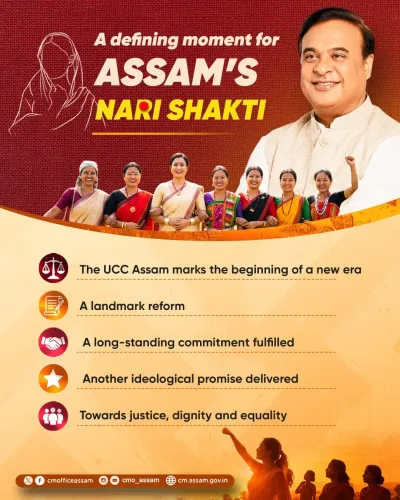
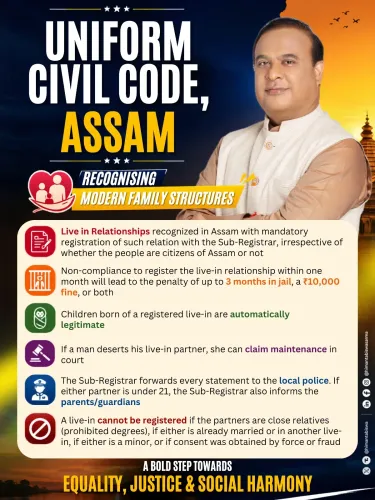
Assam Chief Minister Himanta Biswa Sarma on 27 May 2026 welcomed the passage of the Assam Uniform Civil Code, crediting PM Modi's leadership and emphasising that the law advances women empowerment while preserving the customs and identity of the state's tribal communities.
Key Takeaways
Assam has passed a Uniform Civil Code (UCC) , making it one of the first states after Uttarakhand to enact such legislation.
CM Himanta Biswa Sarma credited the law to the leadership of Prime Minister Narendra Modi and called it a 'historic step.' The Assam UCC includes explicit protections for the customs and traditions of Janjatiya (tribal) communities .
The legislation is framed around equality, women empowerment and good governance — core BJP messaging pillars.
Union Minister Sarbanand Sonowal , a former Assam Chief Minister, was acknowledged by CM Sarma in the announcement.
Implementation rules, enforcement mechanisms and potential legal challenges remain the key issues to watch going forward.
Assam Chief Minister Himanta Biswa Sarma on Wednesday, 27 May 2026 publicly hailed the passage of the Uniform Civil Code (UCC) for Assam, calling it a 'historic step' toward equality and women empowerment under the leadership of Prime Minister Narendra Modi. The Chief Minister also acknowledged Union Minister Sarbanand Sonowal, addressing him by the honorific 'Dangoriya' — a term of respect in Assamese culture — in his remarks on the legislation.
Context
In his post, CM Sarma described the #UCCAssam as a 'progressive step' that simultaneously preserves the 'distinct identity, customs and traditions' of Janjatiya (tribal) communities. He credited the legislation to the 'visionary leadership' of Prime Minister Modi and framed it as a fulfilment of a 'long-standing commitment towards equality' and 'good governance.' The use of the Assamese honorific 'Dangoriya' for Sonowal signals the regional cultural sensitivity woven into the political messaging around the law.
Policy Backdrop
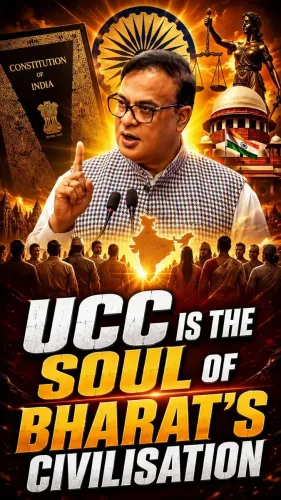
Article 44 of the Indian Constitution (1950) places a Uniform Civil Code among the Directive Principles of State Policy, directing the State to endeavour to secure common personal laws on marriage, divorce, inheritance and adoption for all citizens. The BJP included explicit UCC commitments in its 2014 and 2019 general-election manifestos. Uttarakhand became the first Indian state to enact a UCC in February 2024, and Assam's legislation now follows that precedent at the state level.
The Assam UCC is notable for its built-in carve-out for tribal communities — a design choice that reflects the demographic and political realities of the Northeast, where a significant share of the population belongs to Scheduled Tribes with constitutionally protected customary laws. This approach mirrors the BJP's North-East Democratic Alliance (NEDA) strategy of advancing core ideological goals while accommodating regional cultural identities.
Stakeholders and Impact
Women are the primary intended beneficiaries of UCC legislation, which aims to standardise rights around marriage age, divorce, maintenance and inheritance irrespective of religion. Advocacy groups have long argued that religion-specific personal laws leave women — particularly Muslim and tribal women — with unequal legal protections. The Assam government's framing explicitly links the law to women empowerment, a message that resonates with both the party's national narrative and its outreach to women voters in the state.
Janjatiya communities in Assam, whose customary practices on land, marriage and succession are protected under the Sixth Schedule of the Constitution, stand to be affected by how the UCC's tribal exemptions are defined and enforced. Civil society organisations representing indigenous groups will be watching implementation rules closely to ensure that the promised protections are substantive rather than procedural.
What's Next
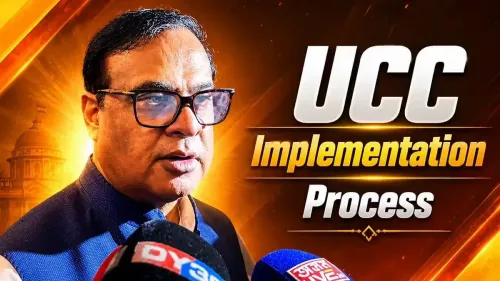
Attention now shifts to the implementation rules and enforcement mechanisms that the Assam government will need to frame under the new law. Legal challenges before the Gauhati High Court or the Supreme Court of India — questioning either the state's legislative competence or the adequacy of tribal protections — remain a possibility. Parallel legislative moves in other BJP-ruled states will also be closely tracked as the party seeks to build momentum toward a potential national UCC ahead of future electoral cycles.
Point of View
Confirming a deliberate BJP strategy of enacting state-level Uniform Civil Codes to build political and legal momentum toward a national framework. The tribal carve-out is not merely a concession — it is a calculated design that allows the party to advance its core ideological agenda while protecting its coalition in the Northeast, where indigenous identity politics are electorally decisive. CM Sarma's public acknowledgement of Union Minister Sonowal using the Assamese honorific 'Dangoriya' signals that the messaging is calibrated for a regional audience, not just a national one. The real test of the law's ambition will come in the implementation rules and any constitutional litigation that follows.
NationPress
10 Oct 2026
Frequently Asked Questions
What is the Assam Uniform Civil Code?
The Assam Uniform Civil Code (UCC) is a state law that seeks to provide common personal laws on matters such as marriage, divorce, inheritance and adoption for all residents of Assam, while preserving the distinct customs and traditions of the state's tribal (Janjatiya) communities.
Is Assam the first state to pass a UCC?
No. Uttarakhand became the first Indian state to enact a Uniform Civil Code in February 2024. Assam's passage of its own UCC makes it one of the early adopters following Uttarakhand's precedent.
Will the Assam UCC apply to tribal communities?
According to Chief Minister Himanta Biswa Sarma, the Assam UCC has been designed to preserve the 'distinct identity, customs and traditions' of Janjatiya (tribal) communities, suggesting explicit exemptions or protections are built into the legislation.
What is Article 44 of the Indian Constitution?
Article 44 is a Directive Principle of State Policy that directs the State to endeavour to secure a Uniform Civil Code for all citizens across India. It has been cited as the constitutional basis for UCC legislation at both the state and national levels.
Who is Sarbanand Sonowal and what is his role in the Assam UCC?
Sarbanand Sonowal is the Union Minister for Ports, Shipping and Waterways and a former Chief Minister of Assam (2016-2021). CM Himanta Biswa Sarma acknowledged him in his post on the passage of the Assam UCC, though his precise role in the legislative process has not been officially detailed.