CM Himanta Defends Assam UCC in Assembly, Cites Women's Rights

Synopsis
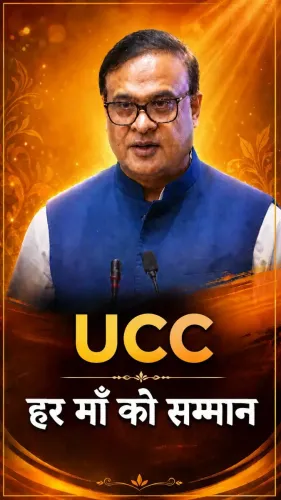
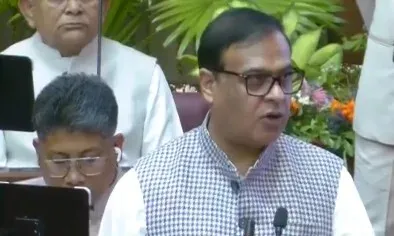
Chief Minister Himanta Biswa Sarma addressed the Assam Legislative Assembly on 27 May 2026 to defend the proposed Uniform Civil Code, arguing it will deliver equal rights, dignity, security and justice to all women in the state regardless of religious community.
Key Takeaways
CM Himanta Biswa Sarma addressed the Assam Legislative Assembly on 27 May 2026 to explain the proposed Uniform Civil Code, Assam .
The UCC aims to replace religion-based personal laws with uniform rules on marriage, divorce, inheritance and adoption for all residents of Assam .
The Chief Minister framed the legislation explicitly around protecting women's 'equal rights, dignity, security and justice'.
Uttarakhand passed India's first state-level UCC in February 2024 , a precedent cited by Assam officials.
Assam 's diverse population — including Hindu, Muslim, and tribal communities — makes the UCC among the state's most consequential and contested legislative proposals.
Next steps include release of a draft bill, possible expert committee formation, and public consultations on specific provisions.
The Chief Minister's Office of Assam announced on 28 May 2026 that Chief Minister Dr. Himanta Biswa Sarma addressed the Assam Legislative Assembly the previous day to explain how a state-specific Uniform Civil Code (UCC) would protect women across the state and guarantee them equal rights, dignity, security, and justice.
Context
Speaking on the floor of the Assam Legislative Assembly, CM Himanta Biswa Sarma laid out the government's rationale for the proposed Uniform Civil Code, Assam. The Chief Minister's Office stated that the legislation is designed to replace religion-based personal laws with uniform provisions applicable to all residents of the state, cutting across community lines. The address signals that the UCC proposal has formally entered the legislative discourse in Assam.
Policy Backdrop
The push for a state-level UCC in Assam is part of a broader national conversation that gained concrete legislative shape when Uttarakhand became the first Indian state to pass a UCC law in February 2024. Assam had publicly signalled its intention to draft similar legislation as early as 2023, positioning the current Assembly discussion as a significant step forward. The proposal draws on Article 44 of the Constitution, a non-enforceable Directive Principle that calls on the state to secure a uniform civil code for all citizens.
Under the proposed framework, areas such as marriage, divorce, inheritance, and adoption would be governed by a single set of rules rather than separate personal laws tied to religious identity. Proponents argue this is essential for ending discrimination that women — particularly those from communities where personal laws limit their rights in matrimonial and inheritance matters — currently face.
Stakeholders and Impact
Assam is a diverse state with significant Hindu, Muslim, tribal, and other communities, making the UCC one of the most consequential and contested legislative proposals in its recent history. Women's groups advocating for equal rights in marriage and inheritance have long supported the principle of a uniform code, while some minority religious organisations and tribal bodies have raised concerns about the preservation of customary practices. The Chief Minister's framing in the Assembly — centred explicitly on women's 'equal rights, dignity, security and justice' — appears calibrated to build a broad social consensus around gender equity as the primary justification.
Tribal communities in Assam, many of whom are governed by customary laws distinct from both Hindu and Muslim personal law, are among the stakeholders closely watching how any draft bill addresses exemptions or special provisions. The government has not yet publicly confirmed the exact scope of such exemptions in the proposed legislation.
What's Next
The Assembly address by CM Himanta Biswa Sarma is expected to be followed by the release of a draft UCC bill text, the possible formation of an expert or select committee, and scheduled public consultations on specific clauses. The legislative trajectory will be closely watched as it could set a second state-level precedent after Uttarakhand and intensify the national debate on balancing legal uniformity with the protection of minority and tribal cultural practices. How the government navigates those competing interests will determine whether the bill advances smoothly or faces sustained opposition inside and outside the Assembly.
Point of View
The government is attempting to insulate the proposal from charges of targeting minority communities. The move follows Uttarakhand's precedent and fits a pattern of BJP-governed states using state-level UCC legislation to advance a policy goal that has stalled at the national level. The real test will come when draft provisions are made public and tribal and minority stakeholders engage with the specifics.
NationPress
11 Oct 2026
Frequently Asked Questions
What is the Uniform Civil Code proposed for Assam?
The Uniform Civil Code, Assam is a proposed state law that would replace separate religion-based personal laws with a single set of rules governing marriage, divorce, inheritance and adoption for all residents of Assam, regardless of their religious community.
What did CM Himanta Biswa Sarma say about the UCC in the Assembly?
According to the Chief Minister's Office, CM Himanta Biswa Sarma told the Assam Legislative Assembly on 27 May 2026 that the Uniform Civil Code would protect all women of the state and provide them with equal rights, dignity, security and justice.
Has any Indian state already passed a Uniform Civil Code?
Yes. Uttarakhand became the first Indian state to pass a Uniform Civil Code law in February 2024, establishing a precedent that Assam officials have cited in support of their own proposal.
Will the Assam UCC apply to tribal communities?
The exact scope of the proposed Assam UCC, including any exemptions for tribal communities governed by customary laws, has not been publicly confirmed. This is one of the key issues expected to be addressed when a draft bill is released.
What happens next with the Assam UCC bill?
The government is expected to release a draft bill text, potentially form an expert or select committee, and hold public consultations on specific clauses before the legislation is put to a vote in the Assam Legislative Assembly.