CM Himanta Backs UCC Assam as Step Toward Gender Justice
Synopsis
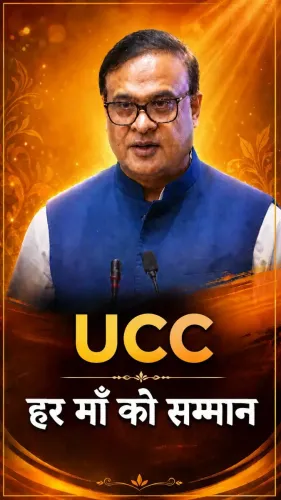
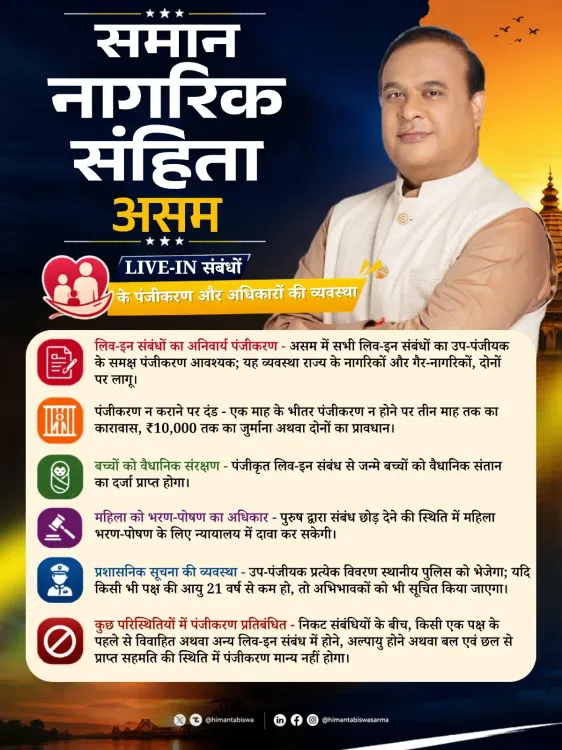
Assam Chief Minister Himanta Biswa Sarma on 27 May 2026 publicly reaffirmed his government's commitment to a Uniform Civil Code for Assam, framing #UCCAssam as a reform to advance gender justice, protect families, and unite the state's diverse communities.
Key Takeaways
Himanta Biswa Sarma posted on 27 May 2026 reaffirming Assam's commitment to the Uniform Civil Code .
He described #UCCAssam as 'not just a legal reform, but a step towards a more just and united future.' Uttarakhand became the first Indian state to enact a UCC law in February 2024 , providing a legislative template.
BJP manifestos have consistently pledged a UCC since 2014 , making state-level moves part of a broader national agenda.
Assam's plural demographic — tribal, Hindu, and Muslim populations — makes its UCC process particularly significant for stakeholders across the north-east.
The next formal step is the introduction of a UCC bill in the Assam Legislative Assembly , with potential legal challenges expected thereafter.
Assam Chief Minister Himanta Biswa Sarma reaffirmed on Wednesday, 27 May 2026 his government's commitment to implementing the Uniform Civil Code (UCC) in Assam, describing it as a reform aimed at strengthening gender justice, protecting families, and fostering unity across communities.
Context
In his post on X, Sarma declared: 'Assam will continue to lead with reforms that strengthen society, uphold gender justice, protect families and foster greater unity among communities.' He characterised #UCCAssam as 'not just a legal reform, but a step towards a more just and united future,' closing with the national salutations Jai Hind, Vande Mataram and the Assamese Joi Aai Axom — expressions of patriotic and regional pride.
The statement positions Assam as an active participant in a reform movement that has gained momentum across BJP-governed states, framing the UCC as a governance and social-justice measure rather than a purely cultural one.
Policy Backdrop
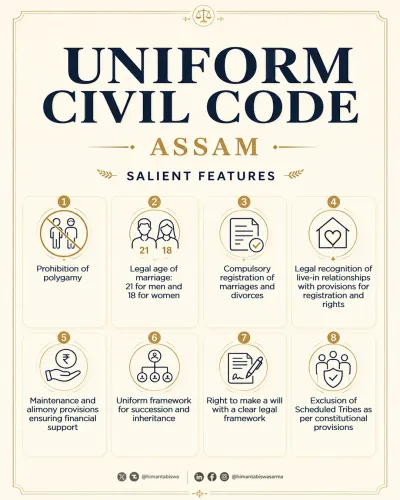
The Uniform Civil Code proposes a single set of civil laws governing marriage, divorce, inheritance, and adoption applicable to all citizens regardless of religion, replacing the existing patchwork of religion-based personal laws. The Bharatiya Janata Party has included the UCC as a core manifesto commitment since at least 2014.
Uttarakhand became the first Indian state to pass a UCC bill in February 2024, setting a legislative precedent for other BJP-ruled states. Sarma had publicly signalled Assam's intent to pursue similar legislation as early as 2023, and the #UCCAssam hashtag has since become a marker of the state government's reform agenda.
Assam's demographic context lends particular weight to the debate: the state is home to a diverse mix of tribal, Hindu, and Muslim populations, each with distinct customary and personal laws, making a unified civil code both politically significant and socially complex.
Stakeholders and Impact
Proponents argue that a UCC would most directly benefit women across communities by standardising rights related to marriage age, divorce, and inheritance — areas where personal laws have historically varied widely. Sarma's framing of the reform as advancing 'gender justice' reflects this argument.
Religious communities and tribal groups, however, have raised concerns about the erosion of customary practices protected under constitutional provisions, particularly for Scheduled Tribes in the north-east. How the eventual Assam legislation addresses these exemptions will be closely watched by civil-society groups and legal scholars alike.
What's Next
The immediate legislative step would be the introduction and passage of a formal UCC bill in the Assam Legislative Assembly. Any enacted law would likely face scrutiny — and potential challenges — before the Gauhati High Court or the Supreme Court of India, following the pattern seen after Uttarakhand's 2024 legislation.
If Assam advances its own UCC, it would mark the second state-level enactment and could intensify pressure on other BJP-governed states to follow suit, further shaping the national conversation ahead of future electoral cycles.
Point of View
Reinforcing the BJP's long-standing national manifesto commitment through sub-national action. By foregrounding gender justice and community unity rather than religious uniformity, the framing is calibrated to broaden the reform's appeal in a state with a significant Muslim minority and constitutionally protected tribal communities. The emphasis on 'unity among communities' also serves Sarma's role as NEDA convenor, projecting the UCC as a north-east governance model rather than a majoritarian imposition. Whether the eventual bill includes tribal exemptions — a key fault line in Uttarakhand's law — will determine how much of that framing holds under legislative and judicial scrutiny.
NationPress
11 Oct 2026
Frequently Asked Questions
What is UCC Assam and what does it mean?
UCC Assam refers to the Assam government's proposed Uniform Civil Code, a single set of laws on marriage, divorce, inheritance and adoption that would apply to all residents regardless of religion, replacing existing personal laws.
Has Assam passed a Uniform Civil Code bill yet?
As of the Chief Minister's statement on 27 May 2026, no formal UCC bill had been passed in the Assam Legislative Assembly; Sarma's post reaffirms the government's intent to pursue the legislation.
Which was the first state to implement UCC in India?
Uttarakhand was the first Indian state to pass a Uniform Civil Code bill, doing so in February 2024 under a BJP government.
Why is the UCC significant for Assam specifically?
Assam has a diverse population of tribal, Hindu and Muslim communities, each governed by different personal and customary laws, making a unified civil code both more complex and more consequential there than in many other states.
What is Himanta Biswa Sarma's position on gender justice?
Sarma has framed the Uniform Civil Code as a gender-justice measure, arguing that standardising civil laws would protect women's rights in areas like marriage age, divorce and inheritance across all communities.