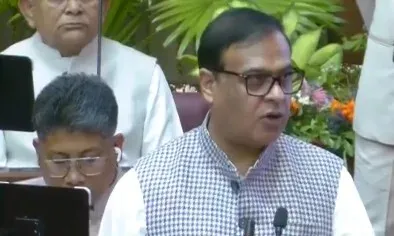
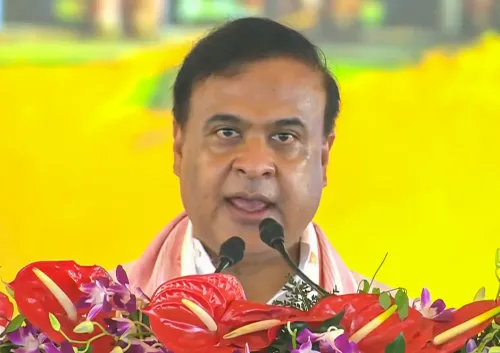
CM Himanta Biswa Sarma Pitches UCC Assam as Pledge for Women
Synopsis
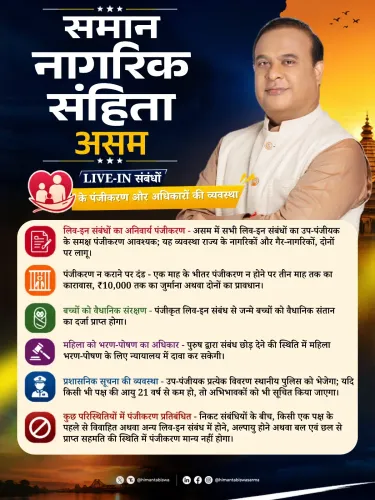
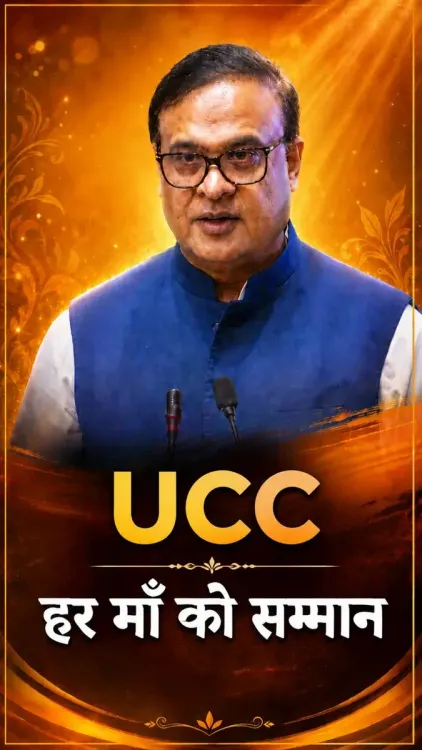
Assam Chief Minister Himanta Biswa Sarma posted a Hindi-language video on X framing the proposed Uniform Civil Code for the state as a commitment to the respect of mothers, the rights of daughters and justice for every woman, signalling continued political push for UCC Assam.
Key Takeaways
Assam CM Himanta Biswa Sarma posted on X with the hashtag #UCCAssam .
The Hindi-language message links a civilised society's identity to respect for mothers.
UCC is positioned as a pledge for women's respect, daughters' rights and justice.
Uttarakhand became the first state to enact a UCC law in 2024 .
A Uniform Civil Code is envisaged under Article 44 of the Constitution.
Focus shifts to any UCC bill tabling and consultations in the Assam Assembly.
Assam Chief Minister Himanta Biswa Sarma on Wednesday framed the proposed Uniform Civil Code for the state as a commitment to the dignity of women, posting a short video message on X with the hashtag #UCCAssam. The post pitched the policy as a marker of social progress, asserting that a society's standing is measured by the respect it accords its mothers.
In the post, written in Hindi, the Chief Minister said 'Kisi bhi sabhya samaj ki pehchaan uski maataon ke sammaan se hoti hai' ('The identity of any civilised society is recognised by the respect it gives to its mothers'). He added that #UCCAssam represents a resolve for 'the respect of every mother, the rights of every daughter and justice for every woman'.
Context
The message lands as the Assam government continues to position a Uniform Civil Code as a flagship social reform. Sarma, who also serves as convenor of the North-East Democratic Alliance (NEDA), has repeatedly framed personal-law reform in the state as a women-centric agenda rather than a community-targeted measure.
The video format and emotive framing — invoking mothers, daughters and women in a single sentence — suggest an effort to broaden public buy-in beyond the legal debate and into the language of everyday family life.
Policy backdrop
A Uniform Civil Code, envisaged under Article 44 of the Constitution as a directive principle, seeks to replace religion-specific personal laws governing marriage, divorce, inheritance, adoption and maintenance with a single set of civil rules applicable to all citizens. The Bharatiya Janata Party has reiterated the commitment in successive national manifestos since 2014.
In 2024, Uttarakhand became the first Indian state to enact a UCC law covering marriage, divorce, inheritance and adoption, setting a template that other BJP-ruled states have signalled interest in studying. Assam's earlier reforms in areas such as child marriage enforcement and registration rules have been presented by the state government as preparatory groundwork for a wider civil code.
Stakeholders and impact
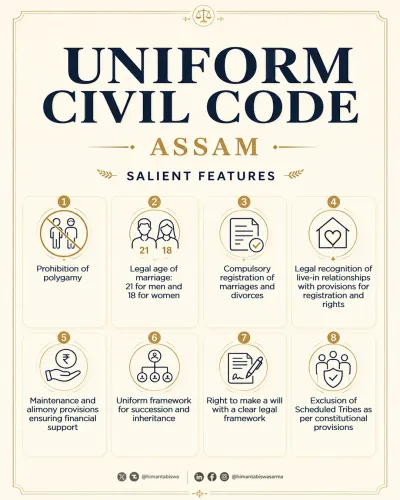
The most directly affected group, as framed by the Chief Minister, is women in Assam, particularly in matters of inheritance, maintenance and protection within marriage. Advocates of a common code argue that uniform rules reduce discretion in personal-law disputes and expand statutory protection for women across communities.
Critics of state-level UCC efforts have raised questions about the treatment of customary practices, including those of tribal communities, and about the scope of exemptions any final draft might include. Assam, with its substantial tribal population and Sixth Schedule areas, presents a more complex legal terrain than states without comparable constitutional protections for indigenous customs.
Legal practitioners, women's rights organisations, religious bodies and tribal councils are likely to be the principal voices in any consultation phase that precedes legislation.
What's next
Attention will turn to whether the Assam government tables a formal UCC bill in the state Assembly, and on what terms. The structure of any draft — its definitions of marriage and divorce, its inheritance rules, and crucially the scope of any tribal exemption — will determine both its political reception and its prospects in court.
Committee consultations, public submissions and the eventual text of a bill will offer the first concrete test of whether the rhetorical pledge in the Chief Minister's post translates into a statute that withstands legal and political scrutiny.
Point of View
Sarma is widening the constituency for UCC beyond legal-policy circles into everyday family vocabulary. The real test, however, lies in the draft's treatment of tribal customary law in a state with significant Sixth Schedule protections. How that balance is struck will shape both the political reception and the judicial durability of any eventual statute.
NationPress
24 Oct 2026
Frequently Asked Questions
What did Himanta Biswa Sarma say about UCC?
In a Hindi-language post on X, the Assam Chief Minister said the identity of a civilised society is recognised by the respect it gives to mothers, and described UCC Assam as a resolve for the respect of every mother, the rights of every daughter and justice for every woman.
Which state was first to enact a Uniform Civil Code in India?
Uttarakhand became the first Indian state to enact a Uniform Civil Code law in 2024, covering marriage, divorce, inheritance and adoption.
What does Article 44 of the Constitution say?
Article 44 is a directive principle that urges the State to endeavour to secure for citizens a Uniform Civil Code throughout the territory of India, replacing religion-specific personal laws with a common framework.
How could UCC affect tribal communities in Assam?
The impact will depend on the final draft, particularly whether it carves out exemptions for tribal customary practices and Sixth Schedule areas, which has been a central concern in earlier discussions on a state-level UCC.