Assam UCC Bill: CM Sarma says it will protect minority women's rights
Synopsis
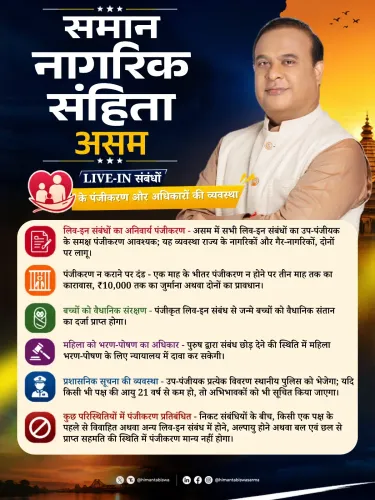
Assam CM Himanta Biswa Sarma took the floor of the state Assembly to defend the UCC Bill as a shield for minority women — not a political weapon. With Uttarakhand already having enacted its own code, Assam's move signals a widening state-level push for uniform civil law, even as opposition parties warn of cultural overreach.
Key Takeaways
Assam CM Himanta Biswa Sarma defended the Uniform Civil Code (UCC) Bill in the Assembly on 26 May 2025 .
Sarma said the Bill was introduced in the first session of the Assembly to prioritise social justice over political interests.
The proposed UCC aims to strengthen minority women's rights in marriage , inheritance , and social security .
The BJP government has maintained that indigenous and tribal communities will be protected under the legislation.
Opposition parties allege the Bill interferes with religious freedom and cultural practices.
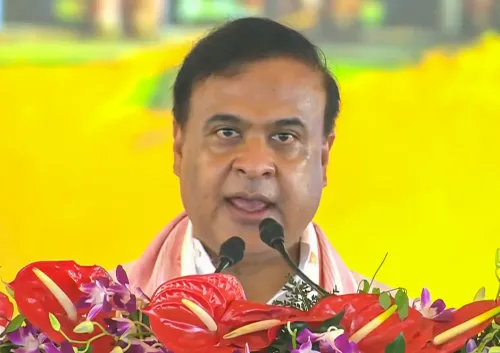
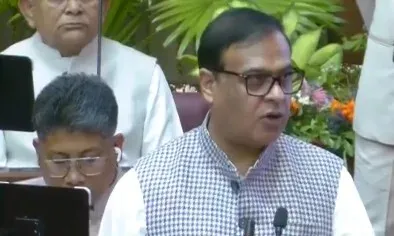
Assam Chief Minister Himanta Biswa Sarma on Tuesday, 26 May defended the proposed Uniform Civil Code (UCC) in the state Assembly, asserting that the legislation is designed to deliver greater protection and legal equality to women from minority communities. Speaking during a floor discussion in Guwahati, Sarma positioned the Bill as a social justice measure rather than a politically motivated one.
What the Chief Minister Said
Sarma argued that the Bharatiya Janata Party (BJP)-led state government had placed social justice ahead of electoral calculations, introducing the UCC Bill in the very first session of the Assembly. 'We are not here merely to appease vote-bank politics. Before doing anything for our supporters or political interests, we brought the Uniform Civil Code Bill for social justice,' he said.
The Chief Minister maintained that the proposed law would extend the 'highest level of protection' to women from minority communities, specifically strengthening their rights in matters of marriage, inheritance, and social security. He also accused opposition parties of deliberately misrepresenting the intent of the Bill to the public.
Historical Context and Assembly Record
Sarma recalled a previous exchange on the Assembly floor involving a legislator from the Raijor Dal, noting that he had publicly committed to reform even then. 'I had clearly stated from the floor of the Assembly that this government would move ahead with reforms aimed at ensuring justice and equality,' he said, citing continuity of intent across legislative sessions.
Notably, this is part of a broader pattern: Assam has been among the more active BJP-governed states in signalling alignment with the Centre's UCC agenda, which has gained renewed momentum since the Uttarakhand government enacted its own version of the code earlier this year.
Opposition Objections
Opposition parties continued to resist the proposal during the session, alleging that the Bill encroaches on religious freedom and entrenched cultural practices. Critics argue that a uniform code, however well-intentioned, risks overriding the distinct personal laws of tribal and indigenous communities — a concern that has been a consistent flashpoint in Assam's socially diverse political landscape.
Government's Stated Safeguards
The BJP government has repeatedly maintained that the Assam UCC will be calibrated to protect the interests of indigenous and tribal communities, even as it pursues broader gender justice objectives. Officials have framed the legislation as an effort to bring constitutional rights — particularly those enshrined under Articles 14 and 15 — into practical effect for women who remain vulnerable under existing personal law frameworks.
The Bill's passage through the Assembly and its eventual legal scrutiny will be closely watched, given that any state-level UCC faces questions of legislative competence and potential conflict with central personal law statutes.
Point of View
Which is that the code targets Muslim personal law. But the argument cuts both ways: if the Bill is genuinely about gender justice, the government will need to demonstrate that its provisions go materially further than existing laws on divorce, inheritance, and maintenance. Assam's tribal communities, many of whom have constitutional protections under the Sixth Schedule, remain the real test of whether the government's 'safeguards' are substantive or cosmetic. The opposition's resistance, meanwhile, risks looking reflexive if it cannot articulate a credible alternative path to protecting minority women within existing personal law frameworks.
NationPress
12 Oct 2026
Frequently Asked Questions
What is the Assam Uniform Civil Code Bill?
The Assam Uniform Civil Code Bill is a proposed state legislation introduced by the BJP-led government to establish uniform legal standards for all citizens in matters such as marriage, inheritance, and social security, with a stated focus on protecting women from minority communities.
Why is CM Sarma defending the UCC Bill now?
CM Himanta Biswa Sarma defended the Bill during an Assembly discussion on 26 May 2025, responding to opposition criticism. He argued the legislation was introduced in the Assembly's first session as a social justice priority, not a vote-bank measure.
What are the opposition's concerns about the Assam UCC?
Opposition parties allege that the Bill interferes with religious freedom and cultural practices. There are also concerns about its potential impact on indigenous and tribal communities who have distinct personal laws and constitutional protections.
How does the Assam UCC affect minority women specifically?
According to CM Sarma, the UCC would provide the highest level of legal protection to women from minority communities in areas including marriage, inheritance, and social security — domains where personal laws have historically left women vulnerable.
Which other state has enacted a Uniform Civil Code?
Uttarakhand enacted its own Uniform Civil Code earlier in 2025, making it the first state to do so in independent India. Assam's legislative move is seen as part of a broader BJP-governed state push toward uniform civil law.