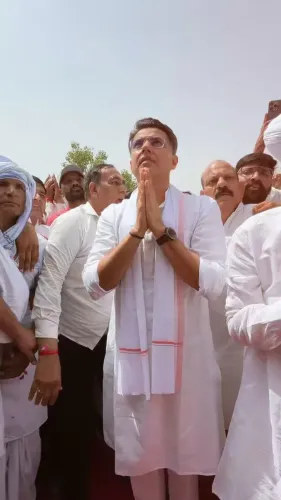
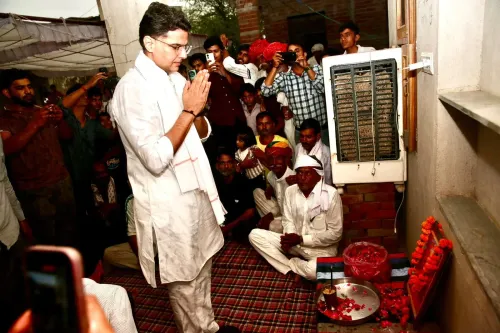
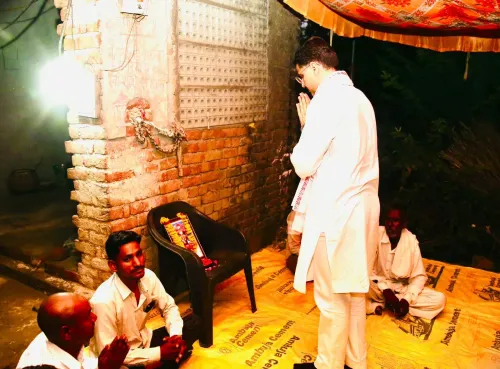
Sachin Pilot condoles drowning deaths of 6 children in Rajasthan
Synopsis
Congress leader Sachin Pilot on 13 July 2026 expressed condolences over the monsoon drowning deaths of six children — four at a check dam in Dungarpur and two in a farm pond in Alwar — urging Rajasthan residents to stay alert and follow administration advisories during the rainy season.
Key Takeaways
Six children drowned in two separate monsoon-related incidents in Rajasthan on or around 13 July 2026 .
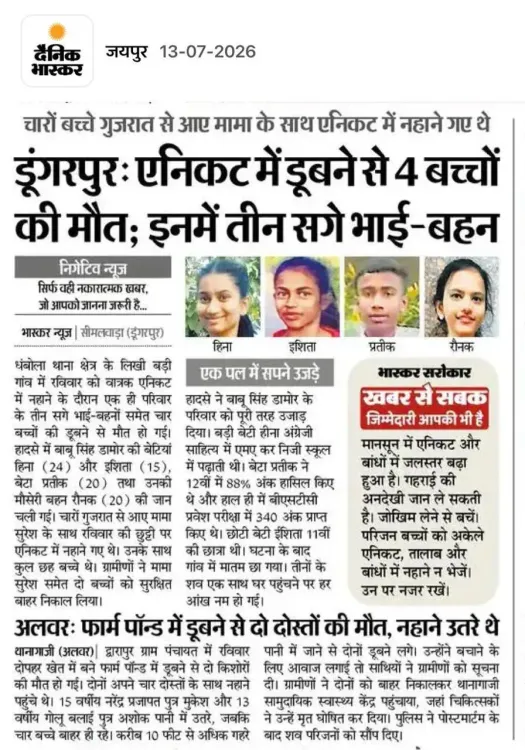
Four children drowned while bathing in a check dam at Likhi Badi village, Dungarpur district .
Two children drowned in a farm pond in Dwarapur Gram Panchayat, Alwar district .
Congress leader Sachin Pilot expressed condolences and prayed for strength for the bereaved families.
Pilot urged citizens to avoid waterlogged areas and follow official administration guidelines during the monsoon.
Both Dungarpur and Alwar districts are geographically distant, indicating the statewide scale of monsoon water-body hazards.
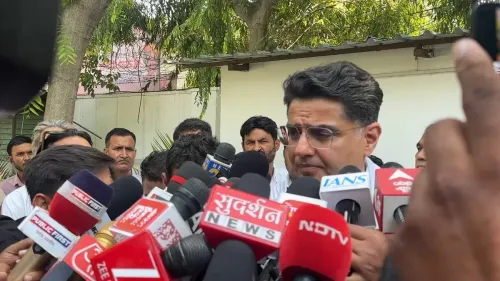
Congress leader and Rajasthan in-charge Sachin Pilot on Monday, 13 July 2026, expressed deep condolences over the drowning deaths of six children in two separate incidents in Rajasthan — four in Dungarpur district and two in Alwar district — urging citizens to exercise caution near water bodies during the ongoing monsoon season.
What happened
Four children lost their lives while bathing in an aniket (check dam) at Likhi Badi village in Dungarpur district. In a separate incident, two children drowned while bathing in a farm pond in Dwarapur Gram Panchayat of Alwar district. Both incidents occurred as monsoon rains have caused rivers, streams, and local water bodies across Rajasthan to swell significantly.
Pilot described the news as 'atyant dukkhad evam durbhagyapurn' (extremely sorrowful and unfortunate), and said his deepest sympathies are with the bereaved families. He prayed that God give the grieving families strength to endure this loss.
Context
Rajasthan receives the bulk of its annual rainfall between July and September, when the southwest monsoon is active. During this period, rural water bodies — including check dams, farm ponds, and seasonal streams — fill rapidly and become hazardous, particularly for children who may not be aware of sudden depth changes or strong undercurrents.
Dungarpur and Alwar are geographically distinct districts: Dungarpur lies in the tribal belt of southern Rajasthan near the Gujarat border, while Alwar is in the northeastern part of the state bordering Haryana. The fact that drowning incidents occurred simultaneously in two such distant districts underscores how widespread the monsoon hazard is across the state this season.
Policy backdrop
State administrations routinely issue advisories during the monsoon cautioning residents against entering swollen water bodies, and local authorities are expected to deploy warning signage near check dams, ponds, and river ghats. Farm ponds, constructed under central and state government schemes to support irrigation, are widespread across rural Rajasthan and can reach considerable depth during heavy rainfall.
Pilot, in his post, specifically called on citizens to follow administration-issued guidelines and avoid waterlogged or flooded areas. His appeal reflects a recurring challenge: translating official advisories into behavioural change in rural communities where open water bodies are part of daily life.
Stakeholder and community impact
The six deaths represent a devastating loss for the families and villages concerned. In rural Rajasthan, check dams and farm ponds serve vital agricultural and domestic purposes, making complete avoidance impractical — yet the monsoon season transforms them into serious safety hazards.
Child drowning during the monsoon is a recurring public-health concern across India, and incidents like these in Dungarpur and Alwar highlight the need for stronger community-level awareness campaigns, physical barriers, and rapid-response mechanisms at local water bodies.
What's next
With the monsoon season likely to continue through September 2026, district administrations in Rajasthan are expected to intensify public safety advisories. Pilot's public appeal adds political weight to calls for greater vigilance and may prompt the state government to review safety protocols around rural water infrastructure. The grief of six families now stands as a sombre reminder of the seasonal danger that monsoon rains bring to communities across the state.
Point of View
And it implicitly places accountability on the state administration to enforce safety protocols around rural water infrastructure. Child drowning during the monsoon is a recurring, under-reported public-health crisis in India, and the simultaneous occurrence of fatal incidents in Dungarpur and Alwar — districts hundreds of kilometres apart — suggests systemic gaps in community-level safety awareness. As Rajasthan Congress in-charge, Pilot's intervention also keeps the party visible on ground-level governance issues in a state where it is in opposition. The episode is likely to intensify calls for mandatory safety barriers and signage at government-built farm ponds and check dams.
NationPress
14 Jul 2026
Frequently Asked Questions
Where did the children drown in Rajasthan on 13 July 2026?
Four children drowned while bathing in a check dam at Likhi Badi village in Dungarpur district, and two children drowned in a farm pond in Dwarapur Gram Panchayat in Alwar district of Rajasthan.
What did Sachin Pilot say about the Rajasthan drowning incidents?
Sachin Pilot described the deaths as extremely sorrowful and unfortunate, offered condolences to the bereaved families, and urged all citizens to remain alert, avoid waterlogged areas, and follow administration-issued guidelines during the monsoon season.
Why are drowning incidents common in Rajasthan during monsoon?
During the monsoon season, rivers, streams, check dams, and farm ponds fill rapidly and can become dangerously deep with strong undercurrents, posing serious hazards especially for children bathing in them.
What is an aniket or check dam in Rajasthan?
An aniket, commonly called a check dam, is a small barrier built across a seasonal stream or river to hold water for agricultural and domestic use. During heavy monsoon rains these structures fill quickly and can be hazardous for bathers.
What safety measures are advised during Rajasthan monsoon floods?
Authorities advise residents to avoid bathing in or near swollen rivers, check dams, and farm ponds, stay away from waterlogged areas, and strictly follow guidelines issued by local district administrations during the monsoon season.