CM Himanta Moves Assam Toward Uniform Civil Code

Synopsis
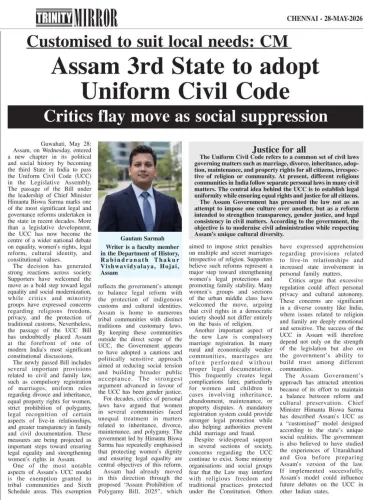
The Assam Legislative Assembly debated a Uniform Civil Code bill on 27 May 2026, with CM Himanta Biswa Sarma announcing that its passage would make Assam the third Indian state to adopt a common civil code, following Uttarakhand's landmark 2024 legislation.
Key Takeaways
CM Himanta Biswa Sarma announced on 27 May 2026 that the Assam Legislative Assembly was debating a Uniform Civil Code bill, with a vote expected the same day.
If enacted, Assam would become the third state in India to adopt a UCC, after Uttarakhand (legislation passed February 2024 ) and Goa (which operates under a Portuguese-era common civil code).
The UCC is grounded in Article 44 of the Constitution and would replace religion-specific personal laws on marriage, divorce, inheritance, and adoption .
The BJP has included UCC implementation as a core national manifesto commitment across multiple election cycles.
Legal experts anticipate potential constitutional challenges before the Supreme Court of India once the Assam legislation is enacted.
The move may accelerate UCC legislative efforts in other BJP-governed states such as Gujarat .
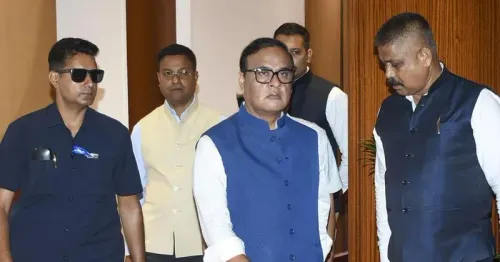
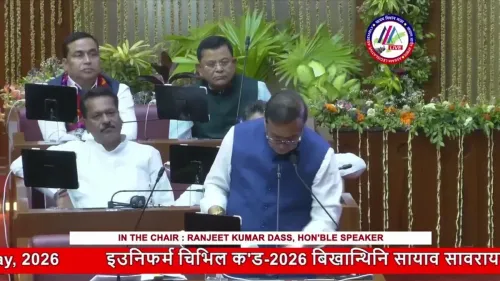
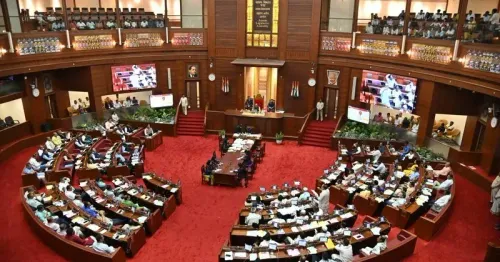
Assam Chief Minister Himanta Biswa Sarma announced on Wednesday, 27 May 2026 that the Assam Legislative Assembly was actively debating a bill to adopt the Uniform Civil Code (UCC), with a vote expected the same day. If passed, Assam would become the third state in India to adopt a uniform civil code.
Context
Sarma posted on X that 'discussion on the Uniform Civil Code is underway in the Assam Assembly,' adding that once passed, 'Assam will become the third state of our great nation to adopt the Uniform Civil Code.' The announcement marks a significant legislative moment for the state and for the broader national debate around personal law reform.
The Uniform Civil Code is envisioned under Article 44 of the Indian Constitution as a Directive Principle of State Policy, calling for a common set of laws governing marriage, divorce, inheritance, and adoption for all citizens regardless of religion. It has remained one of the most contested policy questions in Indian public life for decades.
Policy Backdrop
Uttarakhand became the first post-independence Indian state to enact a UCC through legislation passed in February 2024, setting a precedent that other BJP-governed states have since sought to follow. Goa is frequently cited as an existing example, having operated under a common civil code derived from Portuguese-era law since the 19th century.
The BJP's national election manifestos have repeatedly committed to implementing a UCC across India, framing it as a measure to advance gender justice and replace community-specific personal laws — such as those governing Muslim, Hindu, Christian, and Parsi communities separately — with a single, religion-neutral framework. Assam, under CM Sarma, has been one of the more active BJP-governed states in pursuing this agenda, alongside efforts such as the National Register of Citizens update.
Stakeholders and Impact
The bill's passage would directly affect all residents of Assam, cutting across religious communities in matters of personal law. Proponents argue the code would deliver uniform legal rights — particularly for women — on issues such as divorce, maintenance, and inheritance, removing disparities that exist under religion-specific statutes.
Critics and minority community representatives have historically raised concerns that a state-level UCC could encroach on religious freedoms guaranteed under Articles 25–28 of the Constitution. Legal observers have flagged the possibility of constitutional challenges before the Supreme Court of India once such legislation is enacted.
What's Next
Should the Assam Assembly pass the bill as anticipated, the state government will need to frame and notify implementation rules before the code takes practical effect — a process that took several months in Uttarakhand after its 2024 legislation. Judicial scrutiny at the Supreme Court level is widely expected, as petitions challenging the constitutional validity of state-level UCCs remain a live possibility.
The move could also accelerate similar legislative efforts in other BJP-ruled states, with Gujarat among those where UCC discussions have been reported. For CM Sarma, who also serves as convenor of the North-East Democratic Alliance (NEDA), the bill represents a high-profile delivery on a core party commitment ahead of the evolving political calendar in the north-east.
Point of View
If passed, would mark the most significant replication of Uttarakhand's 2024 precedent and signal that the BJP intends to normalise state-level UCC enactment as a template ahead of any central legislation. For CM Sarma, it consolidates his image as one of the party's most assertive implementers of ideological commitments at the state level. The move also raises the political stakes for opposition-governed states, which may face renewed pressure to articulate a clear counter-position on personal law reform. Longer term, the accumulation of state-level UCCs could either pre-empt or catalyse a national legislative effort, depending on how the Supreme Court receives the first round of constitutional challenges.
NationPress
10 Oct 2026
Frequently Asked Questions
What is the Uniform Civil Code and why is Assam debating it?
The Uniform Civil Code is a proposed common set of laws on marriage, divorce, inheritance, and adoption applicable to all citizens regardless of religion, envisioned under Article 44 of the Indian Constitution. Assam debated a bill on 27 May 2026 to enact it at the state level, following a similar move by Uttarakhand in February 2024.
Which states have already adopted the Uniform Civil Code in India?
Uttarakhand became the first post-independence state to legislate a UCC in February 2024. Goa has long operated under a common civil code derived from Portuguese-era law. Assam was positioned to become the third state if its assembly passed the bill on 27 May 2026.
What will the Assam UCC cover?
Like other UCC frameworks, the Assam bill is expected to govern personal law matters including marriage, divorce, inheritance, and adoption under a single religion-neutral code applicable to all residents of the state.
Can a state pass its own Uniform Civil Code, or does it require central legislation?
States can legislate on matters in the Concurrent List of the Constitution, and personal laws fall within legislative competence that states can exercise. However, such laws are subject to judicial review, and constitutional challenges before the Supreme Court of India are widely anticipated.
What happens after the Assam UCC bill is passed?
Once passed, the state government must frame and notify implementation rules before the code takes effect — a process that took several months in Uttarakhand after its 2024 legislation. Legal challenges in the Supreme Court are also expected.