Assam CM Himanta tables UCC Bill in state Assembly
Synopsis
The Chief Minister's Office of Assam announced the tabling of the Uniform Civil Code Bill in the state Assembly on 26 May 2026, calling it 'a historic step towards equality.' Assam becomes only the second Indian state after Uttarakhand to formally introduce UCC legislation, with opposition parties demanding wider consultation.
Key Takeaways
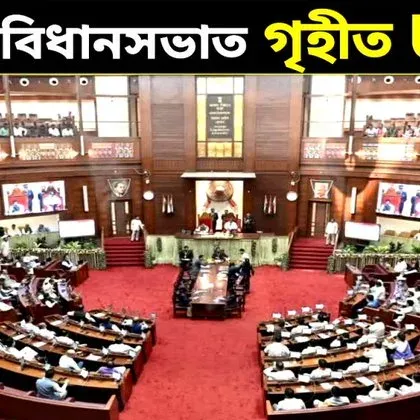
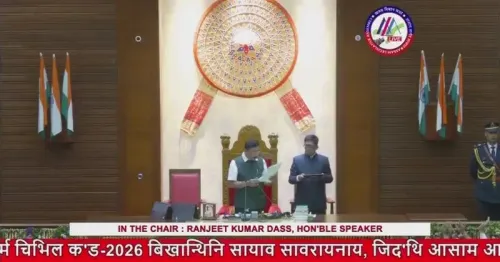
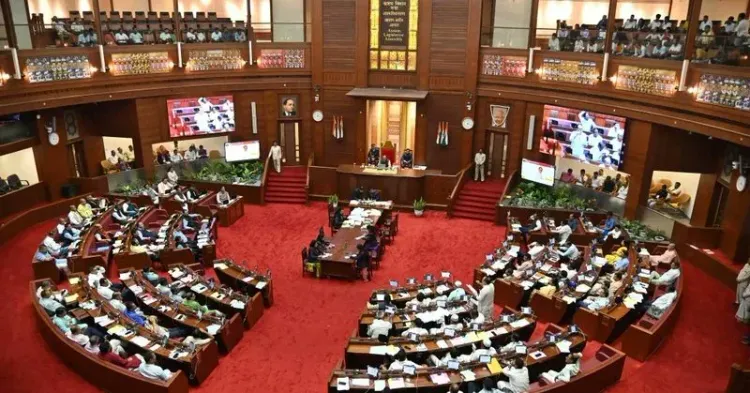
The Assam UCC Bill was tabled in the Assam Legislative Assembly on 26 May 2026 , during Day 3 of the ongoing session.
Assam becomes the second Indian state after Uttarakhand (which passed its UCC law in early 2024) to formally introduce such legislation.
The bill aims to replace religion-specific personal laws with a uniform statute on marriage, divorce, inheritance, and adoption.
The move is backed by the BJP -led state government under Chief Minister Himanta Biswa Sarma , fulfilling a key electoral commitment.
Opposition parties have called for wider consultation, including with religious and tribal communities, before the bill is debated.
Legal challenges before the Gauhati High Court or the Supreme Court are anticipated if the bill is passed.
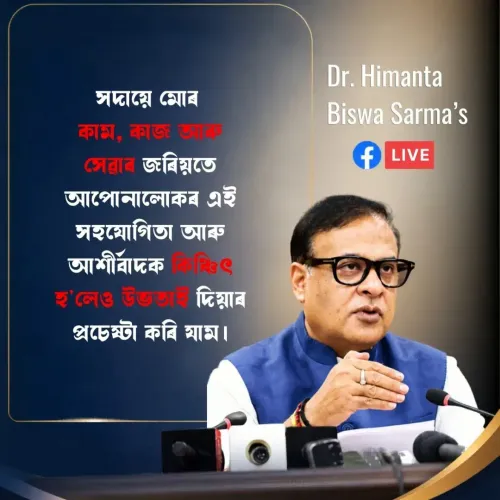
The Chief Minister's Office of Assam announced on Tuesday, 26 May 2026 that the Uniform Civil Code (UCC) Bill has been tabled in the Assam Legislative Assembly, describing the move as 'a historic step towards equality and legal uniformity.' The tabling makes Assam the second Indian state after Uttarakhand to formally introduce UCC legislation in its legislature.
Context
The UCC Bill was introduced during the ongoing session of the Assam Legislative Assembly, on Day 3 of the session. The official post from the Chief Minister's Office framed the legislation as a step toward equality, signalling the Bharatiya Janata Party-led state government's intent to replace religion-specific personal laws with a uniform statute governing marriage, divorce, inheritance, and adoption. Opposition parties have sought wider consultation before the bill is taken up for debate.
Chief Minister Himanta Biswa Sarma, who has led the BJP government in Assam since 2021, has been a vocal advocate of the UCC. The bill's tabling translates a long-standing electoral promise into a legislative reality for the state.
Policy Backdrop
Article 44 of the Indian Constitution, a Directive Principle of State Policy, has since 1950 directed the State to secure a Uniform Civil Code for citizens. For decades the provision remained aspirational, with Goa standing as India's only de facto uniform personal law regime, inherited from its Portuguese-era civil code after integration in 1961.
The Muslim Women (Protection of Rights on Marriage) Act, 2019 — which criminalised instant triple talaq — marked an early legislative move toward gender-equal personal laws at the national level. Uttarakhand then enacted India's first state-level UCC law in early 2024, paving the procedural path that Assam is now following. Similar preparatory exercises have been announced in Gujarat and Madhya Pradesh.
Stakeholders and Impact
Proponents argue the legislation will bring legal parity to women across all religious communities by replacing personal laws that critics say treat women unequally in matters of divorce, inheritance, and guardianship. Religious community organisations and civil society groups are expected to scrutinise the bill's specific provisions closely once the text is made public.
Opposition parties in the Assembly have demanded broader consultation — including with religious and tribal communities — before the bill proceeds to a vote. Tribal groups in Assam and the broader Northeast have historically sought exemptions from uniform civil legislation, citing the protection of customary laws under the Constitution's Sixth Schedule.
What's Next
The bill is expected to be taken up for clause-by-clause debate in the ongoing Assembly session. Legal experts and opposition members may push for referral to a select committee or an all-party consultation panel. Should the bill be passed, challenges before the Gauhati High Court or the Supreme Court of India are widely anticipated from multiple stakeholders.
Assam's move will add pressure on other BJP-governed states that have signalled intent to enact similar legislation, potentially accelerating the national conversation around a central UCC framework ahead of future electoral cycles.
Point of View
Building on Uttarakhand's 2024 precedent and the 2019 triple talaq ban. By framing the move around 'equality,' the Sarma government is attempting to shift the UCC debate from a religious-identity contest to a gender-rights argument — a politically calculated reframing. The opposition's demand for wider consultation signals that the bill's passage will be contentious, particularly given Assam's diverse tribal and religious demographics and the constitutional protections those communities enjoy. How the state handles Sixth Schedule exemptions will be the legislative stress test that other states and the Centre will watch closely.
NationPress
11 Oct 2026
Frequently Asked Questions
What is the Assam UCC Bill?
The Assam Uniform Civil Code Bill proposes a single set of personal laws covering marriage, divorce, inheritance, and adoption for all citizens of Assam regardless of their religion, replacing the current system of separate religion-specific personal laws.
Which states have UCC laws in India?
As of 2026, Uttarakhand is the first state to have enacted a UCC law (in early 2024), and Assam has now tabled a similar bill in its Assembly. Goa has long had a uniform civil code inherited from its Portuguese-era legislation.
What does Article 44 of the Indian Constitution say about UCC?
Article 44 is a Directive Principle of State Policy that directs the State to endeavour to secure a Uniform Civil Code for all citizens across India. It is not a justiciable right but a guiding principle for lawmakers.
Why are opposition parties opposing the Assam UCC Bill?
Opposition parties in the Assam Assembly have sought wider consultation — particularly with religious minorities and tribal communities — before the bill is debated and voted upon, citing concerns about the bill's impact on customary laws protected under the Constitution's Sixth Schedule.
Will tribal communities in Assam be exempt from the UCC?
This remains a key point of contention. Tribal groups in Assam and the Northeast have sought exemptions from uniform civil legislation, arguing their customary laws are protected under the Sixth Schedule of the Constitution. The specific provisions of the Assam bill on this issue have not yet been made fully public.