CM Himanta: Assam passes UCC in first month of new term
Synopsis
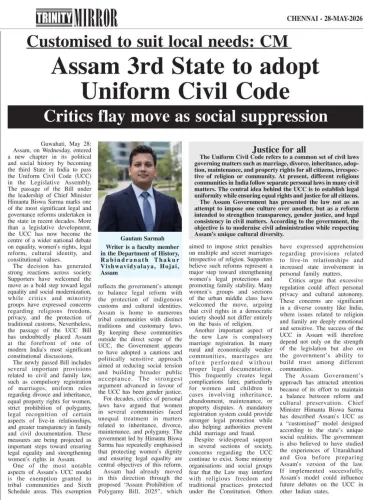
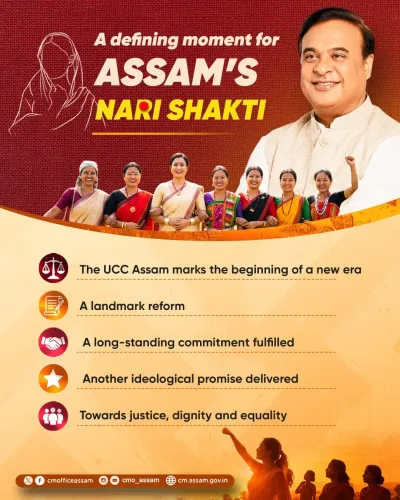
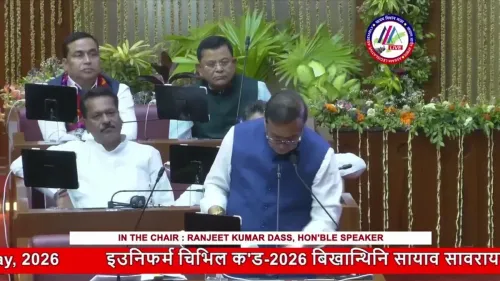
Assam CM Himanta Biswa Sarma announced via Facebook Live on 14 June 2026 that the Uniform Civil Code has been passed in the Assam Legislative Assembly within the first month of the new government term, calling it a milestone for social justice in the state.
Key Takeaways
CM Himanta Biswa Sarma made the announcement during a Facebook Live session on 14 June 2026 .
The Uniform Civil Code (UCC) was reportedly passed in the Assam Legislative Assembly within the first month of the new government term.
CM Sarma described the passage as 'an important milestone' and 'a significant step towards strengthening social justice in Assam.' Uttarakhand was the first Indian state to enact a state-level UCC, in February 2024 , establishing the legislative precedent Assam has now followed.
Assam's distinct demographic profile — including Sixth Schedule tribal communities and significant religious minorities — will shape scrutiny of the law's provisions.
Legal challenges before the Gauhati High Court or Supreme Court are anticipated once the legislation is formally notified.
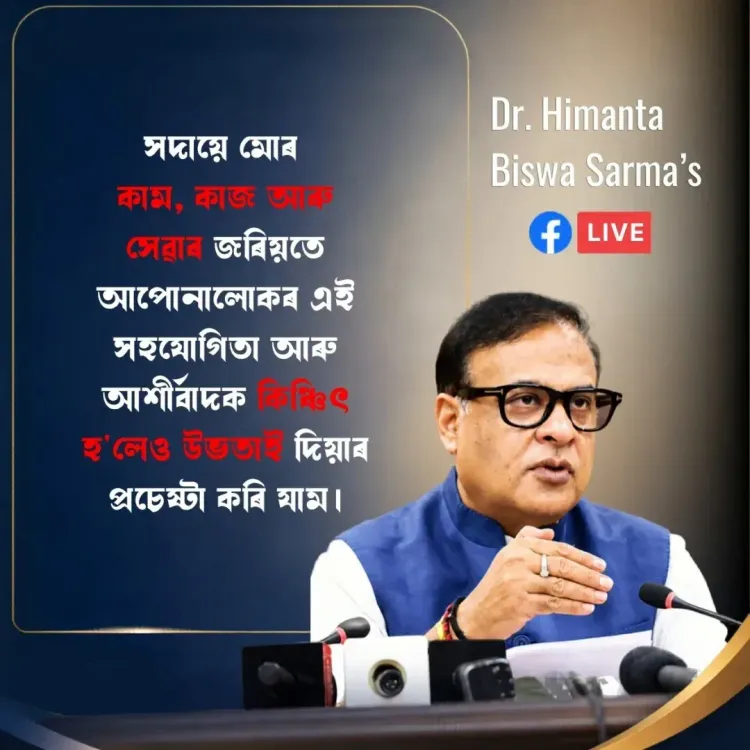
The Chief Minister's Office of Assam announced on Sunday, 14 June 2026 that Chief Minister Dr. Himanta Biswa Sarma used a Facebook Live session to declare that the state government has begun working with 'full dedication' to fulfil its commitments, highlighting the passage of the Uniform Civil Code (UCC) in the Assam Legislative Assembly within the first month of the new term.
Context
Speaking directly to citizens via Facebook Live, CM Himanta Biswa Sarma described the UCC's passage as 'an important milestone in the state's governance journey' and 'a significant step towards strengthening social justice in Assam.' The announcement signals the BJP-led government's intent to move swiftly on legislative commitments made during the election campaign.
The Chief Minister's Office framed the development as evidence of the administration's resolve, noting that work began immediately after the new term commenced rather than deferring major legislation to a later phase of governance.
Policy Backdrop
Article 44 of the Indian Constitution (1950) places the Uniform Civil Code among the Directive Principles of State Policy, directing the state to endeavour to secure a common set of civil laws for all citizens regardless of religion. The Bharatiya Janata Party has advocated UCC implementation as a core plank of its national policy platform since the 1980s.
Uttarakhand became the first Indian state to enact a state-level UCC in February 2024, setting a legislative precedent that multiple BJP-governed states have since examined. Assam's action, if confirmed, would represent a significant addition to this emerging pattern of state-level legislative initiatives on common civil laws.
Assam's demographic context adds complexity to the move. The state is home to indigenous tribal communities protected under the Sixth Schedule of the Constitution and substantial religious minority populations — factors that are likely to shape the specific provisions and exemptions within the legislation.
Stakeholders and Impact
The passage of a UCC in Assam would directly affect personal law matters — including marriage, divorce, inheritance, and adoption — currently governed by religion-specific codes for Hindu, Muslim, Christian and other communities. Women's rights groups have historically been among the strongest advocates for a uniform code, arguing it would close legal gaps that leave women in disadvantaged positions under certain personal law regimes.
Tribal communities in Assam, many of whom hold customary land and social rights under the Sixth Schedule, will be watching closely to see whether the enacted legislation carves out protections for their distinct customary practices. Religious minority groups are similarly expected to scrutinise the bill's provisions in detail once formally notified.
What's Next
The immediate focus will be on the official gazette notification of the UCC legislation and the framing of implementation rules. Legal observers anticipate that petitions challenging or seeking clarification on the law's scope may be filed before the Gauhati High Court or escalated to the Supreme Court of India. The government's handling of Sixth Schedule exemptions and minority community concerns will be closely tracked as the law moves from passage to enforcement.
CM Sarma's use of a public Facebook Live to communicate this milestone reflects a broader trend of state executives using direct digital outreach to build citizen awareness of legislative actions, bypassing traditional intermediaries and framing the narrative in real time.
Point of View
Assam joining Uttarakhand as a state-level UCC adopter strengthens the argument that a nationwide code is administratively feasible, not merely aspirational. The announcement's delivery via Facebook Live rather than a formal press conference reflects a calculated effort to own the narrative directly with voters before opposition framing can take hold. The real test, however, lies in the details: how the legislation handles Sixth Schedule tribal customary rights and minority personal law will determine whether the UCC becomes a governance achievement or a prolonged legal and political contest.
NationPress
14 Sept 2026
Frequently Asked Questions
What is the Uniform Civil Code passed in Assam?
The Uniform Civil Code (UCC) is a common set of civil laws — covering marriage, divorce, inheritance and adoption — intended to apply uniformly to all citizens regardless of religion, replacing separate religion-based personal law regimes. Assam's Legislative Assembly passed such a code in June 2026, according to CM Himanta Biswa Sarma.
Which was the first Indian state to pass a Uniform Civil Code?
Uttarakhand was the first Indian state to enact a state-level Uniform Civil Code, doing so in February 2024. Assam's passage in 2026 follows that precedent.
What does the UCC mean for tribal communities in Assam?
Assam has significant indigenous tribal populations protected under the Sixth Schedule of the Indian Constitution, which grants autonomy over customary practices. How the UCC legislation addresses these communities — through exemptions or specific provisions — remains a key question pending formal notification of the law.
Why did CM Himanta announce the UCC on Facebook Live?
CM Himanta Biswa Sarma used a Facebook Live session to communicate directly with citizens, a format that allows the government to frame major announcements without intermediary interpretation and reach a wide digital audience in real time.
Can the Assam UCC be challenged in court?
Yes. Legal experts anticipate that petitions may be filed before the Gauhati High Court or the Supreme Court of India once the legislation is formally notified, particularly regarding its applicability to Sixth Schedule communities and religious minority personal law matters.