CM Himanta calls UCC foundation of Indian culture, women's rights
Synopsis
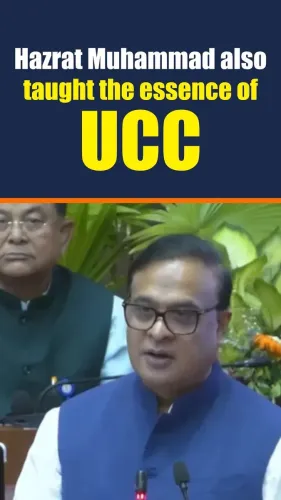
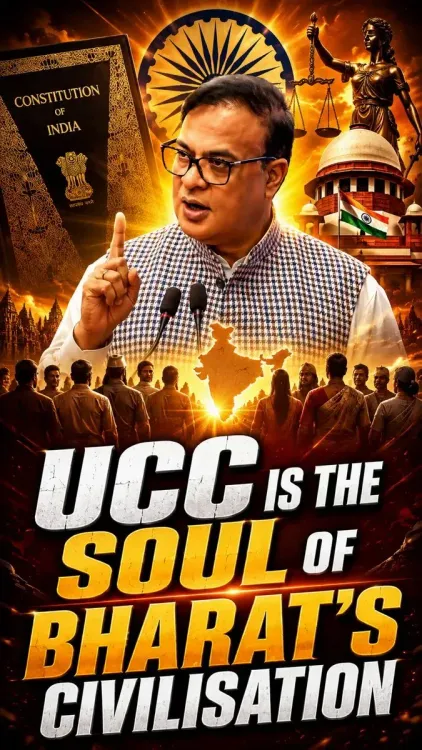
Assam Chief Minister Himanta Biswa Sarma on 27 May 2026 declared the Uniform Civil Code the foundational framework of Indian culture and a symbol of equal rights for women, signalling a renewed push for UCC legislation in Assam following Uttarakhand's landmark 2024 law.
Key Takeaways
CM Himanta Biswa Sarma on 27 May 2026 called the Uniform Civil Code the 'foundational framework of Indian culture' and a symbol of women's equal rights.
The post was tagged #UCCAssam , indicating a state-specific legislative intent.
The UCC is rooted in Article 44 of the Constitution of India (1950) , a Directive Principle urging a common civil law for all citizens.
Uttarakhand became the first state to pass a UCC law in post-independence India in 2024 , setting a legislative precedent.
The BJP has pledged UCC enactment in its 2014 and 2019 national election manifestos.
Analysts will watch for a formal UCC bill in the Assam Legislative Assembly and possible coordination with the central government.
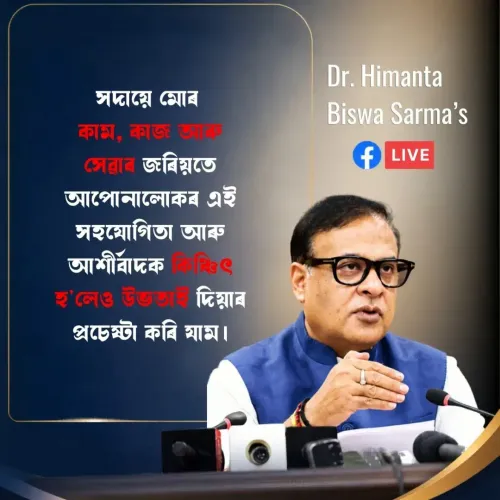
Assam Chief Minister Himanta Biswa Sarma on Wednesday, 27 May 2026, publicly championed the Uniform Civil Code (UCC), describing it as the bedrock of Indian civilisation and a symbol of equal rights and respect for women across the country. The statement, posted on his official X account under the hashtag #UCCAssam, signals a renewed push by the Bharatiya Janata Party (BJP)-led state government to advance UCC implementation in Assam.
Context
In his post, CM Sarma wrote: 'UCC bhartiya sanskriti ka buniyadi dhanca hai' ['UCC is the foundational framework of Indian culture'], adding that it represents 'the honour and equal rights of the nation's women.' The framing is deliberate — linking a contentious legal reform directly to constitutional values of gender justice rather than religious or communal discourse.
The Uniform Civil Code proposes a single set of civil laws governing marriage, divorce, inheritance, and adoption for all citizens, replacing the current patchwork of religion-based personal laws. Its roots lie in Article 44 of the Constitution of India (1950), a Directive Principle that instructs the State to endeavour to secure a UCC for all citizens.
Policy Backdrop
The BJP has carried the UCC promise in its election manifestos since 2014 and 2019, framing it as a measure of legal uniformity and women's empowerment. The policy gained concrete momentum when the Uttarakhand legislature became the first state assembly in post-independence India to pass a UCC law in 2024.
Following Uttarakhand's legislation, several other BJP-governed states initiated public consultations or constituted expert committees to examine state-level UCC frameworks. Assam, under CM Sarma's leadership, has been among the states most vocal in endorsing the reform. The Chief Minister's post reinforces that position and keeps the issue in public discourse ahead of any potential legislative action in Guwahati.
Stakeholders and Impact
Women stand as the central stated beneficiaries of the UCC push, with proponents arguing that uniform laws on marriage age, divorce rights, and inheritance would close gaps that disadvantage women under certain personal law regimes. Advocacy groups supporting the reform argue it fulfils a long-pending constitutional obligation.
Religious minority communities, however, have historically raised concerns that a uniform code could override distinct personal law traditions protected under the Constitution. Civil society organisations have called for wide consultation before any legislation is tabled. The debate around stakeholder inclusion is expected to intensify as state governments move from consultation to drafting.
What's Next
Observers will watch closely for the introduction of a formal UCC bill in the Assam Legislative Assembly, as well as any coordinated moves between the central government and BJP-ruled states toward model legislation or inter-state harmonisation of draft provisions. CM Sarma's role as convenor of the North-East Democratic Alliance (NEDA) also raises the possibility of the issue being taken up across the north-eastern region. The political and legislative trajectory of Assam's UCC process will be a key indicator of how far and how fast the nationwide reform agenda moves.
Point of View
Keeping the BJP's long-standing manifesto promise alive at the state level. By anchoring the UCC explicitly to women's rights and Indian cultural identity rather than to religious reform, the framing attempts to shift the debate away from minority-community concerns and toward constitutional obligation. As NEDA convenor, Sarma's endorsement could also nudge other north-eastern states into the conversation, broadening the political coalition behind the reform. The move fits a wider BJP pattern of advancing ideological priorities through state-level legislation ahead of any central law.
NationPress
12 Oct 2026
Frequently Asked Questions
What is the Uniform Civil Code and why is Assam discussing it?
The Uniform Civil Code is a proposed single set of civil laws on marriage, divorce, inheritance and adoption applicable to all citizens regardless of religion, replacing separate personal law systems. Assam CM Himanta Biswa Sarma has publicly advocated for its implementation in the state, most recently on 27 May 2026.
Has any Indian state already enacted a Uniform Civil Code?
Yes. Uttarakhand passed India's first post-independence state UCC law in 2024, becoming a legislative model for other BJP-governed states including Assam.
What does Article 44 of the Indian Constitution say about UCC?
Article 44 is a Directive Principle of State Policy that directs the State to endeavour to secure a Uniform Civil Code for all citizens across India. It has been part of the Constitution since 1950 but remains unimplemented at the national level.
How does the UCC affect women's rights in India?
Proponents argue a uniform code would close gaps in marriage age, divorce rights and inheritance that disadvantage women under certain personal law regimes, providing equal legal protection regardless of religion.
What is NEDA and what role does CM Himanta play in it?
The North-East Democratic Alliance (NEDA) is a BJP-led political alliance of parties governing north-eastern Indian states. CM Himanta Biswa Sarma is its convenor, giving him influence over the political agenda across the region.