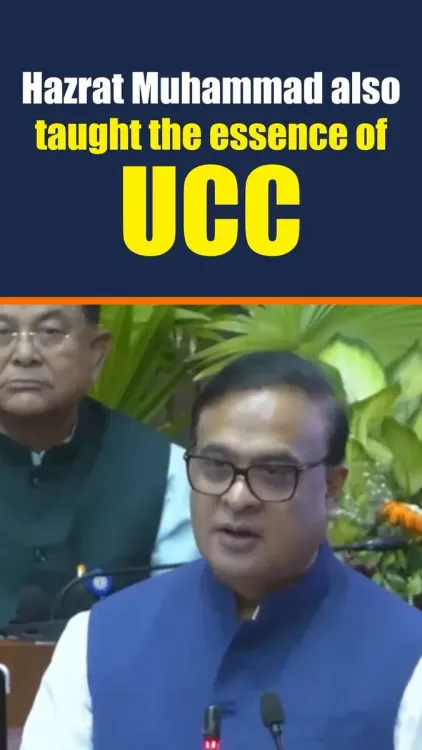
CM Himanta Says UCC Aligns With All Faiths
Synopsis
Assam Chief Minister Himanta Biswa Sarma has declared that the core essence of all religions aligns with the objectives of the Uniform Civil Code, deepening his government's push for UCC adoption in Assam and reinforcing the BJP's nationwide legislative strategy following Uttarakhand's landmark 2024 enactment.
Key Takeaways
Himanta Biswa Sarma stated on 27 May 2026 that the core essence of all religions aligns with the objectives of the Uniform Civil Code .
Uttarakhand became the first Indian state to pass a UCC law in February 2024 , serving as a legislative model.
The BJP has committed to the UCC in its election manifestos, anchoring it to Article 44 of the Constitution.
The UCC seeks uniform laws on marriage, divorce, inheritance, and adoption across all religious communities.
Assam has held public consultations on UCC, with a potential Assembly bill being the next legislative step.
Similar UCC discussions are under way in Gujarat and Madhya Pradesh , indicating a coordinated BJP state-level strategy.
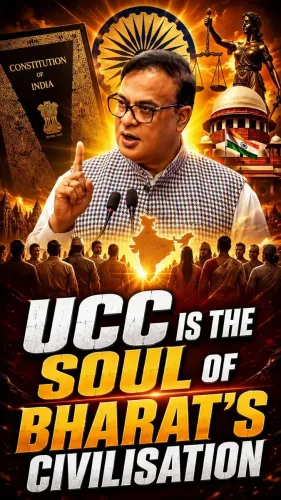
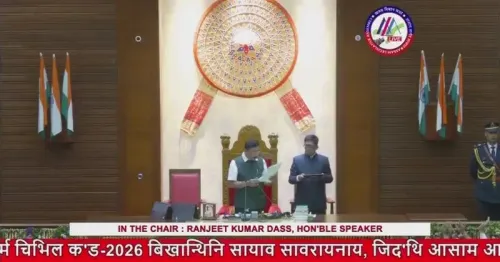
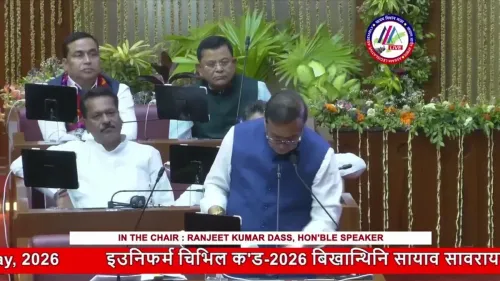
Assam Chief Minister Himanta Biswa Sarma on Wednesday, 27 May 2026, asserted that the core essence of other religions and faiths are also aligned with the overarching objectives of the Uniform Civil Code (UCC), signalling his government's continued push to build cross-community consensus around the proposed legislation.
Context
Sarma's statement comes as the BJP-led government in Assam has been conducting public consultations on introducing the UCC in the state. The Chief Minister has consistently framed the code not as a measure targeting any single community, but as a unifying legal framework compatible with the spiritual values shared across India's diverse religious traditions.
In the post, Sarma stated: 'The core essence of other religions and faiths are also aligned with the overarching objectives of the UCC.' The remark is notable for its conciliatory framing, seeking to pre-empt objections from minority communities who have historically viewed the UCC with suspicion.
Policy Backdrop
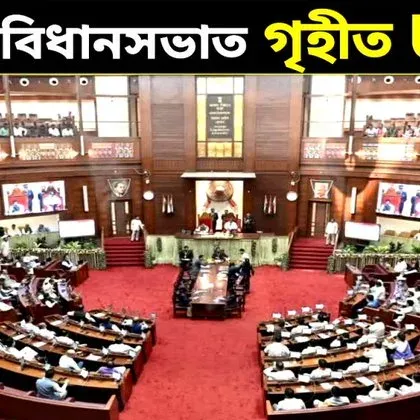
Uttarakhand became the first Indian state to enact a UCC law in February 2024, passing the Uniform Civil Code Bill in its Legislative Assembly and providing a legislative template for other BJP-ruled states. The BJP has included the UCC in its election manifestos — most notably in 2019 — anchoring it to Article 44 of the Constitution, a Directive Principle of State Policy that calls for a common civil code for all citizens.
The code seeks to replace religion-specific personal laws governing marriage, divorce, inheritance, and adoption with a single uniform statute. Proponents argue this advances gender justice and legal equality; critics from several religious communities contend it infringes on constitutionally protected religious freedoms.
Stakeholders and Impact
Women's groups have broadly welcomed the UCC's potential to equalise rights in matters of marriage and inheritance that are currently governed by unequal personal laws. Religious communities — particularly Muslim personal law bodies and some tribal organisations in the North-East — have raised concerns about the erosion of customary practices protected under the Constitution.
Sarma's framing that 'the core essence' of all faiths aligns with UCC objectives appears designed to address those concerns directly, positioning the code as spiritually consonant rather than culturally disruptive. Assam's demographic complexity, with significant Muslim, Hindu, tribal, and Christian populations, makes this messaging particularly consequential.
What's Next
The immediate question is whether Assam will introduce a UCC bill in the state Assembly, following Uttarakhand's lead. Parallel discussions have been reported in Gujarat and Madhya Pradesh, suggesting a coordinated BJP strategy to expand state-level UCC adoption ahead of any central legislation. Any bill tabled in Guwahati would likely face scrutiny in the Gauhati High Court and potentially the Supreme Court, particularly over its applicability to constitutionally protected tribal customary laws in the region.
Point of View
He is attempting to shift the debate from legal imposition to moral consensus. This mirrors the BJP's broader pattern of framing UCC as a gender-justice and national-unity measure rather than a majoritarian project. With Uttarakhand's law already operational, Assam's next legislative move will be a significant test of whether this messaging translates into durable cross-community support in a state with complex demographic and tribal dynamics.
NationPress
13 Oct 2026
Frequently Asked Questions
What is the Uniform Civil Code and why is it in the news?
The Uniform Civil Code is a proposed common set of laws governing marriage, divorce, inheritance, and adoption for all citizens regardless of religion, as envisioned under Article 44 of the Constitution. It is in the news because Assam Chief Minister Himanta Biswa Sarma has stated that the core essence of all religions aligns with the UCC's objectives, signalling a fresh push for its adoption in Assam.
Has any Indian state already enacted a Uniform Civil Code?
Yes. Uttarakhand became the first Indian state to enact a UCC law in February 2024, when its Legislative Assembly passed the Uniform Civil Code Bill. It serves as a legislative template for other BJP-ruled states including Assam.
What is Himanta Biswa Sarma's position on the UCC?
Himanta Biswa Sarma, Assam Chief Minister and senior BJP leader, supports the Uniform Civil Code and has framed it as compatible with the values of all religious communities. His government has conducted public consultations on introducing the UCC in Assam.
Does the UCC apply to tribal communities in Assam and the North-East?
This is a key legal question. Several tribal communities in the North-East have constitutionally protected customary laws, and any UCC legislation in Assam would likely face legal challenges over its applicability to these groups, potentially reaching the Gauhati High Court or the Supreme Court.
Which other states are considering a Uniform Civil Code?
Besides Assam, discussions on introducing state-level UCC legislation have been reported in Gujarat and Madhya Pradesh, suggesting a coordinated BJP strategy to expand UCC adoption across states following Uttarakhand's enactment.