CM Himanta's Assam Enacts UCC, Becomes Third Indian State
Synopsis
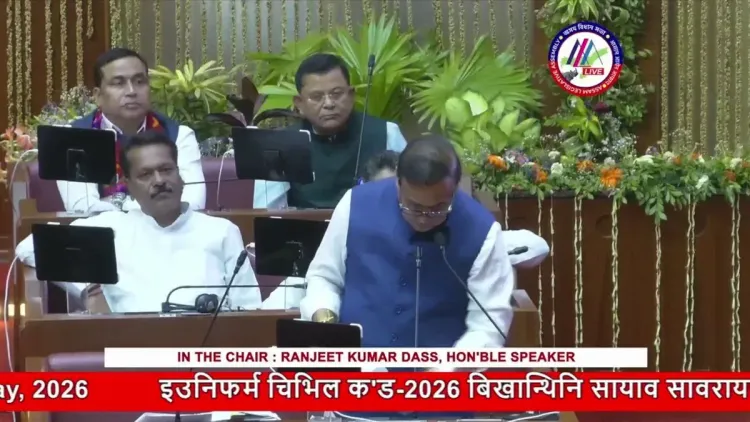
Assam Chief Minister Himanta Biswa Sarma declared on May 27, 2026 that Assam has enacted the Uniform Civil Code, becoming the third Indian state to do so. The move fulfils Article 44 of the Constitution and a longstanding BJP electoral promise, following Uttarakhand's landmark 2024 legislation.
Key Takeaways
Assam has enacted the Uniform Civil Code (UCC) , announced by CM Himanta Biswa Sarma on May 27, 2026 .
Assam is described as the third Indian state to enact UCC legislation, after Goa (de facto, since 1961) and Uttarakhand (February 2024).
The enactment fulfils Article 44 of the Indian Constitution, a Directive Principle that has remained unimplemented at the national level for over 70 years.
The move delivers on a BJP electoral promise made to Assam voters and aligns with the party's national manifesto commitments of 2014 and 2019 .
Assam's diverse religious and tribal populations make implementation — and any exemptions — a critical area to watch.
As NEDA convenor, CM Sarma's move could prompt similar legislative action across other BJP -governed northeastern states.
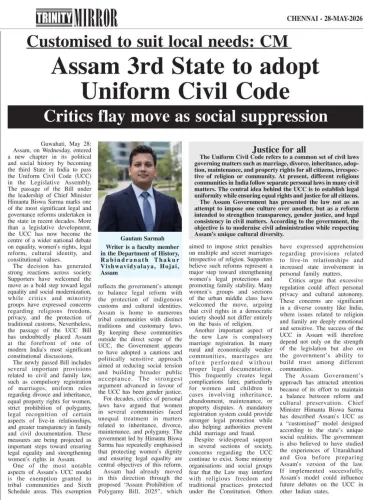
Assam Chief Minister Himanta Biswa Sarma announced on Wednesday, May 27, 2026, that Assam has enacted the Uniform Civil Code (UCC), declaring it a 'watershed moment' in the state's history and positioning Assam as the third Indian state to pass such legislation.
Context
In a post on X, CM Sarma described the enactment as fulfilling three simultaneous commitments: Article 44 of the Indian Constitution, the founding ideals of the Bharatiya Janata Party (BJP), and the party's electoral promise to the people of Assam. The announcement marks a significant legislative milestone for the BJP-governed northeastern state, which has been under the party's rule since 2016.
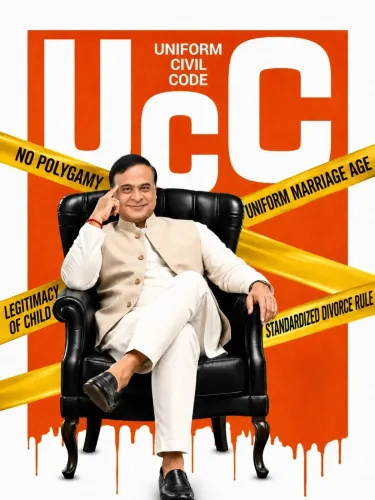
The UCC seeks to replace religion-based personal laws with a common statutory framework governing marriage, divorce, inheritance, and adoption for all citizens regardless of faith. CM Sarma framed the move as honouring the 'desire of the founding fathers of our nation.'
Policy Backdrop
Article 44 of the Constitution of India (1950) lists a uniform civil code among the Directive Principles of State Policy, directing the state to secure uniform civil laws for all citizens — a provision that has remained aspirational at the national level for over seven decades.
Goa has long been cited as India's only existing example of a uniform civil code, having retained its Portuguese Civil Code of 1867 after liberation in 1961. The contemporary legislative push began in earnest when Uttarakhand passed its Uniform Civil Code Bill in February 2024, becoming the first post-independence state to enact such a statute. Assam's enactment now places it alongside Uttarakhand among the earliest modern adopters. The BJP had pledged UCC implementation in its 2014 and 2019 national manifestos, making state-level enactments a visible demonstration of that commitment.
Stakeholders and Impact
Assam is home to a diverse mix of religious communities and tribal populations, making the UCC's application particularly consequential. Proponents argue the code advances gender justice by standardising rights in personal matters such as inheritance and divorce across communities. Critics and minority rights groups have historically raised concerns about the erosion of community-specific customs and protections.
Tribal communities in the northeast have been a particular focus of debate, as many states in the region have sought exemptions for customary tribal laws. How Assam's UCC addresses these communities will be closely watched by neighbouring states and civil society groups alike.
What's Next
Attention will now turn to the implementation rules, rollout timelines, and the potential for legal challenges to the Assam UCC in the courts. The enactment is also likely to renew pressure on other BJP-governed states — particularly in the northeast, where CM Sarma serves as convenor of the North-East Democratic Alliance (NEDA) — to pursue similar legislation.
With a general election cycle on the horizon, Assam's move could accelerate parallel legislative efforts across the country, intensifying the national conversation around federal competence over personal laws, secularism, and uniform rights for women.
Point of View
Reinforcing his standing as one of the BJP's most proactive regional executives. By framing the law as simultaneously constitutional, ideological, and electoral in nature, Sarma is projecting Assam as a model for other BJP-governed states. The move also consolidates his influence within the northeast through NEDA, where he can now point to a concrete legislative achievement. Coming ahead of the next election cycle, it sharpens the BJP's UCC narrative at the state level even as the national legislation remains pending.
NationPress
10 Oct 2026
Frequently Asked Questions
Which states have enacted the Uniform Civil Code in India?
Goa has a de facto uniform civil code through its retained Portuguese Civil Code of 1867 . Uttarakhand became the first post-independence state to pass a UCC statute in February 2024 . Assam followed in May 2026 , becoming the third state to enact such legislation.
What is Article 44 of the Indian Constitution?
Article 44 is a Directive Principle of State Policy that directs the state to secure a Uniform Civil Code for all citizens of India. It has been part of the Constitution since 1950 but has not been implemented as a national law.
What does the Uniform Civil Code mean for Assam's tribal communities?
The UCC's application to Assam's tribal communities is a key concern, as many tribal groups follow customary personal laws. The specific provisions and any exemptions under the Assam UCC will determine its impact on these communities.
Why is Himanta Biswa Sarma calling the UCC a watershed moment for Assam?
CM Himanta Biswa Sarma described it as a watershed moment because the enactment fulfils Article 44 of the Constitution, aligns with BJP's founding ideals, and delivers on a direct electoral promise made to Assam voters — three distinct commitments addressed through a single legislation.
What happens after Assam enacts the UCC?
After enactment, the focus shifts to implementation rules, rollout timelines, and potential court challenges. The development may also prompt other BJP -governed states, particularly in the northeast, to pursue similar legislation before the next general election.