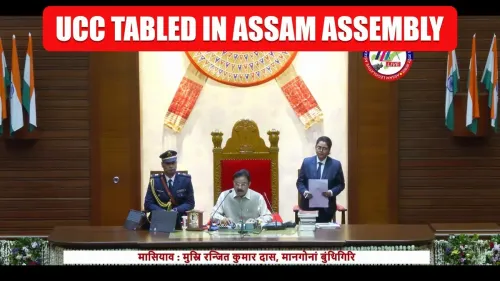
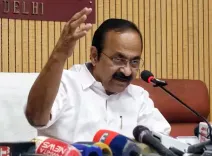
CM Himanta introduces UCC Bill in Assam Assembly
Synopsis
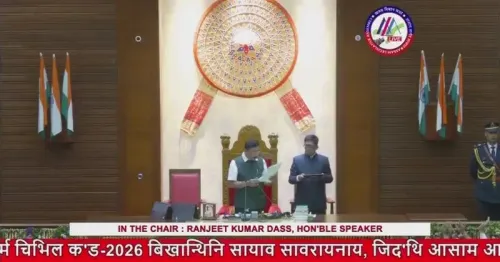
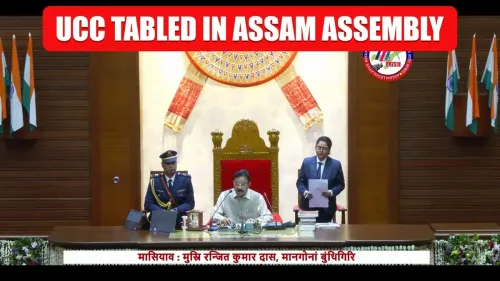
Chief Minister Himanta Biswa Sarma introduced the Uniform Civil Code Bill in the Assam Legislative Assembly during the first session of the newly elected government, framing it as a guarantee of justice and equality for all citizens of the state.
Key Takeaways
CM Himanta Biswa Sarma introduced the Uniform Civil Code Bill in the Assam Legislative Assembly on 26 May 2026 .
The Bill was tabled in the very first session of the new Assam government, signalling it as a top legislative priority.
The UCC aims to replace religion-specific personal laws on marriage, divorce, inheritance, and adoption with a common framework for all citizens.
Assam follows Uttarakhand as among the first BJP-governed states to advance state-level UCC legislation.
The Bill must clear committee review, floor debates, and a final vote before it can become law, with potential legal challenges expected in the Gauhati High Court .
Tribal and indigenous communities in Assam are expected to raise concerns about the impact on customary laws during legislative proceedings.
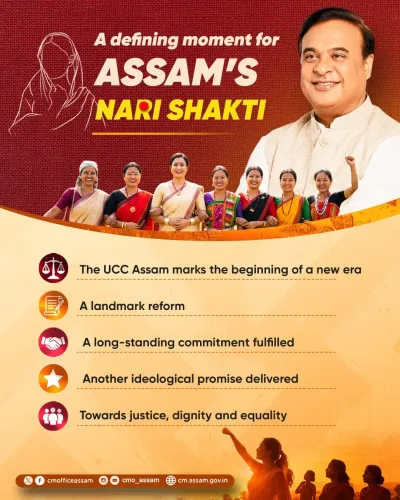
The Chief Minister's Office of Assam announced on Tuesday, 26 May 2026 that Chief Minister Dr. Himanta Biswa Sarma has introduced the Uniform Civil Code (UCC) Bill in the Assam Legislative Assembly during the first session of the newly elected government, framing the move as a step to safeguard the rights and ensure justice and equality for all citizens of the state.
Context
Addressing the significance of the timing, CM Himanta Biswa Sarma stated: 'We are proud that in the very first Assembly session of the new government, we introduced the Uniform Civil Code Bill to safeguard the rights and ensure justice and equality for all citizens.' The choice to table the Bill in the inaugural session signals the administration's intent to treat legal uniformity as a legislative priority from the outset of its new term.
The Uniform Civil Code seeks to replace religion-specific personal laws — governing marriage, divorce, inheritance, and adoption — with a single, common framework applicable to all citizens regardless of religious identity. Proponents argue it fulfils the constitutional directive under Article 44, which lists a UCC among the Directive Principles of State Policy.
Policy Backdrop
The Bharatiya Janata Party (BJP), which governs Assam, has carried the UCC as a central plank in its national manifestos since 2014, committing to enact such a code as part of a broader agenda of legal equality and national integration. Assam's move follows a comparable trajectory set by Uttarakhand, which in December 2022 constituted an expert committee to draft the first state-level UCC after independence — a process that culminated in legislation there.
Several other BJP-governed states, including Gujarat, have publicly examined or signalled intent to advance uniform personal law frameworks, making Assam's Bill part of a wider pattern of state-level action ahead of any central legislation on the subject.
Stakeholders and Impact
The Bill, if passed, would affect all residents of Assam — a state with a diverse religious and ethnic composition, including significant Muslim, Hindu, tribal, and indigenous communities. Women's groups have historically been among the most engaged stakeholders in UCC debates, with many advocacy organisations arguing that a uniform code could strengthen protections against discriminatory personal law provisions on divorce and inheritance.
At the same time, tribal and indigenous community leaders in the Northeast have in past discussions raised concerns about the potential impact of a uniform code on customary laws that govern community land rights, inheritance, and marriage practices — issues that are expected to surface during floor debates in Dispur.
What's Next
The Bill's introduction marks only the first procedural step; it must pass through committee scrutiny, floor debates, possible amendments, and a final vote in the Assam Legislative Assembly before it can receive the Governor's assent and become law. Legal experts anticipate that any enacted legislation could subsequently face challenges before the Gauhati High Court, particularly on questions of constitutional competence and the protection of customary tribal rights.
The progression of Assam's UCC Bill will be closely watched as a potential template — or a cautionary case — for other states and for any future central government effort to enact a nationwide Uniform Civil Code.
Point of View
Placing legal uniformity at the very top of Assam's legislative agenda rather than deferring it to a later, less scrutinised window. The move aligns Assam with the BJP's long-standing national commitment under Article 44, while also positioning the state as a frontrunner alongside Uttarakhand in translating that commitment into actual statute. The real test, however, lies in the legislative details: how the Bill addresses the rights of Assam's numerically significant tribal and indigenous communities will determine both its legal durability and its political reception. The Bill's passage or stalling will send a clear signal about the feasibility of state-level UCC implementation ahead of any prospective central legislation.
NationPress
10 Oct 2026
Frequently Asked Questions
What is the Uniform Civil Code Bill introduced in Assam?
The Uniform Civil Code Bill introduced in the Assam Assembly proposes to replace religion-specific personal laws on marriage, divorce, inheritance, and adoption with a single common legal framework applicable to all citizens of Assam, regardless of their religious identity.
Who introduced the UCC Bill in Assam Assembly?
Chief Minister Dr. Himanta Biswa Sarma, representing the BJP government in Assam, introduced the Uniform Civil Code Bill in the Assam Legislative Assembly during the first session of the newly elected government in May 2026.
Which Indian states have a Uniform Civil Code?
Uttarakhand became the first Indian state after independence to enact a Uniform Civil Code, following an expert committee constituted in December 2022. Assam has now introduced a UCC Bill in its Assembly, making it among the earliest states to pursue similar legislation.
Does the Uniform Civil Code affect tribal communities in Assam?
Tribal and indigenous community leaders in the Northeast have raised concerns that a uniform code could affect customary laws governing land rights, inheritance, and marriage practices. How the Assam Bill addresses these concerns is expected to be a central issue in floor debates.
What happens after the UCC Bill is introduced in the Assam Assembly?
After introduction, the Bill must go through committee scrutiny, floor debates, possible amendments, and a final vote in the Assam Legislative Assembly. If passed and given the Governor's assent, it could still face legal challenges in the Gauhati High Court.