Assam tables Uniform Civil Code Bill 2026 in Assembly
Synopsis
Assam tabled the Uniform Civil Code Bill 2026 in its state assembly on 25 May 2026, with Minister Atul Bora presenting the legislation on behalf of Chief Minister Himanta Biswa Sarma. The move follows Uttarakhand's 2024 UCC enactment and continues a BJP-led state-level legislative trend anchored in Article 44 of the Constitution.
Key Takeaways
The Uniform Civil Code Bill 2026 was tabled in the Assam Legislative Assembly on 25 May 2026 .
Minister Atul Bora presented the bill on behalf of Chief Minister Dr Himanta Biswa Sarma .
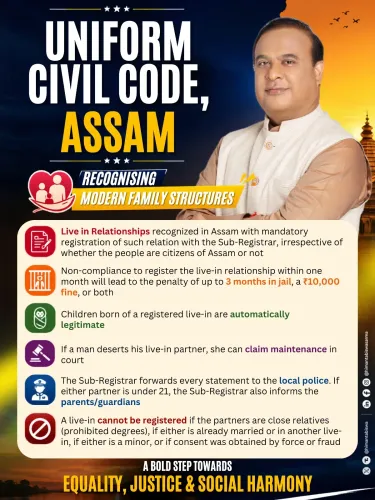
The bill proposes uniform rules on marriage, divorce, inheritance, and adoption for all Assam residents regardless of religion.
Uttarakhand enacted India's first state-level UCC in February 2024 , serving as a legislative precedent.
Article 44 of the Indian Constitution directs the State to secure a Uniform Civil Code for all citizens.
The bill will now face assembly debate, possible select committee review, and potential legal scrutiny in the Gauhati High Court .
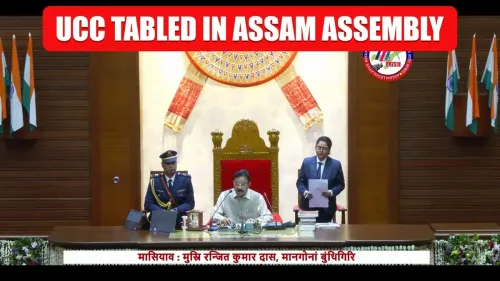
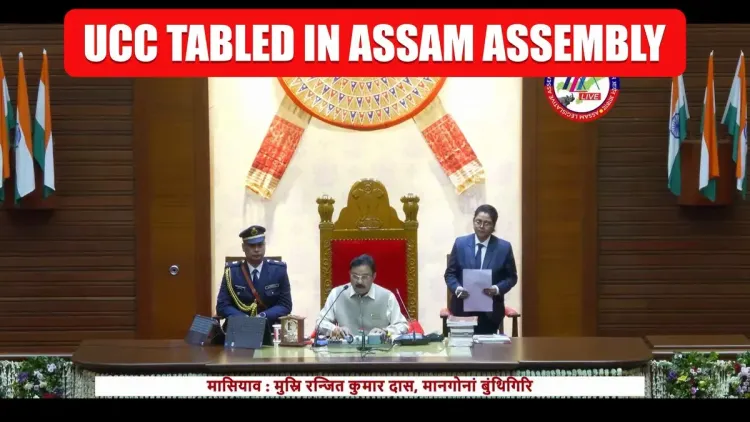
The Chief Minister's Office of Assam announced on Monday, 25 May 2026, that the Uniform Civil Code Bill 2026 was tabled in the Assam Legislative Assembly, with Minister Atul Bora presenting the legislation on behalf of Chief Minister Dr Himanta Biswa Sarma.
Context
The CMO's post confirmed that Hon'ble Minister Shri Atul Bora tabled the bill in the state legislature, acting on behalf of Chief Minister Dr Himanta Biswa Sarma. The tabling marks the formal entry of the proposed legislation into the legislative process of the unicameral Assam Legislative Assembly, where it will now be subject to debate and scrutiny by elected members.
Atul Bora is a senior cabinet minister in the Assam government, previously having held portfolios including agriculture and animal husbandry. His role in tabling the bill underscores the collective cabinet ownership of this legislation.
Policy Backdrop
Article 44 of the Indian Constitution (1950) places a Uniform Civil Code among the Directive Principles of State Policy, directing the State to endeavour to secure uniform rules on marriage, divorce, inheritance, and adoption for all citizens regardless of religion. The provision has remained a subject of political and legal debate for over seven decades.
The 21st Law Commission of India released a consultation paper in 2018 examining the feasibility of a UCC, without arriving at a definitive recommendation. In 2023, Chief Minister Himanta Biswa Sarma publicly committed to introducing a Uniform Civil Code in Assam, signalling the state government's legislative intent well in advance of the current session.
Uttarakhand became the first Indian state to enact a UCC statute in February 2024, setting a legislative precedent that several BJP-governed states, including Assam, have cited as a reference point. Assam's move continues this state-level legislative trend while operating within the framework of concurrent personal-law subjects under the Constitution.
Stakeholders and Impact
The proposed legislation, if enacted, would apply uniform rules on personal matters — including marriage, divorce, inheritance, and adoption — to all residents of Assam irrespective of their religion. Women's rights groups have broadly welcomed UCC proposals as a step toward gender equality, arguing that existing personal laws in some communities place women at a disadvantage.
Religious communities, particularly minorities, have raised questions about the scope of such legislation and its potential impact on faith-based personal practices. Civil society organisations are expected to engage with the bill during assembly debates. Assam's initiative also intersects with the state's existing focus on citizenship documentation and demographic policy, adding a layer of political significance to the legislative exercise.
What's Next
The bill's progress through assembly debates, possible referral to a select committee, and any subsequent legal challenges in the Gauhati High Court will be closely watched. Parallel developments in other BJP-governed states and any statements from the central government on model UCC provisions are also expected to shape the broader national conversation.
How the Assam Legislative Assembly deliberates on the bill — and whether it proceeds to passage in the current session or is referred for wider consultation — will determine the pace at which Assam joins Uttarakhand as a state with an enacted UCC framework.
Point of View
Building on the template established by Uttarakhand in 2024. Chief Minister Himanta Biswa Sarma has consistently positioned Assam as a frontrunner in administrative and social legislation, and the UCC bill fits squarely within that political identity. The move is likely to sharpen the ideological contrast with opposition parties ahead of future electoral cycles in the state. Whether the bill passes intact, is amended through committee review, or faces judicial challenge will set a precedent for other states watching closely.
NationPress
9 Oct 2026
Frequently Asked Questions
What is the Uniform Civil Code Bill 2026 in Assam?
The Uniform Civil Code Bill 2026 is a proposed Assam state law that would apply uniform rules on marriage, divorce, inheritance, and adoption to all residents of the state regardless of their religion. It was tabled in the Assam Legislative Assembly on 25 May 2026.
Who tabled the UCC Bill in the Assam assembly?
Senior cabinet minister Atul Bora tabled the Uniform Civil Code Bill 2026 in the Assam Legislative Assembly on behalf of Chief Minister Dr Himanta Biswa Sarma on 25 May 2026.
Which was the first Indian state to pass a Uniform Civil Code?
Uttarakhand was the first Indian state to enact a Uniform Civil Code statute, doing so in February 2024, ahead of Assam's 2026 legislative move.
What does Article 44 of the Indian Constitution say about UCC?
Article 44, a Directive Principle of State Policy, directs the State to endeavour to secure a Uniform Civil Code for all citizens across India, though it is not a justiciable right.
What happens after the UCC Bill is tabled in the Assam assembly?
After tabling, the bill will be debated by members of the Assam Legislative Assembly and may be referred to a select committee for detailed review before being put to a vote. It could also face legal challenges in the Gauhati High Court if enacted.