Assam CM Himanta Biswa Sarma on UCC passage and Eid
Synopsis
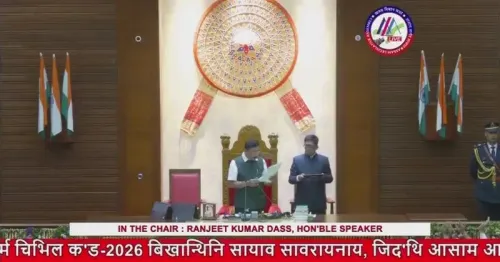
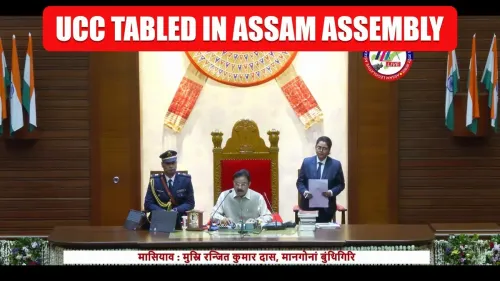
The Assam Legislative Assembly passed the Uniform Civil Code, Assam on 27 May 2026. Chief Minister Dr. Himanta Biswa Sarma thanked all MLAs for their support and acknowledged Eidgah committees for refraining from cow qurbani during Eid, signalling both legislative resolve and communal outreach.
Key Takeaways
The Assam Legislative Assembly passed the Uniform Civil Code, Assam on 27 May 2026 .
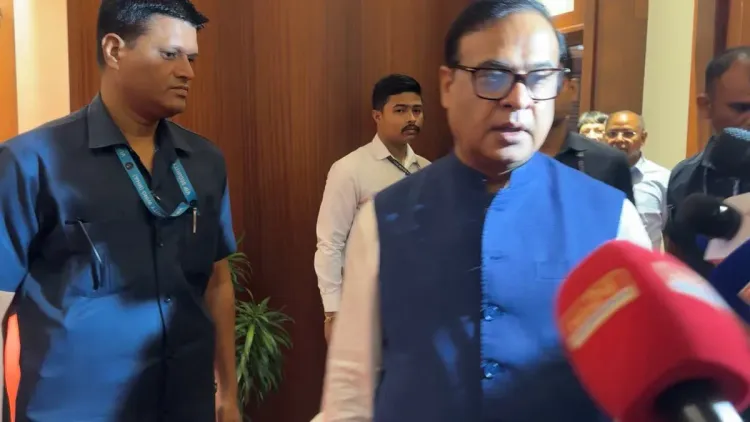
Himanta Biswa Sarma addressed the media immediately after the vote and thanked all MLAs for supporting the bill.
The CM separately acknowledged Eidgah committees for refraining from cow qurbani during Eid, framing it as an act of communal goodwill.
Assam follows Uttarakhand , which enacted India's first state-level UCC in February 2024 .
The code, rooted in Article 44 of the Constitution, aims to replace religion-specific personal laws on marriage, divorce, inheritance and adoption.
Next steps include rules-framing by the state government and potential legal challenges before the Gauhati High Court or Supreme Court .
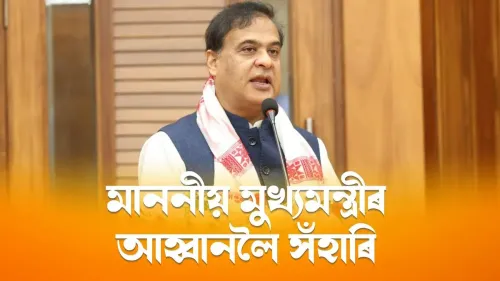
The Chief Minister's Office of Assam announced on Wednesday, 27 May 2026 that Chief Minister Dr. Himanta Biswa Sarma addressed the media following the passage of the Uniform Civil Code, Assam in the Assam Legislative Assembly. The CM expressed gratitude to all MLAs for supporting the adoption of the legislation and separately acknowledged Eidgah committees for refraining from cow qurbani during Eid.
Context
The Assam Legislative Assembly passed the Uniform Civil Code, Assam bill, making Assam one of the early Indian states to enact such legislation. Speaking to the media after the vote, Dr. Himanta Biswa Sarma thanked every member of the House who backed the measure. The CM's remarks underlined the government's view that the code represents a step toward uniform personal laws for all residents of the state, irrespective of religion.
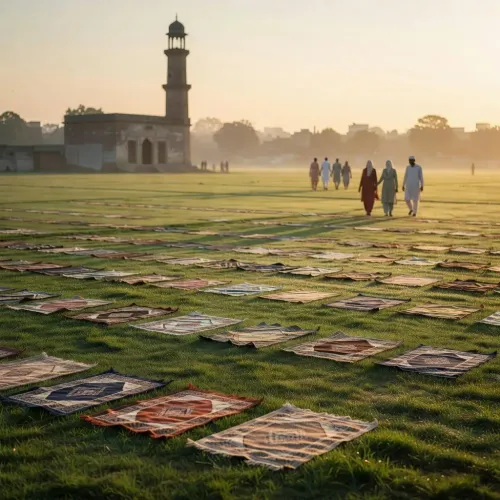
In the same address, Dr. Sarma also acknowledged 'various Eidgah committees' for refraining from cow qurbani during Eid, a gesture the Chief Minister presented as an example of communal goodwill. The two acknowledgements — one legislative, one social — formed the twin thrust of his post-session media briefing.
Policy Backdrop
The Uniform Civil Code draws its constitutional basis from Article 44 of the Indian Constitution, which lists a common civil code as a Directive Principle of State Policy. The provision envisions a single set of laws governing marriage, divorce, inheritance, and adoption for all citizens, replacing the religion-specific personal law frameworks that have existed since before Independence.
Uttarakhand became the first Indian state to enact a UCC when its legislature passed the law in February 2024. Assam's passage of its own code follows that precedent and aligns with the BJP's long-standing national manifesto commitment to implement the UCC. Dr. Himanta Biswa Sarma has led the BJP government in Assam since May 2021, consistently prioritising uniform-law and anti-infiltration measures as central planks of his administration.
Stakeholders and Impact
The legislation directly affects all residents of Assam across religious communities, as it seeks to replace separate personal law regimes with a single civil framework. Women's rights advocates have broadly supported UCC measures for their potential to standardise protections around marriage age, divorce rights, and inheritance — areas where gaps between personal law systems have historically disadvantaged women.
Religious community organisations, particularly those representing Muslim and tribal populations in Assam, have historically raised concerns about such legislation impacting customary practices. The CM's separate acknowledgement of Eidgah committees appears calibrated to signal a cooperative relationship with Muslim community bodies even as the broader legislative change takes effect. Tribal communities in Assam's scheduled areas may also seek clarity on whether customary land and inheritance laws fall within the code's ambit.
What's Next
Attention will now shift to the rules-framing stage, where the state government will notify the operational regulations that give the code practical effect. Legal observers will watch for petitions before the Gauhati High Court or the Supreme Court of India challenging the law's constitutional validity or its applicability to scheduled tribe communities.
The Assam passage is also likely to add momentum to similar legislative efforts in other BJP-governed states, and central government statements on a national UCC remain a closely watched variable. The interplay between state-level codes and any future national legislation will shape the long-term legal landscape for personal law across India.
Point of View
Following the Uttarakhand template. Chief Minister Sarma's decision to pair the legislative announcement with public appreciation for Eidgah committees reflects a deliberate political calculation: projecting the code as inclusive reform rather than majoritarian imposition. The dual messaging — legislative assertion and communal acknowledgement — is consistent with Sarma's broader governing style of combining assertive identity politics with selective gestures toward minority community leaders. Whether that framing holds will depend heavily on the rules that follow and the reception in Assam's diverse tribal and Muslim constituencies.
NationPress
10 Oct 2026
Frequently Asked Questions
What is the Uniform Civil Code passed in Assam?
The Uniform Civil Code, Assam is a state law passed by the Assam Legislative Assembly on 27 May 2026 that seeks to replace religion-specific personal laws with a single civil framework governing marriage, divorce, inheritance, and adoption for all residents of Assam.
Which was the first Indian state to pass the Uniform Civil Code?
Uttarakhand was the first Indian state to enact a Uniform Civil Code, passing the law in February 2024. Assam is among the early states to follow with its own legislation.
What did Assam CM Himanta Biswa Sarma say after the UCC was passed?
CM Dr. Himanta Biswa Sarma addressed the media after the bill's passage, expressing gratitude to all MLAs for supporting the UCC and separately thanking Eidgah committees for refraining from cow qurbani during Eid.
Will the Assam UCC apply to tribal communities?
This remains a key question to be resolved during rules-framing. Tribal communities in Assam's scheduled areas may seek clarification on whether their customary land and inheritance practices are covered or exempted under the new code.
Can the Assam Uniform Civil Code be challenged in court?
Yes. Legal observers expect petitions may be filed before the Gauhati High Court or the Supreme Court of India challenging the law's constitutional validity or its applicability to scheduled tribe communities in Assam.