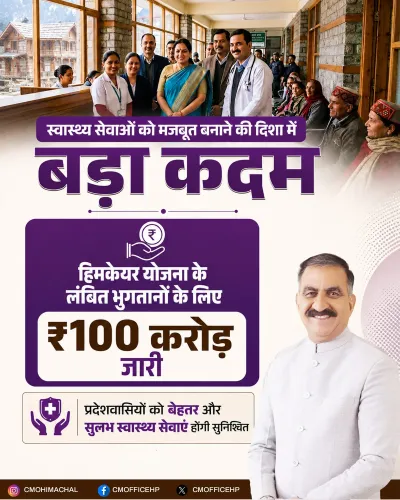
HP CM Office Highlights Health Reforms for Hill Communities
Synopsis
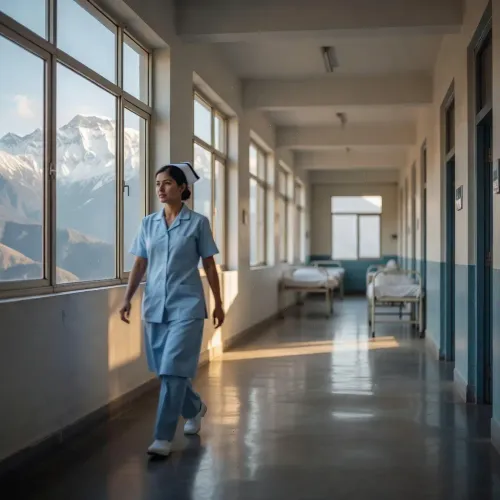
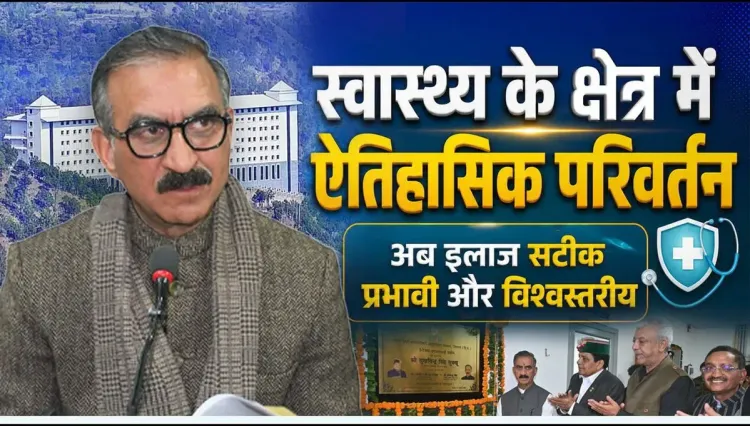
The Chief Minister's Office of Himachal Pradesh says the state government has delivered a systemic transformation in healthcare, addressing the long-standing hardship of mountain residents travelling miles for basic medical treatment. The post credits concrete policy steps for the state's improved health standing.
Key Takeaways
The Chief Minister's Office of Himachal Pradesh posted on 12 July 2026 claiming measurable progress in the state's healthcare system.
The post acknowledges that travelling long distances through difficult mountain terrain for medical care was a 'deeply painful experience' for residents.
The government says it took 'concrete steps' toward systemic transformation of health services in response to this challenge.
Himachal Pradesh's mountainous geography has historically been a structural barrier to equitable healthcare access.
The National Health Mission has supported primary health infrastructure upgrades in hilly states including Himachal Pradesh .
Specific metrics, facility data, and scheme details underpinning the claimed transformation have not yet been publicly detailed.
The Chief Minister's Office of Himachal Pradesh on Sunday, 12 July 2026 shared a post on X highlighting the state government's efforts to transform healthcare access for residents living in remote mountain terrain, describing the reforms as a response to the longstanding hardship of travelling long distances for basic medical treatment.
Context
The post, written in Hindi, opens with an acknowledgement of a deeply felt reality across Himachal Pradesh: 'पहाड़ की कठिन राहों पर बेहतर इलाज के लिए लोगों का मीलों दूर जाना एक बेहद दुखद एहसास था' — 'It was a deeply painful experience for people to travel miles along the difficult mountain paths for better treatment.' The CMO states that this challenge prompted the government to commit to a 'systemic transformation' in health services and to take concrete steps toward that goal.
The post concludes by crediting those efforts for what it describes as Himachal Pradesh's current standing in health — though the full text of the post was not available in its entirety, the thrust of the message is a claim of measurable progress in the state's health sector.
Policy Backdrop
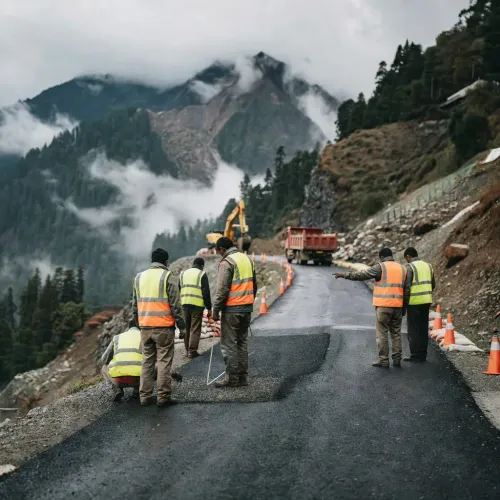
Himachal Pradesh's mountainous geography has long been identified as a structural barrier to equitable healthcare. Residents in higher-altitude and remoter districts have historically faced multi-hour journeys to reach district hospitals or specialist care, resulting in high out-of-pocket expenditure and delayed treatment.
Nationally, the National Health Mission (NHM) — which evolved from the National Rural Health Mission launched in 2005 — has channelled funds to states including Himachal Pradesh for strengthening primary health centres, upgrading sub-district facilities, and expanding the health workforce in underserved areas. States with difficult terrain have additionally piloted telemedicine and mobile health units to extend diagnostic reach without requiring patients to travel.
Stakeholders and Impact
The primary beneficiaries of improved hill-area healthcare are the estimated millions of residents spread across Himachal Pradesh's 12 districts, many of whom live in villages accessible only by narrow mountain roads that become impassable during winter or monsoon months. Reduced travel burdens directly lower household health expenditure and improve the likelihood of early diagnosis for conditions such as cardiac disease, respiratory illness, and maternal complications.
Healthcare workers, auxiliary nurse midwives, and community health officers posted at sub-centre and primary-centre levels are also key stakeholders, as decentralisation of services depends on adequate staffing and supply chains reaching remote postings.
What's Next
The government's framing of the post as a report of results — rather than an announcement of a new scheme — suggests that further details, including specific facility counts, telemedicine coverage data, or district-level health outcome indicators, may be released through official budget documents or health department reports.
Observers and health policy analysts will watch whether Himachal Pradesh publishes verifiable metrics — such as reductions in patient referral distances, increases in institutional deliveries, or diagnostic facility density — to substantiate the claim of systemic transformation. The state's performance on national health indices will be a key benchmark against which such assertions are ultimately measured.
Point of View
The CMO is making an emotional and political case for policy continuity. The absence of specific figures or scheme names in the available post text, however, leaves the claim open to scrutiny — a gap that independent health outcome data will ultimately fill. This kind of pre-metric announcement is increasingly common ahead of state budget cycles or health ministry reviews, where headline narratives are set before granular data is formally published.
NationPress
12 Jul 2026
Frequently Asked Questions
What health reforms has the Himachal Pradesh government announced?
The Chief Minister's Office of Himachal Pradesh stated on 12 July 2026 that the government has undertaken a systemic transformation of health services to address the difficulty of mountain residents travelling long distances for medical care. Specific scheme names and metrics were not detailed in the available post text.
Why is healthcare access difficult in Himachal Pradesh?
Himachal Pradesh's mountainous terrain means many villages are accessible only by narrow roads that can become impassable in winter or during monsoon, forcing residents to travel miles to reach district hospitals or specialist care.
What is the National Health Mission and does it cover Himachal Pradesh?
The National Health Mission, which evolved from the National Rural Health Mission launched in 2005, funds primary health centre upgrades and health workforce expansion across Indian states, including Himachal Pradesh, with a focus on underserved and remote areas.
How does the HP government plan to improve healthcare in remote hill areas?
The CMO's post indicates the government has already taken 'concrete steps' toward improving health services, with Indian states in similar terrain typically pursuing telemedicine, mobile health units, and upgraded primary centres to reduce patient travel burdens.
What is the CM Office of Himachal Pradesh's role in health policy?
The Chief Minister's Office of Himachal Pradesh coordinates and communicates the state government's policy priorities, including health sector reforms, and is the official account through which the state government makes public announcements on X.