Giriraj Singh: India a Global Investment Launchpad
Synopsis
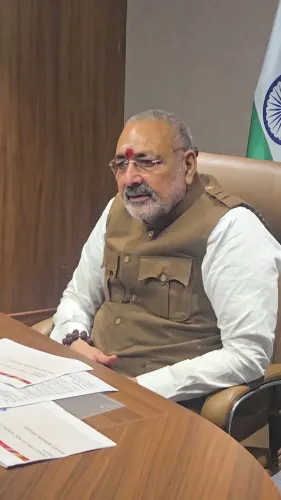
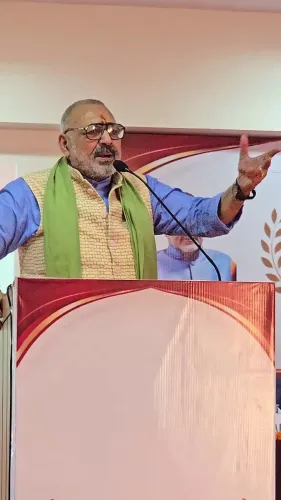
Union Textiles Minister Giriraj Singh declared on 12 July 2026 that India has evolved from a consumer market into a global growth launchpad, crediting a decade of reforms, digital infrastructure, and PLI schemes under the Viksit Bharat 2047 vision.
Key Takeaways
Giriraj Singh stated on 12 July 2026 that India is now a 'strong launchpad for global development,' not merely a market.
He cited government reforms, modern infrastructure, digital transformation, and industry-friendly policies as key enablers.
The Make in India (2014) and Digital India (2015) initiatives form the foundational policy architecture behind this claim.
PLI schemes across 14 sectors , including textiles, have been deployed since 2020 to boost domestic production and exports.
The post aligns with the government's Viksit Bharat 2047 vision of making India a fully developed economy by independence's centenary.
Key stakeholders include foreign investors, textile exporters, and MSMEs who stand to benefit from the evolving investment climate.
Union Textiles Minister Giriraj Singh on Sunday, 12 July 2026 declared that the world's growing trust in India proves the country has transformed from a mere consumer market into a powerful launchpad for global growth, citing government reforms, modern infrastructure, digital transformation, and industry-friendly policies as the driving forces.
Context
Posting on X with the hashtags #NewIndia #RisingIndia #ViksitBharat2047, Giriraj Singh wrote that 'the world's rising trust in India is proof that today India is not merely a market, but has become a strong launchpad for global development.' He added that government reforms, modern infrastructure, digital transformation, and industry-friendly policies have made India a reliable centre for investment, innovation, and new opportunities.
The post reflects a broader political messaging effort by the ruling BJP-led government to frame India's economic trajectory as a story of structural transformation rather than cyclical growth. It comes amid sustained global interest in diversifying supply chains away from single-country dependence.
Policy Backdrop
The assertions in the post draw on a decade-long policy architecture. The Make in India initiative, launched in 2014, positioned India as a global manufacturing destination and a magnet for foreign direct investment. This was followed by the Digital India programme in 2015, which built digital infrastructure and enabled technology-driven governance and commerce.
From 2020, the government rolled out Production Linked Incentive (PLI) schemes across 14 sectors, including textiles — a sector directly overseen by Giriraj Singh. The Atmanirbhar Bharat package, also announced in 2020, sought to balance self-reliance with deeper global integration. Together, these measures have been credited with improving India's ease-of-doing-business rankings and attracting diversified global investment.
The long-term ambition underpinning all these efforts is the Viksit Bharat 2047 vision — a government roadmap to transform India into a fully developed economy by the centenary of its independence through sustained growth, infrastructure upgrades, and policy continuity.
Stakeholders and Impact
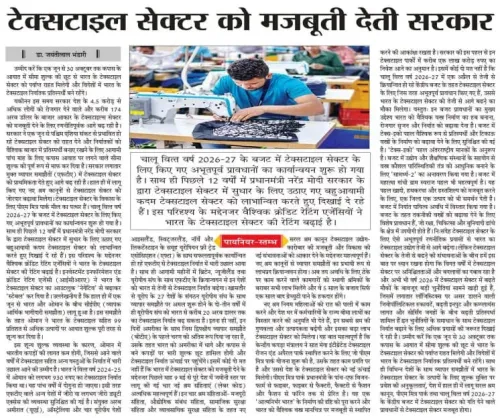
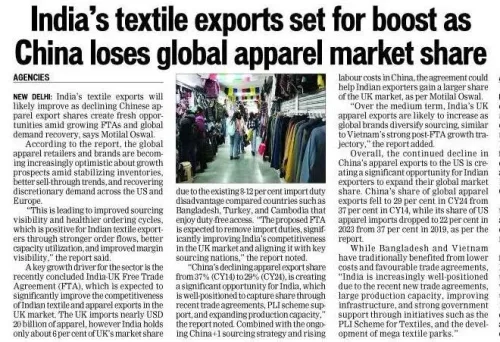
The constituencies most directly affected by the policy environment Giriraj Singh describes include foreign investors scouting manufacturing bases, textile exporters seeking competitive parity with rival nations, and MSMEs that form the backbone of India's industrial ecosystem. For the textiles sector in particular, PLI allocations have created incentives for both domestic capacity expansion and export-market penetration.
Global firms have increasingly cited India as an alternative or complementary production hub as they diversify supply chains, a trend that aligns with the minister's framing of India as a 'reliable centre for investment and innovation.' The digital infrastructure built under Digital India has further lowered the operational friction for technology-intensive industries looking to set up or scale in the country.
What's Next
Observers will watch for quarterly FDI inflow data and any fresh PLI allocations for the textiles sector in the next Union Budget as concrete indicators of whether the investment momentum the minister describes is reflected in official figures. Participation by Indian delegations at major trade forums will also serve as a barometer of the global partnerships Giriraj Singh references.
If the policy environment continues to attract diversified global capital and supply-chain anchors, India's positioning as a manufacturing and innovation launchpad — rather than a consumption-only market — could become a defining economic narrative heading into the Viksit Bharat 2047 milestone.
Point of View
The minister is stitching together a coherent arc from 2014 reforms to a 2047 destination — a framing that serves both domestic electoral messaging and investor-confidence building. The choice of a textiles minister to amplify a broad economic-positioning message is notable, suggesting coordinated cabinet-level communication rather than a sector-specific announcement. The real test of this narrative will come when fresh FDI data and PLI utilisation figures are published, which will either validate or complicate the 'reliable centre for investment' claim.
NationPress
10 Oct 2026
Frequently Asked Questions
What did Giriraj Singh say about India's global investment status?
Giriraj Singh said India is no longer just a consumer market but has become a strong global launchpad for development, driven by government reforms, digital infrastructure, and industry-friendly policies.
What is Viksit Bharat 2047?
Viksit Bharat 2047 is the Indian government's vision to make India a fully developed economy by 2047, the centenary of independence, through sustained growth, infrastructure investment, and policy reforms.
What is the PLI scheme and how does it relate to textiles?
The Production Linked Incentive scheme, rolled out from 2020 across 14 sectors including textiles, provides financial incentives to boost domestic manufacturing and exports — a key policy under Giriraj Singh's ministry.
Why is India seen as an alternative global manufacturing hub?
Global firms have been diversifying supply chains away from single-country dependence, and India's improving ease-of-doing-business environment, digital infrastructure, and competitive incentives have made it a frequently cited alternative destination.
What should investors watch for next regarding India's investment climate?
Quarterly FDI inflow data, fresh PLI allocations in the upcoming Union Budget, and India's participation in major global trade and investment forums will be key indicators of the investment momentum Giriraj Singh describes.