CM Rekha Gupta Hails INS Mahendragiri as Symbol of Atmanirbhar Bharat

Synopsis
Delhi Chief Minister Rekha Gupta has welcomed the induction of INS Mahendragiri into the Indian Navy, highlighting its over 75% indigenous content and the role of more than 200 Indian industries and MSMEs, calling it a defining symbol of Atmanirbhar Bharat under PM Modi's leadership.
Key Takeaways
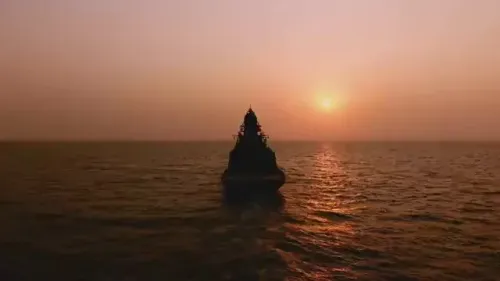
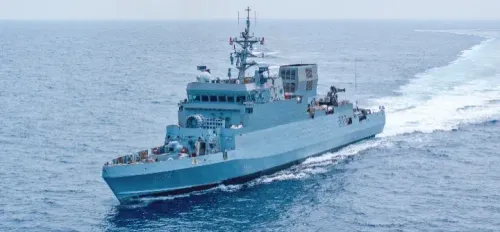
INS Mahendragiri has been commissioned into the Indian Navy as a Nilgiri-class stealth frigate under Project 17A .
The warship was built with more than 75% indigenous content , reflecting India's defence self-reliance goals.
Over 200 Indian industries and MSMEs contributed to its construction, broadening the domestic defence industrial base.
Delhi CM Rekha Gupta credited PM Narendra Modi's leadership for enabling a new era in defence manufacturing.
The commissioning reinforces the Make in India and Atmanirbhar Bharat policy frameworks launched in 2014 and 2020 respectively.
Remaining Nilgiri-class frigates and updates to indigenisation incentives are the next milestones to watch.
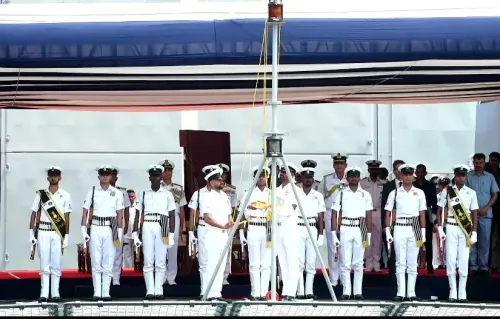
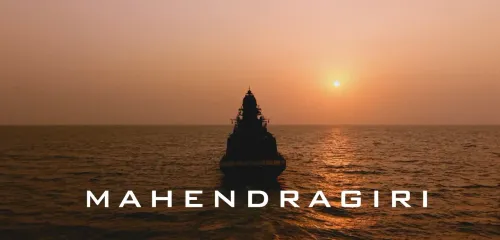
Delhi Chief Minister Rekha Gupta on Sunday, 12 July 2026, celebrated the commissioning of INS Mahendragiri into the Indian Navy, calling it a proclamation not just of India's growing maritime power but of the 'grand rise of Atmanirbhar Bharat.' The stealth frigate, built with over 75% indigenous content and the collective strength of more than 200 Indian industries and MSMEs, has been described by the Chief Minister as a living symbol of new India's technological capability and national confidence.
Context
INS Mahendragiri is a Nilgiri-class stealth frigate commissioned under Project 17A, a programme sanctioned to construct advanced warships with progressively higher domestic content. In her post on X, CM Gupta wrote that the warship's induction is 'आत्मनिर्भर भारत के विराट उदय का उद्घोष' — 'a proclamation of the grand rise of Atmanirbhar Bharat.' She credited Prime Minister Narendra Modi's leadership for ushering in a new era in India's defence sector.
The commissioning event marks a significant milestone in India's indigenous warship-building programme, with participation spanning large defence enterprises as well as small and medium manufacturers across the country.
Policy Backdrop
The Make in India initiative, launched in September 2014, and the Atmanirbhar Bharat campaign, announced in May 2020, together form the policy spine behind India's push to reduce dependence on foreign defence suppliers. Project 17A frigates were designed specifically to embed these goals into naval procurement, requiring shipbuilders to source components domestically wherever possible.
CM Gupta emphasised that these two campaigns are 'no longer just initiatives, but India's global identity,' reflecting the ruling party's framing of defence indigenisation as a marker of national transformation rather than a narrow procurement policy.
Stakeholders and Impact
The involvement of more than 200 Indian industries and MSMEs in the construction of INS Mahendragiri underscores a deliberate effort to build a domestic defence industrial ecosystem beyond the traditional public-sector shipyards. Small and medium enterprises supplying components — from electronics to hull materials — stand to benefit from the credibility and order pipeline that high-profile naval contracts generate.
For the Indian Navy, each Nilgiri-class induction strengthens blue-water capability while reducing the foreign-exchange burden historically associated with warship imports. The defence workforce, engineers, and technology firms linked to naval programmes are among the direct beneficiaries of this sustained indigenisation push.
What's Next
Attention will now turn to the commissioning timelines for the remaining frigates in the Nilgiri class under Project 17A, as well as any revisions to the defence indigenisation list or production-linked incentive schemes that could further deepen domestic content requirements. CM Gupta's post signals that the BJP will continue to use each naval induction as a political and policy milestone, reinforcing the 'self-reliant India' narrative ahead of future electoral cycles. Every new indigenous warship, she noted, sends the message that 'India is shaping its own future through its own strength.'
Point of View
Visible proof-point for the Atmanirbhar Bharat narrative at a moment when defence indigenisation is central to the government's political identity. By amplifying the event, CM Rekha Gupta — a state-level leader with no direct defence portfolio — signals the party's intent to nationalise the credit for every defence milestone, tying it to PM Modi's governance brand. The emphasis on MSME participation is particularly strategic: it connects an elite defence achievement to a constituency of small entrepreneurs, broadening the political resonance beyond urban nationalists. If the remaining Project 17A frigates commission on schedule, the government will have a sustained drumbeat of such moments through the next electoral cycle.
NationPress
12 Jul 2026
Frequently Asked Questions
What is INS Mahendragiri?
INS Mahendragiri is a Nilgiri-class stealth frigate commissioned into the Indian Navy under Project 17A, built with over 75% indigenous content and contributions from more than 200 Indian industries and MSMEs.
What did Delhi CM Rekha Gupta say about INS Mahendragiri?
CM Rekha Gupta called the commissioning of INS Mahendragiri a proclamation of the 'grand rise of Atmanirbhar Bharat,' crediting PM Narendra Modi's leadership for ushering in a new era in India's defence sector.
What is Project 17A?
Project 17A is an Indian Navy programme to construct Nilgiri-class advanced stealth frigates with progressively higher indigenous content, forming a core part of India's naval modernisation and self-reliance drive.
How does INS Mahendragiri relate to Make in India and Atmanirbhar Bharat?
INS Mahendragiri is a direct product of these two policy initiatives — Make in India (launched 2014) and Atmanirbhar Bharat (announced 2020) — which together aim to reduce India's dependence on foreign defence suppliers and build a domestic industrial ecosystem.
What is the significance of MSME involvement in INS Mahendragiri's construction?
The participation of over 200 MSMEs in building INS Mahendragiri shows that India's defence indigenisation is no longer limited to large public-sector shipyards, but is creating a broader supply chain that benefits small and medium manufacturers across the country.