INS Mahendragiri commissioned: India's 6th Project 17A frigate joins Navy
Synopsis
Six Project 17A frigates inducted in under 18 months — India's shipbuilding sprint just reached its finish line. INS Mahendragiri, armed with BrahMos missiles and 75% indigenous components, completes a fleet-building sequence that began with INS Nilgiri in January 2025 and signals a structural shift in India's naval industrial capacity.
Key Takeaways
INS Mahendragiri was commissioned on 11 July 2026 in Visakhapatnam as the sixth and final Project 17A stealth frigate.
All six frigates were inducted within 18 months , starting with INS Nilgiri in January 2025 .
The warship displaces 6,670 tonnes , reaches 28 knots , and carries the BrahMos cruise missile alongside LR-SAM air-defence systems.
More than 75 per cent of its components are indigenously manufactured.
Defence Minister Rajnath Singh cited Operation Urja Suraksha — escort of 18 merchant vessels worth over ₹9,000 crore — as proof of the Navy's expanded economic-security role.
The commissioning advances India's MAHASAGAR framework for Indo-Pacific security and growth.
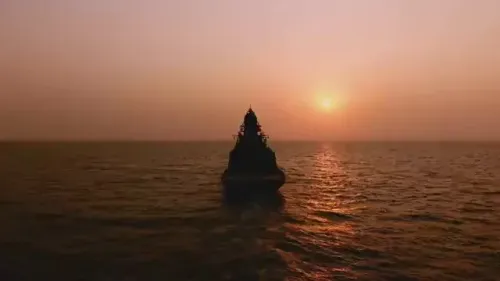
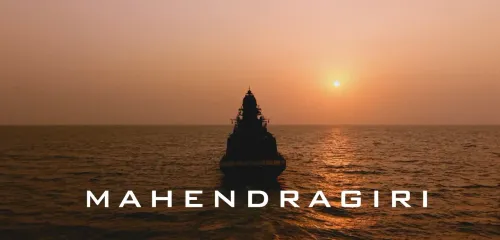
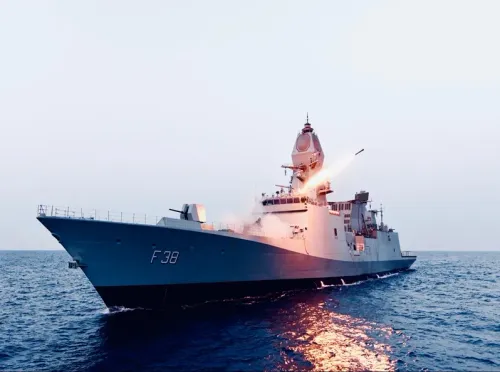
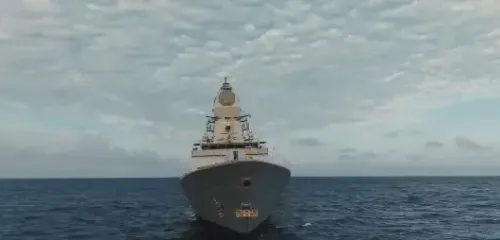
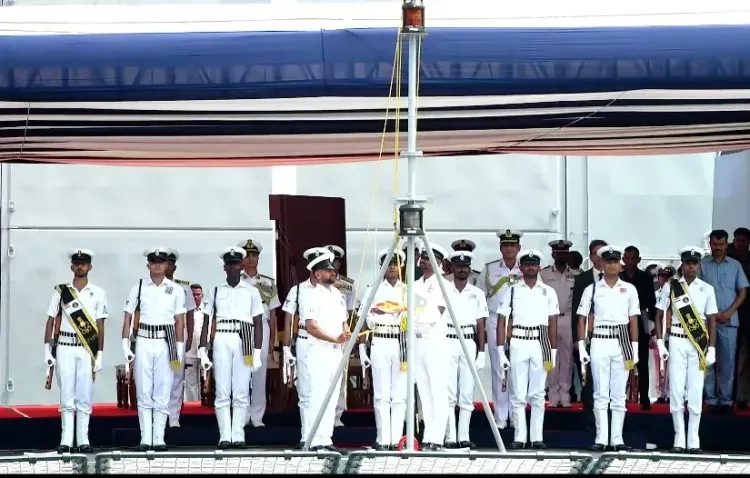
INS Mahendragiri, the sixth and final indigenous stealth frigate under Project 17A, was formally commissioned into the Indian Navy on 11 July 2026 at a ceremony in Visakhapatnam. Defence Minister Rajnath Singh presided over the induction, declaring that the warship would bolster India's eastern seaboard, extend its blue-water reach, and reinforce New Delhi's strategic footprint across the Indian Ocean Region (IOR).
A Fleet Built in 18 Months
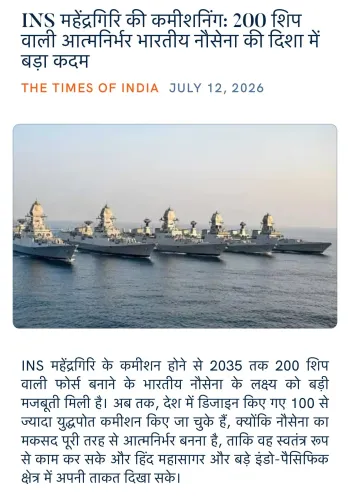
The commissioning of INS Mahendragiri completes a remarkable shipbuilding sprint. The first vessel of the class, INS Nilgiri, was inducted by Prime Minister Narendra Modi in January 2025. INS Udaygiri and INS Himgiri followed together in August 2025, INS Taragiri was commissioned in April 2026, and INS Dunagiri joined the fleet in June 2026. Six frontline frigates inducted in under 18 months is a pace that defence officials say reflects the maturation of India's naval industrial ecosystem.
'There was a time when we used to look towards other countries for our defence needs. Today, we are manufacturing warships in our own shipyards with the help of our own people,' Singh said at the ceremony.
Capabilities and Specifications
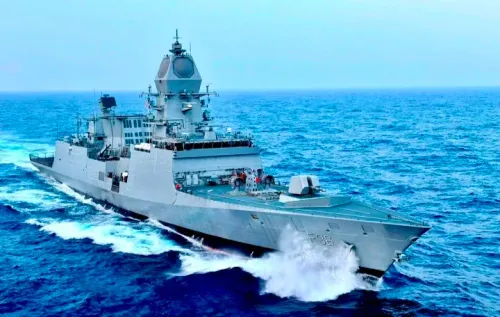
INS Mahendragiri displaces approximately 6,670 tonnes and can reach speeds of up to 28 knots. More than 75 per cent of its components are indigenously sourced — a figure Singh described as a testament to India's design and manufacturing depth. The frigate is armed with the BrahMos surface-to-surface cruise missile, widely regarded as one of the fastest in its class. Its air-defence architecture combines a multifunction radar with Long-Range Surface-to-Air Missiles (LR-SAM) capable of detecting and neutralising aerial threats at distance.
Additional systems aboard include indigenous rocket launchers, torpedo launchers, an Integrated Anti-Submarine Defence System, an Electronic Warfare suite, and a Close-In Weapon System (CIWS) — together making the vessel a multi-domain combatant suited to both littoral and deep-ocean operations.
Strategic Context: The Indo-Pacific Calculus
Singh placed the commissioning within India's broader maritime ambitions, referencing Prime Minister Modi's 'MAHASAGAR' framework — an acronym for 'Mutual and Holistic Advancement for Security and Growth Across Regions.' He described India as a 'net security provider' across the Indo-Pacific, a role the Navy has been operationalising through recent deployments.
Singh cited Operation Urja Suraksha as evidence of the Navy's expanding mandate: following the outbreak of conflict in West Asia, the force safely escorted 18 merchant vessels carrying essential cargo valued at over ₹9,000 crore. 'This demonstrates that our Navy has emerged not merely as a fighting force but as a robust guardian of India's economic interests,' he said.
Technology and Conventional Power: Singh's Doctrine
The Defence Minister used the occasion to articulate a philosophy on modern warfare, arguing that artificial intelligence and emerging technologies complement rather than replace conventional military capability. 'Future wars may be fought with Artificial Intelligence, but they will still be won through national resolve, trained soldiers, and credible military power,' he said.
He warned that nations which had historically neglected conventional strength in favour of new technology 'had to pay a heavy price,' and framed INS Mahendragiri as a symbol of India's commitment to excelling in both domains simultaneously. Visakhapatnam — home to the Eastern Naval Command — was described by Singh as 'one of the strongest pillars of India's maritime power' and Andhra Pradesh as an emerging 'defence and aerospace manufacturing powerhouse.'
With all six Project 17A frigates now in service, attention turns to whether India's shipyards can sustain this tempo as the Navy eyes the next generation of surface combatants.
Point of View
Maintaining, and deploying them simultaneously across the IOR is another. Singh's invocation of the MAHASAGAR doctrine also deserves scrutiny — India's 'net security provider' posture is increasingly credible in the western Indian Ocean, but the eastern seaboard, where INS Mahendragiri is based, faces a different and more contested strategic geometry. Whether six new frigates meaningfully shift that calculus will depend on how the Navy integrates them into its force employment plans, not just its commissioning ceremonies.
NationPress
10 Oct 2026
Frequently Asked Questions
What is INS Mahendragiri and why is it significant?
INS Mahendragiri is the sixth indigenous stealth frigate commissioned under Project 17A of the Indian Navy, inducted on 11 July 2026 in Visakhapatnam. It is significant because it completes a class of six advanced warships built entirely in Indian shipyards, with over 75 per cent indigenous components, marking a milestone in India's defence self-reliance.
What weapons and systems does INS Mahendragiri carry?
The frigate is equipped with the BrahMos surface-to-surface cruise missile, Long-Range Surface-to-Air Missiles paired with a multifunction radar, indigenous rocket and torpedo launchers, an Integrated Anti-Submarine Defence System, an Electronic Warfare suite, and a Close-In Weapon System.
How many Project 17A frigates has India commissioned, and when?
All six Project 17A frigates have now been commissioned: INS Nilgiri in January 2025, INS Udaygiri and INS Himgiri together in August 2025, INS Taragiri in April 2026, INS Dunagiri in June 2026, and INS Mahendragiri on 11 July 2026 — completing the class in under 18 months.
What is Operation Urja Suraksha mentioned by Rajnath Singh?
Operation Urja Suraksha was an Indian Navy mission in which the force escorted 18 merchant vessels carrying essential cargo worth over ₹9,000 crore following the outbreak of conflict in West Asia. Defence Minister Singh cited it as evidence of the Navy's role as a guardian of India's economic interests, beyond its conventional combat function.
What is the MAHASAGAR framework referenced at the commissioning?
MAHASAGAR stands for 'Mutual and Holistic Advancement for Security and Growth Across Regions,' a vision articulated by Prime Minister Narendra Modi for India's role in the Indo-Pacific. It frames India as a net security provider committed to regional stability, and was cited by Singh as the strategic doctrine INS Mahendragiri will serve.