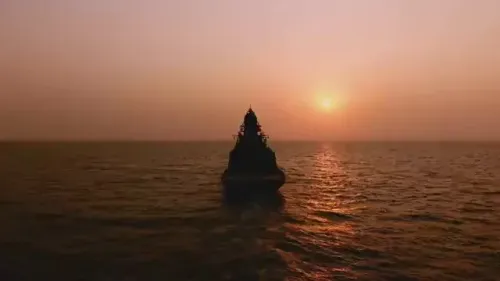
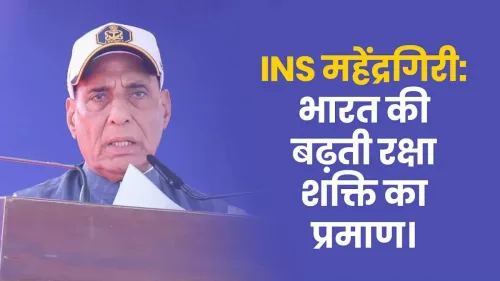
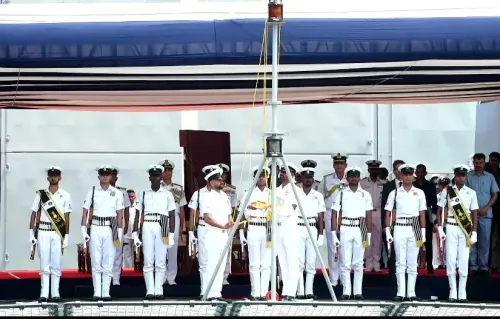
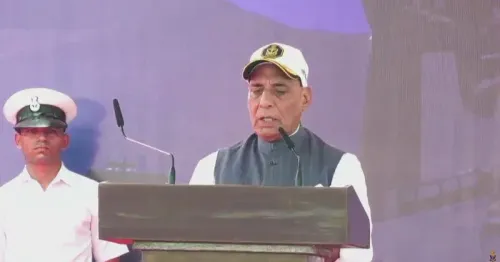
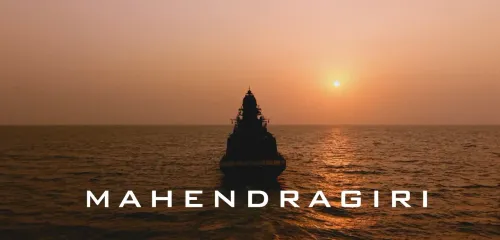
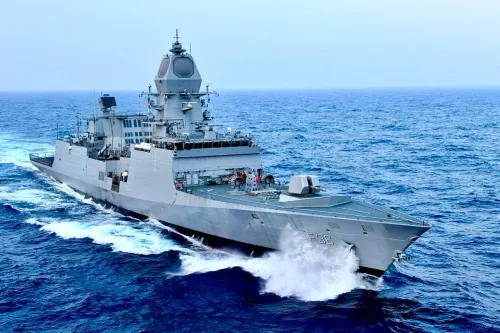
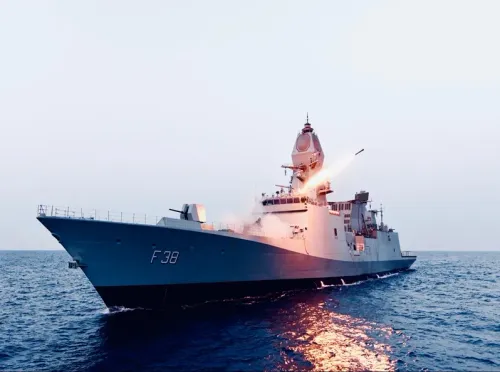
INS Mahendragiri commissioning: India's 6th Project 17A stealth frigate joins Navy on July 11
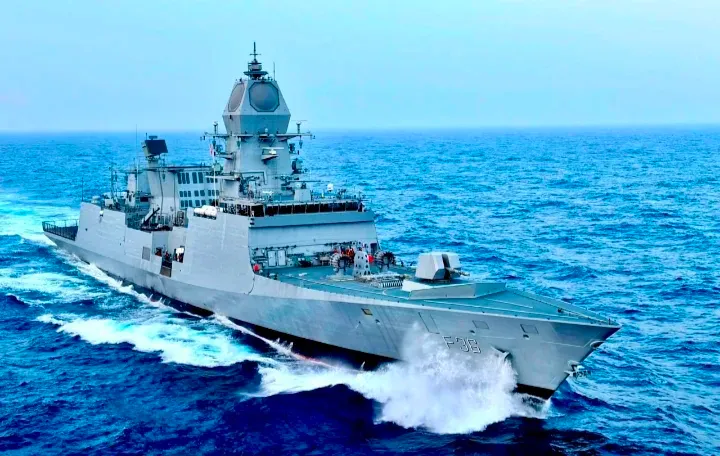
Synopsis
Two Project 17A stealth frigates commissioned within three weeks — INS Mahendragiri's induction on 11 July 2026 caps a remarkable delivery sprint for India's most advanced warship programme. With over 75% indigenous content, BrahMos and Barak-8 missiles, and a likely berth in the Eastern Fleet, this commissioning is as much an industrial statement as a naval one.
Key Takeaways
INS Mahendragiri , the sixth Project 17A stealth frigate, will be commissioned at Visakhapatnam on 11 July 2026 .
Its commissioning follows that of INS Dunagiri — the fifth frigate of the class — by just 20 days , commissioned in Kolkata on 21 June 2026 by PM Narendra Modi .
Built by Mazagon Dock Shipbuilders Ltd in Mumbai , the warship carries over 75% indigenous content under the Atmanirbhar Bharat initiative.
Armed with BrahMos surface-to-surface and Barak-8 surface-to-air missiles, plus an integrated Combat Management System .
The seventh and final frigate of the class, INS Vindhyagiri , is under construction at GRSE in Kolkata .
The Indian Navy is set to commission its sixth and second-to-last Project 17A indigenous stealth frigate, INS Mahendragiri, at Visakhapatnam on 11 July 2026 — less than three weeks after the fifth ship of the class, INS Dunagiri, entered service. The commissioning at Visakhapatnam strongly indicates that INS Mahendragiri will join the Eastern Fleet, reinforcing India's naval posture in the Indo-Pacific.
A Rapid Succession of Commissionings
INS Dunagiri, the fifth frigate of the Project 17A class, was commissioned in Kolkata on 21 June 2026 by Prime Minister Narendra Modi. INS Mahendragiri's induction just weeks later signals an accelerating delivery tempo for a programme that has been central to India's indigenisation drive. The seventh and final frigate of the class, INS Vindhyagiri, remains under construction at Garden Reach Shipbuilders and Engineers (GRSE) Ltd in Kolkata.
Built in India, for India
INS Mahendragiri was constructed by Mazagon Dock Shipbuilders Ltd (MDL) in Mumbai and designed entirely in-house by the Navy's Warship Design Bureau. The warship carries over 75 per cent indigenous content, directly embodying the government's Atmanirbhar Bharat initiative. A significant number of Micro, Small and Medium Enterprises (MSMEs) participated in its construction, generating measurable employment across the supply chain.
Named after the Mahendragiri mountain range in the Eastern Ghats, the frigate's motto — 'Mighty-Majestic-Matchless' — reflects the class's positioning as the largest and most advanced warships ever built and operated in India, and among the largest frigates globally.
Capabilities and Combat Systems
INS Mahendragiri incorporates advanced stealth features, a reduced radar signature, enhanced survivability, and a high degree of automation. It is propelled by a Combined Diesel or Gas (CODOG) system, enabling high-speed operations with extended endurance across a full spectrum of missions.
The warship's weapons suite includes BrahMos surface-to-surface missiles and Barak-8 surface-to-air missiles, alongside sophisticated electronic warfare systems, comprehensive anti-submarine warfare (ASW) capabilities, and an integrated Combat Management System. It is capable of anti-air, anti-surface, and anti-submarine operations, as well as Humanitarian Assistance and Disaster Relief (HADR) and Search and Rescue (SAR) missions.
What the Ministry of Defence Said
The Ministry of Defence described the commissioning as 'another significant milestone in the successful execution of the Project 17A programme,' adding that 'successive frigates of the class continue to strengthen the Indian Navy's combat capability while reinforcing India's position as a leading indigenous warship-building nation.' The warship is expected to serve as a 'formidable force multiplier' in safeguarding India's maritime interests and contributing to a 'secure, stable and prosperous Indo-Pacific.'
Strategic Significance
The Project 17A class represents a generational leap from its predecessor, the Shivalik-class frigates, with deeper indigenisation and more advanced sensor-weapon integration. As India's strategic competition in the Indian Ocean Region intensifies, the rapid induction of these platforms — two within a single month — signals both industrial readiness and operational urgency. With INS Vindhyagiri still on the slipway, the programme is on course to complete its full complement of seven ships in the coming years.
Point of View
With MSMEs embedded in the supply chain. The real test will be whether this tempo is sustained through INS Vindhyagiri and into the next-generation frigate programme, or whether it represents a one-off sprint driven by political timelines.
NationPress
5 Oct 2026
Frequently Asked Questions
What is INS Mahendragiri and when will it be commissioned?
INS Mahendragiri is the sixth warship of the Indian Navy's Project 17A indigenous stealth frigate programme. It is scheduled to be commissioned at Visakhapatnam on 11 July 2026.
What weapons does INS Mahendragiri carry?
The frigate is equipped with BrahMos surface-to-surface missiles, Barak-8 surface-to-air missiles, anti-submarine warfare systems, electronic warfare suites, and an integrated Combat Management System.
Who built INS Mahendragiri?
INS Mahendragiri was built by Mazagon Dock Shipbuilders Ltd in Mumbai and designed in-house by the Indian Navy's Warship Design Bureau. It has over 75% indigenous content.
How many Project 17A frigates has India commissioned so far?
INS Mahendragiri will be the sixth of seven Project 17A frigates. The fifth, INS Dunagiri, was commissioned on 21 June 2026 in Kolkata by Prime Minister Narendra Modi. The seventh, INS Vindhyagiri, is still under construction at GRSE in Kolkata.
Which fleet is INS Mahendragiri expected to join?
Its commissioning at Visakhapatnam — the headquarters of the Eastern Naval Command — strongly suggests INS Mahendragiri will join the Eastern Fleet, which operates in the Bay of Bengal and the broader Indo-Pacific.