Kishan Reddy hails INS Mahendragiri induction into Eastern Fleet

Synopsis
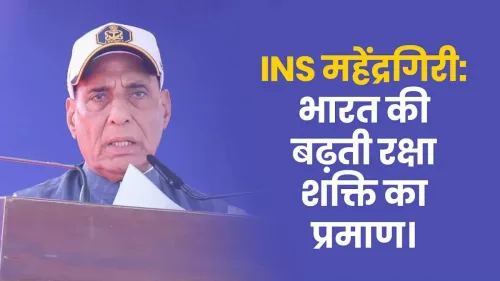
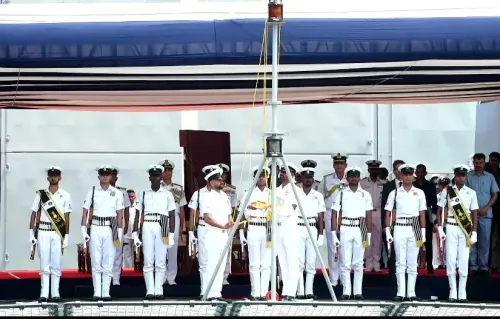
Union Minister G. Kishan Reddy hailed the induction of INS Mahendragiri, the sixth Project 17A Nilgiri-class stealth frigate, into the Indian Navy's Eastern Fleet on 11 July 2026, calling it a milestone in India's Aatmanirbhar Bharat journey and its rise as a global defence manufacturing hub.
Key Takeaways
INS Mahendragiri is the sixth frigate inducted under Project 17A , which covers seven indigenous stealth frigates.
The vessel has been assigned to the Indian Navy's Eastern Fleet , reinforcing India's Indo-Pacific maritime posture.
Project 17A was sanctioned in 2015 ; the frigates are built entirely at domestic shipyards under the Make in India framework.
The induction aligns with the Aatmanirbhar Bharat Abhiyan launched in May 2020 to reduce defence import dependence.
Kishan Reddy linked the milestone to PM Modi 's vision of a self-reliant and technologically advanced India.
The seventh and final Project 17A frigate's induction timeline remains a key development to watch.
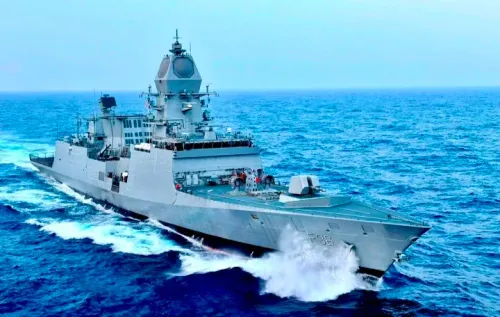
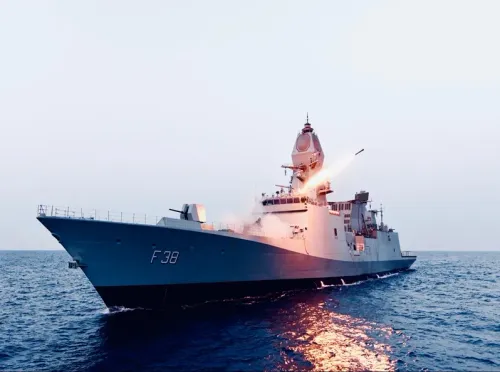
Union Coal and Mines Minister G. Kishan Reddy on Saturday, 11 July 2026 welcomed the induction of INS Mahendragiri into the Indian Navy's Eastern Fleet, calling it 'another proud milestone' in India's journey towards Aatmanirbhar Bharat. The warship is the sixth frigate commissioned under Project 17A, a domestic shipbuilding programme sanctioned in 2015 to deliver seven advanced stealth frigates built entirely within India.
Context
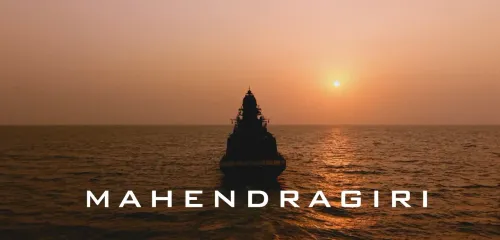
INS Mahendragiri is a Nilgiri-class stealth frigate built under Project 17A, a programme approved to construct seven next-generation frigates at Indian shipyards. Reddy described the vessel as one 'designed and built with cutting-edge indigenous capabilities,' adding that it 'embodies Prime Minister Narendra Modi's vision of a self-reliant and technologically advanced India.' Its induction into the Eastern Fleet strengthens India's maritime posture in the Indo-Pacific.
Policy Backdrop
The commissioning sits at the intersection of two flagship government frameworks. The Make in India initiative, launched in 2014, placed defence shipbuilding among its priority sectors, while the Aatmanirbhar Bharat Abhiyan, announced in May 2020, deepened the push to cut import dependence and build domestic defence manufacturing capacity. Project 17A itself was sanctioned in 2015 and represents one of the most ambitious indigenous naval construction efforts India has undertaken, covering design, systems integration, and weapons fitment within the country.
Reddy underscored the strategic dimension of the programme, stating that 'every indigenously built warship strengthens our maritime security, enhances our strategic capabilities, and reinforces India's emergence as a global defence manufacturing hub.' The framing reflects the government's broader ambition to transition India from a net defence importer to a significant exporter.
Stakeholders and Impact
The Indian Navy is the direct beneficiary, gaining a sixth modern stealth platform capable of anti-submarine, anti-air, and surface warfare operations. Domestic shipbuilders involved in the Project 17A supply chain — spanning hull fabrication, electronics, and propulsion — stand to benefit from continued orders as the programme matures. India's defence indigenisation drive has also attracted attention from partner nations in the Indo-Pacific who are watching the country's shipbuilding capability scale up.
For BJP Telangana state president Reddy, the post also carries a political dimension: associating the party's national leadership with a visible defence achievement resonates with a voter base that responds strongly to national security narratives.
What's Next
Attention will now shift to the induction timeline for the seventh and final Project 17A frigate, as well as any new naval acquisition announcements expected in upcoming defence budgets. Analysts will also watch whether the success of the Nilgiri-class programme accelerates follow-on orders for a next-generation frigate design under a potential Project 17B. India's stated goal of achieving greater strategic autonomy in the Indo-Pacific makes continued fleet expansion a near-certain policy priority through the decade.
Point of View
Bipartisan-in-effect policy of naval indigenisation that has gained significant momentum under the Modi government's Make in India and Aatmanirbhar Bharat frameworks. For the BJP, each Project 17A delivery doubles as a political asset — a tangible, photogenic symbol of national capability that transcends the usual policy-debate cycle. Reddy's post, arriving from a Coal and Mines minister rather than a defence portfolio holder, signals how broadly the party is mobilising its leadership to amplify defence achievements ahead of electoral cycles. The deeper strategic story, however, is India's credible push to shift from importer to exporter, with the Eastern Fleet's growing indigenous tonnage serving as a live demonstration to Indo-Pacific partners.
NationPress
10 Oct 2026
Frequently Asked Questions
What is INS Mahendragiri?
INS Mahendragiri is a Nilgiri-class stealth frigate and the sixth warship commissioned under Project 17A, India's programme to build seven advanced indigenous frigates at domestic shipyards. It has been inducted into the Indian Navy's Eastern Fleet.
What is Project 17A?
Project 17A is an Indian Navy programme sanctioned in 2015 for the construction of seven next-generation stealth frigates entirely within India. The ships are built under the Make in India framework and feature advanced indigenous weapons and sensor systems.
What did G. Kishan Reddy say about INS Mahendragiri?
Union Minister G. Kishan Reddy called the induction of INS Mahendragiri 'another proud milestone' in India's Aatmanirbhar Bharat journey, saying the frigate embodies PM Modi's vision of a self-reliant and technologically advanced India.
What is Aatmanirbhar Bharat in defence?
Aatmanirbhar Bharat Abhiyan, announced in May 2020, is a self-reliance campaign that includes a strong defence manufacturing component aimed at reducing India's dependence on imported weapons and equipment by boosting domestic production.
How many Project 17A frigates has India inducted so far?
As of the induction of INS Mahendragiri in July 2026, six of the seven planned Project 17A Nilgiri-class stealth frigates have been inducted into the Indian Navy, with the seventh and final vessel still awaited.