Rajnath Singh hails INS Mahendragiri as symbol of naval self-reliance

Synopsis
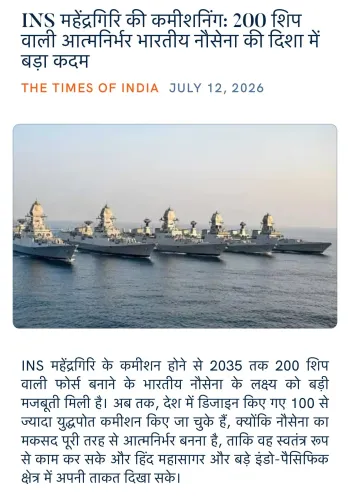
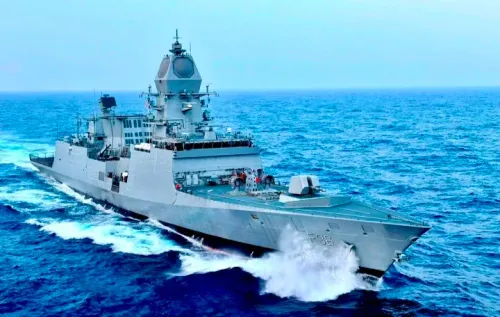
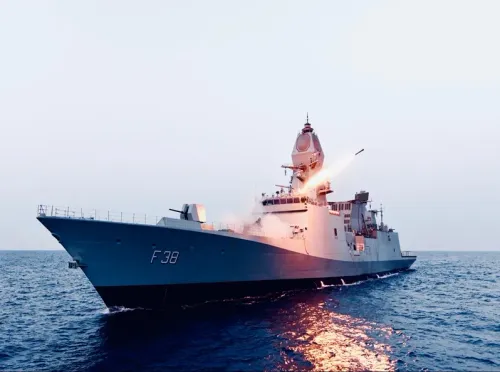
Union Defence Minister Rajnath Singh on 11 July 2026 hailed INS Mahendragiri, the sixth P-17A Nilgiri-class stealth frigate, as a symbol of India's naval self-reliance, noting its over 75 per cent indigenous content and the country's advancing defence industrial ecosystem.
Key Takeaways
Rajnath Singh on 11 July 2026 praised INS Mahendragiri as a symbol of India's growing strategic capability and self-reliance.
The vessel is built with over 75 per cent indigenous content , the highest in any Indian Navy frigate programme to date.
INS Mahendragiri is the sixth ship in the P-17A Nilgiri-class stealth frigate series, a seven-ship programme valued at approximately Rs 13,000 crore .
Contracts for the P-17A programme were signed in 2015 with Mazagon Dock Shipbuilders Ltd and GRSE .
The programme is a cornerstone of the Atmanirbhar Bharat defence manufacturing framework launched in 2020 .
Indigenisation in Indian naval shipbuilding has risen steadily from roughly 40-60 per cent in the 2000s to over 75 per cent in current platforms.
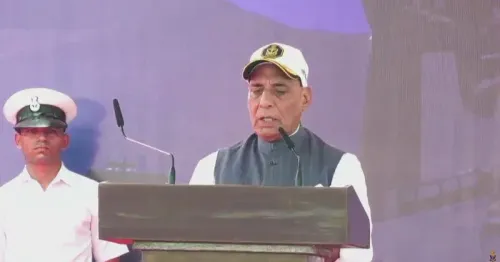
Union Defence Minister Rajnath Singh on Saturday, 11 July 2026 praised INS Mahendragiri, the sixth frontline stealth frigate of the P-17A series, calling it a powerful symbol of the Indian Navy's growing strategic capability, self-reliance, and advanced combat skills. The minister highlighted that the warship is built with more than 75 per cent indigenous content, underscoring India's progress in domestic shipbuilding.
Context
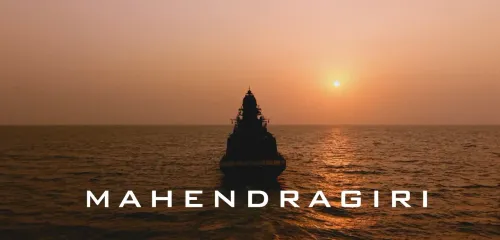
In his post, Rajnath Singh described INS Mahendragiri as 'sashakt pratik' (a powerful symbol) of India's rising strategic capability and 'atmanirbharta' (self-reliance). He stated that the vessel, constructed with over 75 per cent indigenous material, is proof of India's advanced shipbuilding capacity and a robust defence industrial ecosystem. The post was accompanied by a video, reinforcing the celebratory tone around the warship.
The P-17A programme, officially known as the Nilgiri-class stealth frigate series, is a follow-on to the earlier Shivalik-class Project 17 frigates. Contracts for seven ships were signed in 2015 with two major defence public sector undertakings at an estimated programme cost of Rs 13,000 crore. The lead ship, INS Nilgiri, was launched in September 2019, setting the pace for the entire series.
Policy Backdrop
The P-17A series represents a significant leap in indigenisation compared to earlier programmes. The preceding Shivalik-class frigates, commissioned between 2010 and 2012, carried approximately 60 per cent indigenous content. The current series pushes that threshold past 75 per cent, reflecting a deliberate policy shift to deepen the domestic defence manufacturing base.
This trajectory is anchored in the Atmanirbhar Bharat framework launched in 2020, which mandates a progressive increase in indigenous design, development, and production across all defence platforms. Successive naval shipbuilding programmes have steadily raised indigenisation targets — from roughly 40 to 60 per cent in the 2000s to the current benchmark — mirroring parallel efforts in submarines, corvettes, and aircraft-carrier refits. Mazagon Dock Shipbuilders Limited (MDL), a defence public sector undertaking, is responsible for building four of the seven P-17A hulls and remains the primary industrial node for this programme.
Stakeholders and Impact
The commissioning pipeline of the P-17A series directly benefits the broader defence industrial ecosystem, drawing in hundreds of private-sector vendors, component manufacturers, and technology firms beyond the two primary shipyards. This supply chain expansion is central to the government's goal of reducing dependence on foreign platforms and positioning India as a net exporter of defence equipment.
For the Indian Navy, the addition of advanced stealth frigates strengthens its ability to project power across the Indian Ocean Region, a domain of growing strategic competition. Enhanced sensors, weapons systems, and stealth features on the P-17A class give the Navy multi-role capability suited to both blue-water operations and littoral warfare. The programme also builds institutional expertise in complex warship design that can be leveraged for future platforms.
What's Next
Attention will now turn to commissioning timelines for the remaining P-17A hulls and to whether the government will greenlight a follow-on programme — either an improved P-17B variant or a next-generation destroyer — to sustain the momentum built in domestic shipbuilding. Any such announcement would further cement India's ambition to achieve design leadership in multi-role naval combatants.
As indigenisation benchmarks rise with each successive programme, the P-17A series may well serve as the template for future naval acquisitions — one where domestic content is the rule, not the exception.
Point of View
The minister is reinforcing a political narrative in which defence self-reliance serves as both a security imperative and a domestic industrial success story. The P-17A programme's steady build sequence also allows the government to time such announcements for maximum visibility, linking platform milestones to broader policy branding. Watching whether a P-17B or next-generation destroyer order follows will reveal how far this political commitment translates into sustained procurement policy.
NationPress
10 Oct 2026
Frequently Asked Questions
What is INS Mahendragiri?
INS Mahendragiri is a stealth frigate of the Indian Navy belonging to the P-17A Nilgiri class, built with over 75 per cent indigenous content as part of a seven-ship programme contracted in 2015.
What is the P-17A frigate programme?
The P-17A programme, also called the Nilgiri class, is a series of seven advanced stealth frigates ordered in 2015 at an estimated cost of Rs 13,000 crore, designed to replace older platforms with higher indigenous content and enhanced combat systems.
Who builds the P-17A frigates?
Four of the seven P-17A frigates are built by Mazagon Dock Shipbuilders Ltd (MDL) in Mumbai, while the remaining three are built by Garden Reach Shipbuilders and Engineers (GRSE) in Kolkata.
What did Rajnath Singh say about INS Mahendragiri?
Rajnath Singh described INS Mahendragiri as a powerful symbol of the Indian Navy's growing strategic capability, self-reliance, and advanced combat skills, highlighting its construction with more than 75 per cent indigenous material.
What is Atmanirbhar Bharat in defence?
Atmanirbhar Bharat in defence is a policy framework launched in 2020 that prioritises indigenous design, development, and production of military equipment to reduce India's dependence on foreign suppliers and build a robust domestic defence industrial base.