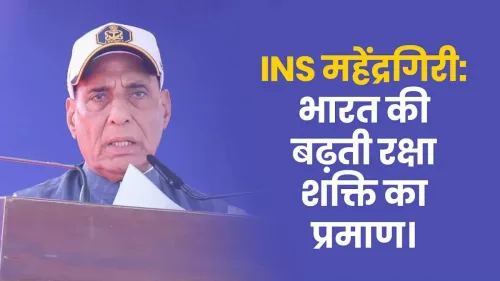
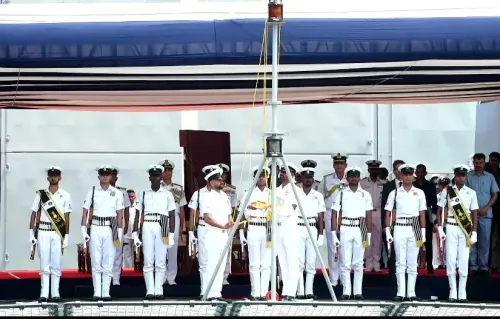
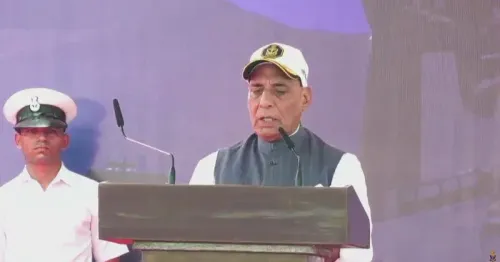
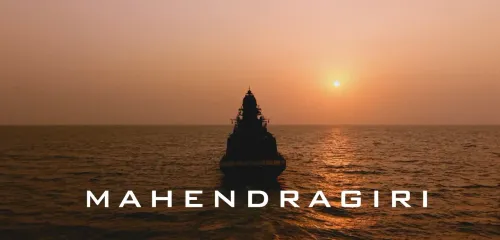
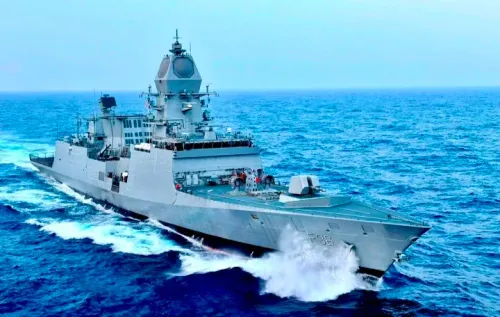
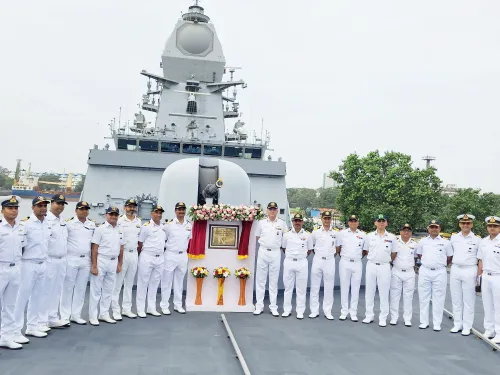
INS Mahendragiri delivered: India's sixth P17A stealth frigate joins Navy
Synopsis
Six of seven advanced stealth frigates delivered in under 17 months — INS Mahendragiri's induction signals that India's indigenous warship-building programme has shifted from aspiration to execution, with 75% local content and 14,000 jobs created along the way.
Key Takeaways
INS Mahendragiri , the sixth Nilgiri-class (P17A) stealth frigate, was delivered to the Indian Navy in Mumbai on 1 May 2025 .
All six deliveries occurred within 17 months of the first P17A ship, INS Nilgiri , handed over on 20 December 2024 .
The ship carries 75% indigenous content and was built by Mazagon Dock Shipbuilders Limited (MDSL) .
Over 200 MSMEs are involved in the project, generating employment for 4,000 direct and 10,000+ indirect personnel.
The P17A fleet comprises seven ships in total; the seventh vessel is yet to be named.
The frigates feature CODOG propulsion , advanced IPMS , and a full anti-surface, anti-air, and anti-submarine warfare suite.
INS Mahendragiri, the sixth ship of the Nilgiri-class (Project 17A) frigate programme, was formally delivered to the Indian Navy in Mumbai on 1 May 2025, marking a significant milestone in India's push for self-reliance in warship design and construction. The delivery comes in less than 17 months from the induction of the first P17A vessel, underscoring the accelerating pace of indigenous naval shipbuilding.
What Project 17A Covers
Project 17A (P17A) is a fleet of seven advanced stealth guided-missile frigates, collectively designated the Nilgiri-class. The seven ships are: INS Nilgiri, INS Himgiri, INS Udaygiri, INS Taragiri, INS Vindhyagiri, INS Mahendragiri, and a seventh vessel yet to be named. Designed by the Warship Design Bureau (WDB) and overseen by the Warship Overseeing Team (Mumbai), these frigates represent a generational leap over their predecessors, the P17 Shivalik-class.
Capabilities and Technology
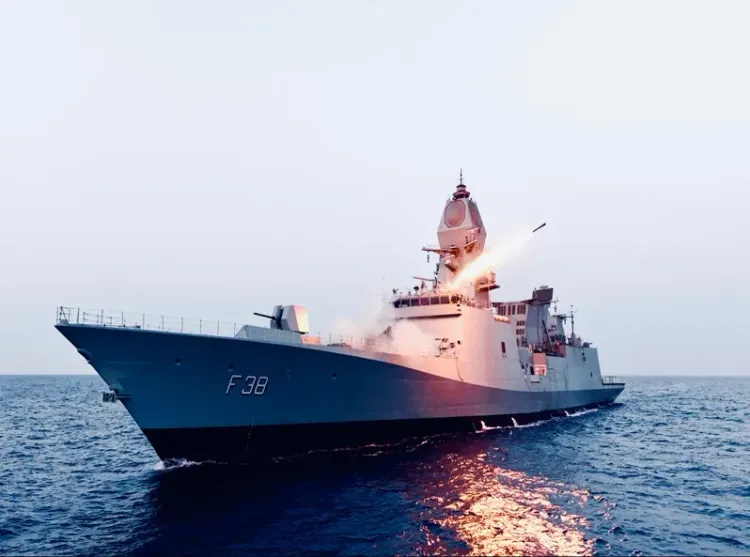
According to an official statement, Mahendragiri reflects a quantum leap in naval design across stealth, firepower, automation, and survivability. The ship is configured with a Combined Diesel or Gas (CODOG) propulsion plant — comprising a diesel engine and a gas turbine driving a Controllable Pitch Propeller (CPP) on each shaft — and is equipped with a state-of-the-art Integrated Platform Management System (IPMS).
The potent weapon and sensor suite spans anti-surface, anti-air, and anti-submarine warfare systems, offering versatile multi-mission capability to address current and emerging maritime challenges.
Aatmanirbharta in Shipbuilding
Built by Mazagon Dock Shipbuilders Limited (MDSL) in Mumbai, Mahendragiri carries an indigenous content of 75 per cent — one of the highest in any Indian naval programme to date. The project has engaged over 200 MSMEs at MDSL and has generated employment for approximately 4,000 personnel directly and more than 10,000 personnel indirectly.
Notably, the first P17A ship, INS Nilgiri, was delivered by MDSL on 20 December 2024. The delivery of Mahendragiri as the sixth vessel within 17 months of that milestone reflects the philosophy of Integrated Construction — a parallel-build methodology that has compressed timelines significantly.
What Comes Next
With six of the seven P17A frigates now delivered, attention turns to the seventh and final unnamed vessel. The successful execution of the P17A programme is widely seen as a template for future indigenous naval platforms, reinforcing India's ambition to become a net exporter of defence equipment. The Indian Navy's focus on Aatmanirbharta in both ship design and shipbuilding is expected to intensify as the next generation of programmes moves into development.
Point of View
By this account, passed. The 75% indigenous content figure is meaningful, but the more consequential metric is whether the supply chain depth built through 200-plus MSMEs can sustain the next programme without the same ramp-up lag. India's naval modernisation has historically been plagued by import dependence and delays; P17A's compressed delivery schedule, if it holds through the seventh hull, would mark a genuine inflection point rather than another aspirational milestone.
NationPress
16 Sept 2026
Frequently Asked Questions
What is INS Mahendragiri and which class does it belong to?
INS Mahendragiri is the sixth ship of the Nilgiri-class, built under Project 17A (P17A) of the Indian Navy. It is an advanced stealth guided-missile frigate designed for multi-mission operations including anti-surface, anti-air, and anti-submarine warfare.
When was INS Mahendragiri delivered to the Indian Navy?
INS Mahendragiri was delivered to the Indian Navy on 1 May 2025 in Mumbai. It is the sixth P17A frigate to be delivered, arriving within 17 months of the first ship, INS Nilgiri, which was handed over on 20 December 2024.
Who built INS Mahendragiri and what is its indigenous content?
INS Mahendragiri was built by Mazagon Dock Shipbuilders Limited (MDSL) in Mumbai. It carries an indigenous content of 75%, making it one of the most locally sourced warships in India's naval history.
How many ships are in the Project 17A programme?
Project 17A consists of seven Nilgiri-class stealth frigates: INS Nilgiri, INS Himgiri, INS Udaygiri, INS Taragiri, INS Vindhyagiri, INS Mahendragiri, and a seventh vessel yet to be named. Six have been delivered as of May 2025.
What propulsion and weapons systems does the P17A frigate carry?
P17A frigates use a Combined Diesel or Gas (CODOG) propulsion plant with a Controllable Pitch Propeller on each shaft, and are fitted with an Integrated Platform Management System (IPMS). Their weapons suite covers anti-surface, anti-air, and anti-submarine warfare capabilities.