Giriraj Singh calls for global branding push in textiles
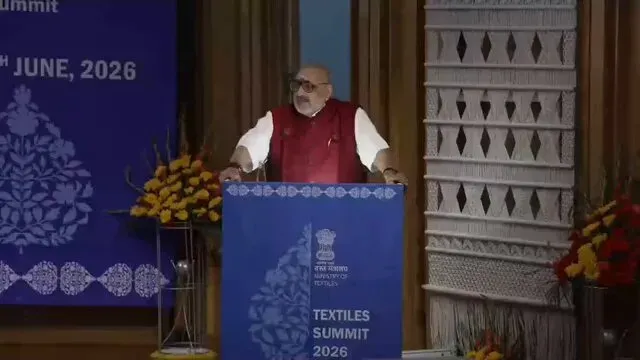
Synopsis
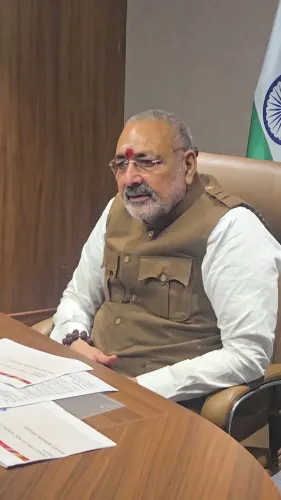
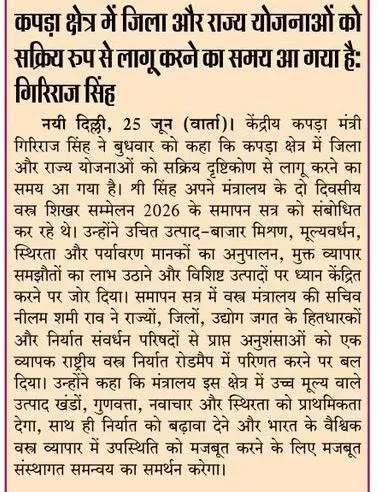
Union Textiles Minister Giriraj Singh has called on states, districts, and industry to set new records in production, exports, and value addition, while pushing for global recognition of Indian textile brands as part of the Viksit Bharat 2047 vision.
Key Takeaways
Union Textiles Minister Giriraj Singh posted on 23 June 2026 calling for new benchmarks in textile production, exports, and value addition.
He stressed that the focus must now shift beyond production volumes to product diversification and global branding of Indian textile goods.
The push is framed as a collective effort by central government, state governments, districts, and industry .
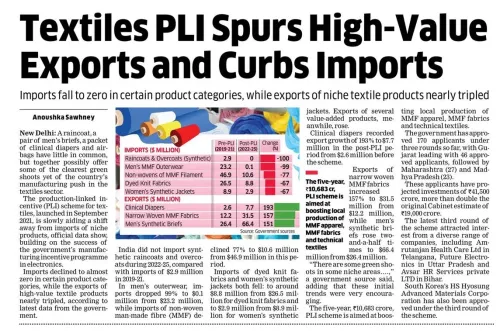
The statement builds on the PLI Scheme for Textiles (outlay: Rs 10,683 crore ) and the seven PM MITRA Parks announced in 2021 .
Progress on PM MITRA parks and the next Union Budget textile allocation are key near-term indicators to watch.
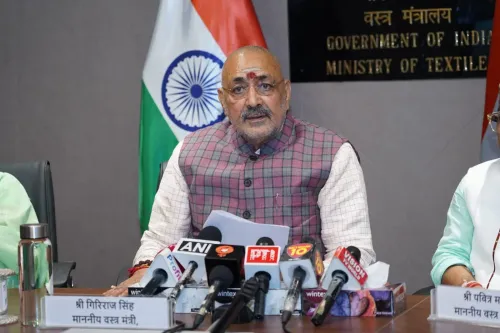
Union Textiles Minister Giriraj Singh on Tuesday, 23 June 2026, called on all stakeholders in India's textile sector — from central and state governments to industry bodies and district administrations — to pursue new benchmarks in production, exports, and value addition as part of Prime Minister Narendra Modi's Viksit Bharat 2047 vision.
Context
Posting on X, Giriraj Singh wrote in Hindi: 'अब समय केवल उत्पादन बढ़ाने का नहीं, बल्कि उत्पाद विविधीकरण के साथ भारतीय उत्पादों और ब्रांडों को वैश्विक पहचान दिलाने का भी है' — ('Now is not just the time to increase production, but also to give Indian products and brands global recognition through product diversification'). The minister underlined that states, districts, and industry are already performing well and that this momentum will accelerate in the years ahead.
Singh framed the push as a collective national effort, stressing that new records in production, exports, and value addition would be set through coordinated action across all levels of government and the private sector.
Policy Backdrop
The statement aligns with a sustained policy thrust that dates to the Make in India initiative launched in 2014, which identified textiles as a priority sector for employment generation and export growth. In 2021-22, the government approved the Production Linked Incentive (PLI) Scheme for Textiles with an outlay of Rs 10,683 crore, targeting man-made fibre apparel, technical textiles, and garment manufacturing to reduce import dependence and attract fresh investment.
Alongside the PLI scheme, seven PM MITRA (Mega Integrated Textile Region and Apparel) Parks were announced to build world-class infrastructure and integrate India into global value chains. Progress reports on these parks are expected in 2026-27. The Union Budget 2022-23 further expanded focus on technical textiles and brand promotion under the 'Brand India' framework — the same hashtag Singh invoked in his post.
Stakeholders and Impact
India's textile sector is among the country's largest employers, particularly for women and rural workers. The minister's call for product diversification and global branding directly concerns textile exporters, MSME garment units, handloom weavers, and state textile departments that together form the backbone of the industry.
The emphasis on moving up the value chain — from raw fibre to branded finished goods — mirrors a broader government strategy visible in other labour-intensive sectors such as leather and gems and jewellery. Global supply-chain shifts, including diversification away from single-country sourcing, have created an opening that Indian policymakers are keen to exploit. Singh's post signals that the ministry views branding and product diversification as the next frontier, beyond mere volume targets.
What's Next
Attention will now turn to the forthcoming Union Budget and whether the textiles allocation reflects the ambitions outlined by the minister — including any revisions to export-incentive mechanisms such as the Remission of Duties and Taxes on Exported Products (RoDTEP) or duty-drawback rates. The operationalisation timeline and investment numbers for the seven PM MITRA parks will also be closely watched as concrete indicators of whether the sector's momentum translates into measurable outcomes.
Singh's post, tagged #Textiles, #BrandIndia, and #ViksitBharat2047, reinforces the government's framing of textile growth not as a standalone sectoral goal but as a pillar of India's broader ambition to become a developed economy by 2047.
Point of View
Keeping the sector's stakeholders aligned with the ruling party's long-term branding. The pivot from production targets to global brand identity marks a maturation in the government's textile messaging, acknowledging that volume growth alone will not sustain India's competitiveness against rivals such as Bangladesh and Vietnam. By invoking collective action across centre, states, and districts, Singh is also implicitly building political accountability into the framework ahead of the next budget cycle. Whether the rhetoric translates into concrete fiscal support — higher PLI disbursements, faster PM MITRA commissioning — will determine its credibility with exporters and MSMEs.
NationPress
22 Sept 2026
Frequently Asked Questions
What did Giriraj Singh say about India's textile sector?
Union Textiles Minister Giriraj Singh said on 23 June 2026 that India must move beyond simply increasing production and focus on product diversification and giving Indian textile brands global recognition, as part of the Viksit Bharat 2047 vision.
What is the PLI scheme for textiles in India?
The Production Linked Incentive (PLI) Scheme for Textiles was approved in 2021-22 with an outlay of Rs 10,683 crore. It targets man-made fibre apparel, technical textiles, and garment manufacturing to boost domestic production and reduce import dependence.
What are PM MITRA parks?
PM MITRA (Mega Integrated Textile Region and Apparel) Parks are seven integrated textile parks announced by the central government in 2021 to create world-class infrastructure and help India integrate into global textile value chains.
What is Viksit Bharat 2047?
Viksit Bharat 2047 is the Indian government's long-term national vision to make India a fully developed economy by the centenary of its independence in 2047. It is frequently cited as the overarching goal for sectoral policy, including textiles.
What is Brand India in the context of textiles?
Brand India in textiles refers to the government's initiative to promote Indian textile products and manufacturers as a recognisable global brand, moving the sector up the value chain from raw material exports to finished, branded goods sold in international markets.