HP CMO Highlights Growth, Disaster Resilience in State

Synopsis
The Chief Minister's Office of Himachal Pradesh on 9 July 2026 highlighted progress in economy, infrastructure, education, health, tourism, agriculture-horticulture and rural development, while acknowledging the state's recurring exposure to natural disasters during its development journey.
Key Takeaways
The Chief Minister's Office of Himachal Pradesh posted on X on 9 July 2026 citing multi-sector development gains.
Sectors highlighted include economy, basic infrastructure, education, health services, tourism, agriculture-horticulture and rural development .
The post simultaneously acknowledged that the state has faced a 'difficult period of natural disaster' alongside its development journey.
Himachal Pradesh's economy rests on horticulture, tourism, hydropower and agriculture — all sectors vulnerable to climate-related hazards.
The communication reflects a broader pattern among Himalayan states of pairing growth claims with disaster resilience narratives .
Upcoming state budget allocations for disaster management and centrally sponsored rural schemes will be key indicators of policy priorities.
The Chief Minister's Office of Himachal Pradesh, in a post on X on Thursday, 9 July 2026, highlighted the state's progress across multiple sectors while acknowledging the severe natural disasters that have tested the hill state's resilience during its development journey.
Context
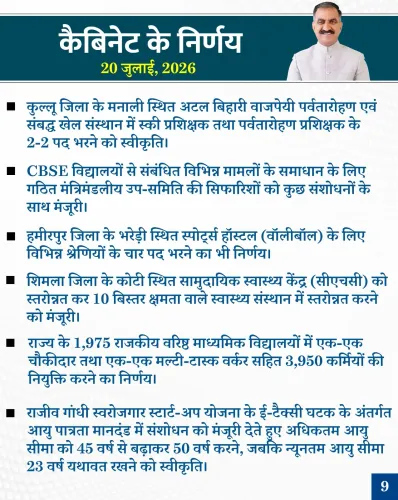
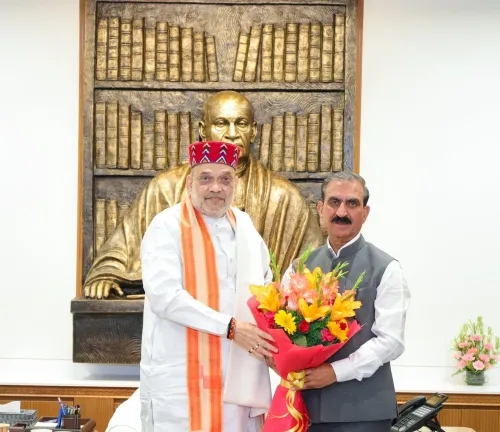
The post, shared from the official @CMOFFICEHP handle, stated in Hindi: 'मजबूत अर्थव्यवस्था, आधारभूत सुविधाओं का विस्तार, गुणवत्तापूर्ण शिक्षा एवं स्वास्थ्य सेवाएं, पर्यटन, कृषि-बागवानी और ग्रामीण विकास जैसे क्षेत्रों में हुए सकारात्मक बदलाव इस प्रगति के साक्षी हैं।' — translated: 'A strong economy, expansion of basic infrastructure, quality education and health services, and positive changes in sectors such as tourism, agriculture-horticulture and rural development are witness to this progress.' The post was accompanied by three images and was part of a broader communication thread from the office.
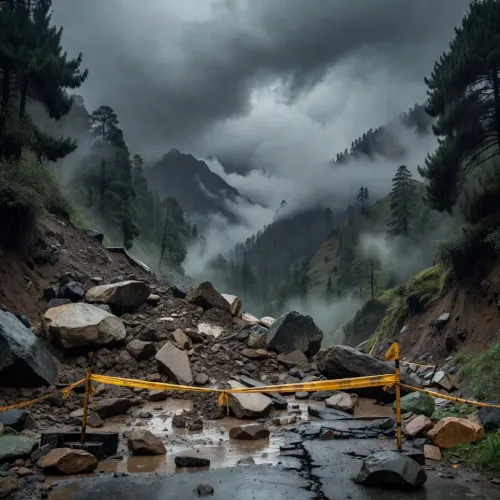
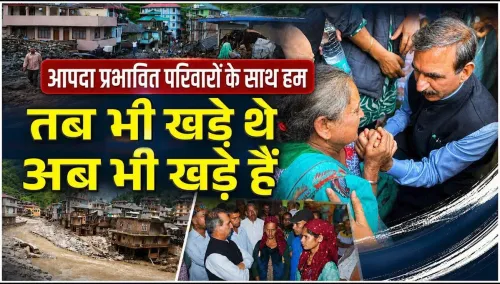
The statement also noted, in the same breath, that 'इस विकास यात्रा के बीच प्रदेश ने प्राकृतिक आपदा का भी कठिन दौर देखा' — 'during this development journey, the state has also witnessed a difficult period of natural disaster.' The pairing of progress claims with disaster acknowledgment is characteristic of official communications from Himachal Pradesh, a state whose geographic vulnerabilities are as defining as its economic assets.
Policy Backdrop
Himachal Pradesh has historically anchored its economy on four pillars: horticulture (particularly apple cultivation), tourism, hydropower, and agriculture. State horticulture development programmes dating to the 1970s expanded apple and off-season vegetable cultivation across multiple districts, making the sector a critical source of rural income.
Investments in rural infrastructure and social services — schools, health sub-centres, and all-weather roads — have been recurring budget priorities for successive state governments. Centrally sponsored schemes for rural connectivity and climate-resilient agriculture have also channelled significant resources into the state's hilly terrain over the past decade.
Stakeholders and Impact
Horticulture farmers, who depend on road connectivity and cold-chain infrastructure to move produce to markets, are among the most directly affected by both the progress cited and the disasters referenced. A single cloudburst or landslide season can wipe out months of income and damage roads built over years.
The tourism sector — a major employer in districts such as Shimla, Kullu-Manali, and Dharamsala — faces a similar dual reality: rising visitor numbers in good years, and sharp revenue losses when natural calamities close highways or damage hospitality infrastructure. Rural households across the state's remote valleys remain the most exposed to both the benefits of expanded services and the setbacks of recurrent floods and landslides.
What's Next
Attention will now turn to the state's upcoming budget cycle and how allocations are distributed between growth-oriented sectors and disaster management and mitigation infrastructure. The rollout status of centrally sponsored rural infrastructure programmes and climate-resilient agriculture schemes will be closely watched by farmers and local administrators alike.
For a Himalayan state navigating the twin pressures of development ambition and climate vulnerability, the balance between building forward and rebuilding after disasters will define Himachal Pradesh's governance agenda in the months ahead.
Point of View
Pre-empting criticism by conceding vulnerability while asserting resilience. This dual narrative is increasingly common among hill-state governments seeking to demonstrate governance competence without minimising the climate risks their populations face. The communication arrives ahead of what is likely a budget or policy cycle moment, suggesting the office is laying rhetorical groundwork for upcoming expenditure announcements. For a state where apple farmers and hoteliers are both swing constituencies, the breadth of sectors cited — from horticulture to health — signals an intent to speak to as wide a base as possible.
NationPress
8 Oct 2026
Frequently Asked Questions
What did the Himachal Pradesh Chief Minister's Office say on 9 July 2026?
The Chief Minister's Office of Himachal Pradesh posted on X citing positive changes in the state's economy, infrastructure, education, health, tourism, agriculture-horticulture and rural development, while also acknowledging that the state has faced a difficult period of natural disasters during its development journey.
Which sectors did the HP CMO highlight as showing progress?
The post highlighted a strong economy, expansion of basic infrastructure, quality education and health services, tourism, agriculture and horticulture, and rural development as areas witnessing positive change in Himachal Pradesh.
What natural disasters affect Himachal Pradesh?
Himachal Pradesh is recurrently affected by floods, landslides and cloudbursts, particularly during the monsoon season. These events damage roads, crops and settlements, disrupting both the horticulture and tourism sectors that anchor the state's economy.
Why is horticulture important to Himachal Pradesh?
Horticulture — especially apple cultivation and off-season vegetables — has been a cornerstone of Himachal Pradesh's rural economy since state development programmes expanded it from the 1970s onwards. It is a primary source of income for a large share of the state's farming households.
What should we watch for next in Himachal Pradesh governance?
Key things to watch include the state's upcoming budget allocations for disaster management versus growth sectors, and the rollout of centrally sponsored rural infrastructure and climate-resilient agriculture schemes across the state's districts.