HP CMO Advocates State Interests at Amit Shah Meet
Synopsis
The Chief Minister's Office of Himachal Pradesh announced on 16 June 2026 that state interests were strongly advocated at a high-level meeting chaired by Union Home Minister Amit Shah in New Delhi, highlighting the state's active engagement with the Centre on key demands.
Key Takeaways
The Chief Minister's Office of Himachal Pradesh confirmed participation in a high-level meeting chaired by Union Home Minister Amit Shah in New Delhi on 16 June 2026 .
The CMO stated that state interests were strongly advocated at the meeting.
Himachal Pradesh has a history of engaging the Union Home Ministry on central assistance for flood and landslide damage.
The Home Ministry oversees key disaster relief funds including the SDRF and NDRF , critical for Himalayan states.
Follow-up announcements on central assistance or budget allocations are awaited.
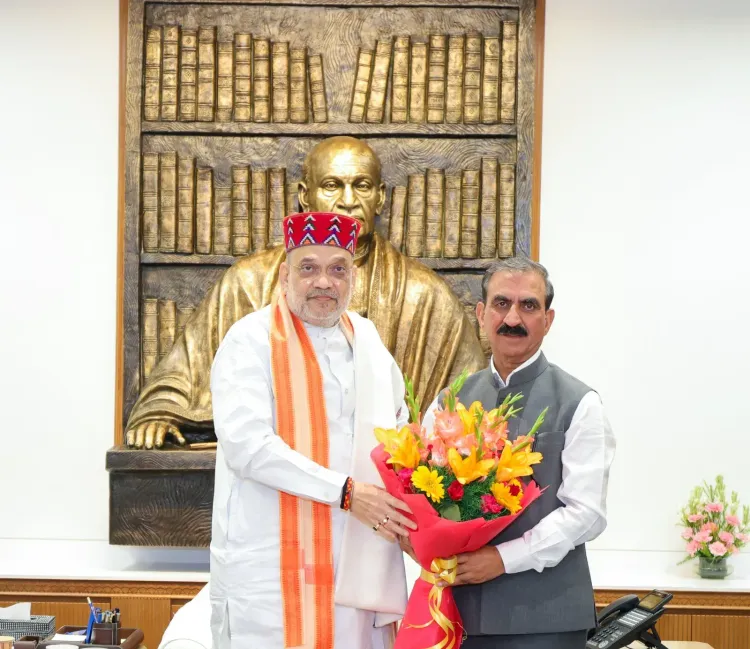
The Chief Minister's Office of Himachal Pradesh on Tuesday, 16 June 2026 stated that state interests were strongly advocated at a high-level meeting chaired by Union Home Minister Amit Shah in New Delhi. The CMO's post underscored the state government's active engagement with the Centre on pressing matters of state concern.
Context
The CMO posted in Hindi: 'आज नई दिल्ली में केंद्रीय गृह मंत्री श्री अमित शाह जी की अध्यक्षता में आयोजित उच्च स्तरीय बैठक में प्रदेश हितों की मजबूती से पैरवी की' — translated: 'Today, at a high-level meeting held in New Delhi under the chairmanship of Union Home Minister Shri Amit Shah ji, the interests of the state were strongly advocated.' The statement signals that Himachal Pradesh used the forum to place its demands and concerns directly before the Union government's top leadership.
Centre-state coordination meetings chaired by the Home Minister are a well-established feature of Indian federal governance. They provide state governments — including those led by opposition parties — a structured channel to raise issues of funding, security, and disaster response with the Centre.
Policy Backdrop
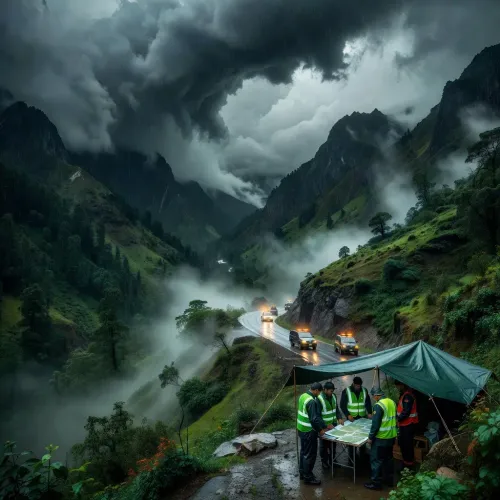
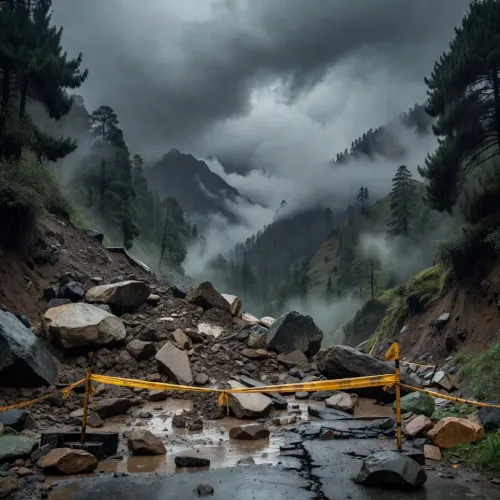
Himachal Pradesh is a Himalayan state particularly vulnerable to floods, cloudbursts, and landslides, making it heavily reliant on central financial assistance for infrastructure repair and disaster relief. In 2023 and 2024, the state's leadership held multiple engagements with the Union Home Ministry seeking additional central assistance to address damage from extreme weather events.
The Home Ministry oversees the National Disaster Management Authority (NDMA) and plays a central role in releasing funds under the State Disaster Response Fund (SDRF) and the National Disaster Response Fund (NDRF). For a terrain-specific state like Himachal Pradesh, these mechanisms are critical to fiscal planning and on-ground recovery.
Stakeholders and Impact
The primary stakeholders in such engagements are the residents of Himachal Pradesh, particularly communities in flood-prone and landslide-affected districts who depend on timely central disbursements for rebuilding homes, roads, and livelihoods. The state government's ability to secure favourable outcomes from such meetings directly influences the pace of infrastructure development and disaster preparedness in the hills.
Such high-level meetings also carry political significance: an opposition-ruled state making its case before a Union Cabinet minister of the ruling dispensation demonstrates the necessity of institutional dialogue that transcends party lines in matters of public welfare.
What's Next
The outcome of the 16 June 2026 meeting — including any commitments on central assistance packages or special grants — is yet to be formally announced. Follow-up announcements could emerge through official press releases from the Home Ministry, inclusion of state demands in forthcoming Union Budget allocations, or decisions taken at NITI Aayog deliberations.
For Himachal Pradesh, securing a strong central commitment at such forums could prove decisive for its fiscal health and its capacity to manage the infrastructure demands of an increasingly climate-stressed Himalayan landscape.
Point of View
While also creating a public record of demands made. For a fiscally stressed Himalayan state with recurring disaster-relief needs, these forums are not ceremonial — they are a primary lever for securing central funds. The pattern of repeated engagement with the Home Ministry underscores how disaster vulnerability and infrastructure deficits shape the political calculus of Himalayan state governments.
NationPress
18 Sept 2026
Frequently Asked Questions
Why did the Himachal Pradesh CMO meet Amit Shah in New Delhi?
The Chief Minister's Office of Himachal Pradesh attended a high-level meeting chaired by Union Home Minister Amit Shah on 16 June 2026 in New Delhi to advocate for state interests, which for Himachal Pradesh typically include central assistance for disaster relief, infrastructure, and development funding.
What issues does Himachal Pradesh usually raise with the Union Home Ministry?
Himachal Pradesh frequently raises issues of central financial assistance for flood and landslide damage, disaster relief fund releases under the SDRF and NDRF, and special grants for infrastructure in its terrain-specific, climate-vulnerable geography.
What is the role of the Union Home Minister in centre-state meetings?
The Union Home Minister chairs high-level inter-governmental meetings that allow states to present demands on funding, internal security, and disaster management. These meetings are a key mechanism of Indian federal coordination.
Which party governs Himachal Pradesh and how does it affect central meetings?
Himachal Pradesh is governed by the Congress party. Despite being an opposition-ruled state, it participates in Union government-chaired meetings to secure central assistance, reflecting the necessity of institutional dialogue beyond party lines.
What could follow from the 16 June 2026 Amit Shah meeting for Himachal Pradesh?
Possible outcomes include announcements of central assistance packages, inclusion of state demands in Union Budget allocations, or decisions at NITI Aayog discussions — though no formal outcome has been announced yet.