HP CM Office Launches Major PWD Reforms to Tackle Disasters
Synopsis
The Himachal Pradesh Chief Minister's Office has announced comprehensive reforms in the Public Works Department to tackle future natural disasters, citing three years of recurring calamities that have tested the state's infrastructure and connectivity.
Key Takeaways
The Himachal Pradesh government has launched comprehensive reforms in the Public Works Department (PWD) to better handle future challenges.
The state has faced multiple natural disasters over the past three years , placing heavy demands on the PWD for restoration and recovery.
The initiative aligns with the Disaster Management Act, 2005 , which mandates states to build disaster-resilient infrastructure.
The reforms mirror similar steps taken by Uttarakhand and other Himalayan states following major flood episodes.
Specific details on budgetary allocations and technical standards for the reforms are yet to be publicly disclosed.
The announcement comes ahead of the 2026 monsoon season , signalling a shift from reactive response to proactive institutional preparedness.
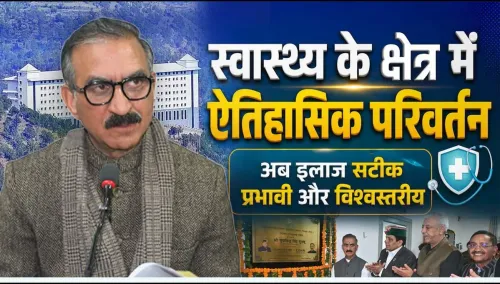
The Chief Minister's Office of Himachal Pradesh announced on Saturday, 20 June 2026 that the state government has initiated sweeping reforms in the Public Works Department (PWD) to better withstand future challenges, particularly in the wake of repeated natural disasters over the past three years that have severely strained the state's infrastructure.
Context
The official post, shared from the CMO Himachal Pradesh account, highlights two key points: first, that the state government has launched comprehensive reforms within the Public Works Department to enable it to respond more effectively to future challenges; and second, that over the past three years, the state has faced multiple natural disasters in which the PWD bore significant responsibility for recovery and restoration. The post was shared in Hindi, with the key phrase 'व्यापक सुधारों की शुरुआत' (the beginning of comprehensive reforms) underscoring the scale of the intervention being signalled.
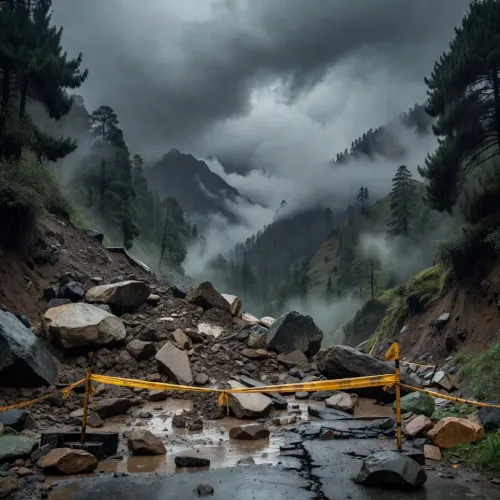
Himachal Pradesh's rugged Himalayan terrain makes it one of India's most disaster-vulnerable states. Recurrent monsoon cloudbursts, landslides, and flash floods routinely sever road connectivity across districts, placing an enormous operational burden on the PWD — the agency responsible for constructing and maintaining roads, bridges, and government buildings throughout the state.
Policy Backdrop
The move aligns with the framework established under the Disaster Management Act, 2005, which mandates Indian states to build disaster-resilient infrastructure and strengthen departmental capacity for rapid recovery. Himachal Pradesh's initiative reflects a growing pattern among Himalayan states to institutionalise climate-resilient design standards within their public-works agencies, rather than treating post-disaster repair as a one-off response.
Neighbouring Uttarakhand undertook similar structural reforms to its public-works machinery following major flood episodes in prior years. Central programmes promoting retrofitting of roads and bridges in ecologically fragile zones have also provided a policy scaffold that state governments are now building upon with their own departmental overhauls.
Stakeholders and Impact
The reforms are expected to directly benefit hill residents across Himachal Pradesh, for whom road connectivity is not merely a convenience but a lifeline — linking remote villages to hospitals, markets, and emergency services. Prolonged road closures following disasters have historically isolated communities for days or even weeks, with cascading effects on local economies and public health.
The PWD workforce itself stands to be significantly affected, as comprehensive reforms typically involve updated technical training, revised construction protocols, and potentially new procurement and engineering standards. The precise scope of the reforms — including any budgetary allocations or new technical benchmarks — has not yet been detailed in the public announcement.
What's Next
Detailed guidelines and budgetary provisions for the PWD reforms are expected to be placed before the Himachal Pradesh state assembly in an upcoming session. Stakeholders and infrastructure experts will be watching closely for specifics on whether the reforms include mandatory climate-resilient design standards for new construction, faster procurement norms for emergency restoration, or enhanced inter-agency coordination protocols with the State Disaster Management Authority.
As the 2026 monsoon season approaches, the timing of this announcement signals the state government's intent to move from reactive disaster response to proactive institutional preparedness — a shift that, if backed by concrete policy and funding, could meaningfully reduce the human and economic toll of future extreme weather events in the region.
Point of View
The announcement positions the ruling dispensation as forward-looking on climate resilience, a politically salient theme in a state where infrastructure failures carry direct electoral consequences. The emphasis on 'comprehensive reforms' rather than specific projects, however, leaves the announcement open to scrutiny until budgetary and technical details are tabled before the assembly. The broader arc here mirrors a national pattern of Himalayan states seeking to embed disaster-resilience into routine public-works governance rather than relying solely on central emergency funds.
NationPress
19 Sept 2026
Frequently Asked Questions
What reforms has the Himachal Pradesh government announced for the PWD?
The Himachal Pradesh government has announced comprehensive reforms in the Public Works Department aimed at improving its capacity to handle future natural disasters and challenges, though specific technical and budgetary details are yet to be disclosed.
Why is the Himachal Pradesh PWD being reformed?
The state has faced multiple natural disasters over the past three years, repeatedly damaging roads and bridges and straining the PWD's capacity for restoration. The reforms are intended to make the department more resilient and responsive to such recurring challenges.
What is the Public Works Department in Himachal Pradesh responsible for?
The Public Works Department (PWD) in Himachal Pradesh is the state agency responsible for constructing, maintaining, and repairing roads, bridges, and government buildings across the state's mountainous terrain.
How does the Disaster Management Act relate to PWD reforms in Himachal Pradesh?
The Disaster Management Act, 2005 mandates Indian states to build disaster-resilient infrastructure and strengthen departmental capacity for rapid recovery, providing the legal and policy framework within which Himachal Pradesh's PWD reforms are being undertaken.
Which other Himalayan states have reformed their public works departments for disaster resilience?
Uttarakhand has undertaken similar structural reforms to its public-works machinery following major flood episodes, and several other Himalayan states have progressively updated their PWD agencies to incorporate climate-resilient design standards.