Dr. Jitendra Singh Addresses NISER Bhubaneswar Graduation
Synopsis
Union Science Minister Dr. Jitendra Singh addressed NISER Bhubaneswar's graduation on 9 July 2026, invoking Homi Bhabha's peaceful nuclear legacy and linking 260 graduates to India's Viksit Bharat 2047 and Net Zero 2070 commitments, while citing a proposed Rare Earth Corridor in Odisha.
Key Takeaways
260 graduates received degrees at NISER Bhubaneswar's graduation ceremony on 9 July 2026 .
Jitendra Singh described the event as passing on the mission of Dr.
Homi Bhabha , founder of India's atomic energy programme, to the next generation.
The minister linked NISER's multidisciplinary training to the National Education Policy 2020 framework.
Graduates were tasked with advancing two national goals: Viksit Bharat by 2047 and Net Zero emissions by 2070 .
Singh referenced a proposed Rare Earth Corridor in Odisha as part of India's clean nuclear energy expansion.
India's nuclear programme was cited as rooted in Dr.
Bhabha's declaration of peaceful purpose, which the minister said is being upheld through current policy decisions.
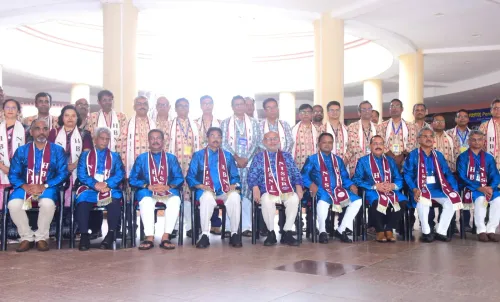
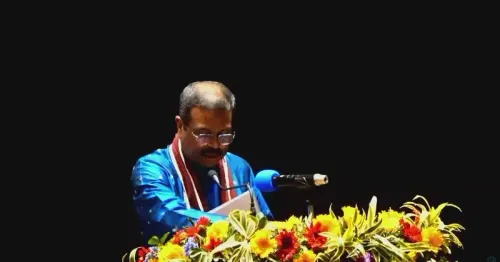
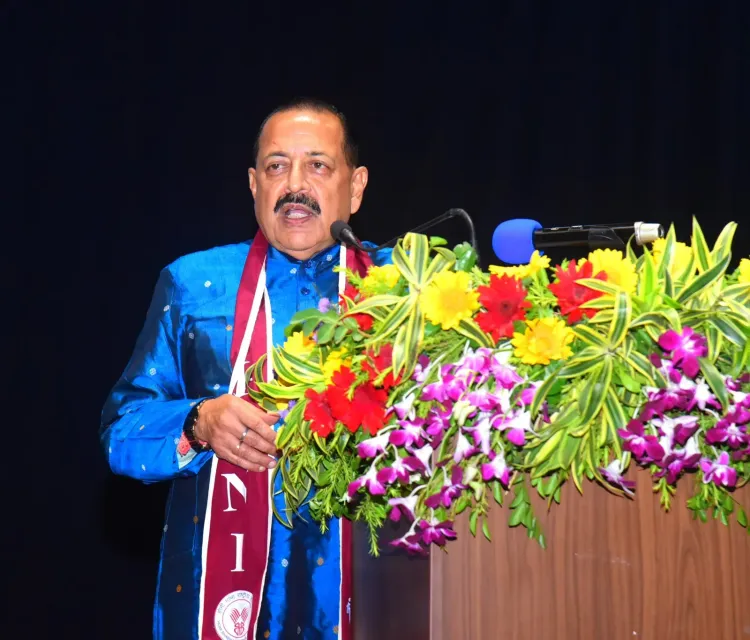
Union Minister of State (Independent Charge) for Science and Technology Dr. Jitendra Singh addressed the graduation ceremony of the National Institute of Science Education and Research (NISER) in Bhubaneswar on 9 July 2026, calling the occasion a symbolic transfer of the atomic energy mission initiated by Dr. Homi Bhabha to the next generation of Indian scientists.
Context
NISER is an autonomous institution under the Department of Atomic Energy (DAE), established in Bhubaneswar, Odisha. It was founded in the legacy of Dr. Homi Bhabha, the nuclear physicist who laid the foundations of India's atomic energy programme in the 1940s and established the Tata Institute of Fundamental Research in 1945. At the ceremony, 260 graduates received their degrees across science disciplines.
Dr. Singh said, 'In awarding degrees to these youngsters, we are actually passing on to the next generation the baton of the mission handed to us by Late Homi Bhabha.' He underscored that NISER is 'a unique academic institution of its kind in the country, functioning under the aegis of the Department of Atomic Energy.'
Policy Backdrop
Dr. Singh invoked Dr. Bhabha's historic declaration that India's nuclear programme was 'dedicated to peaceful purposes,' made in response to early international scepticism when India's nuclear initiative was launched. He stated that this declaration 'stands vindicated' through recent policy decisions by Prime Minister Narendra Modi, citing the SHANTI Act and the announcement of four Rare Earth Corridors across the country, one of which is envisaged in Odisha.
India's Net Zero emissions target by 2070, announced at COP26 in Glasgow in 2021, and the Viksit Bharat @2047 vision — India's goal to become a fully developed nation by the centenary of its independence — were cited as the twin national commitments the graduating batch must carry forward. The minister also highlighted that the multidisciplinary training offered at NISER is 'closely aligned with NEP 2020,' the National Education Policy approved in 2020 to foster integrated science education.
Stakeholders and Impact
The 260 graduates from NISER's latest batch enter a research and industry landscape increasingly oriented around clean energy, critical minerals, and advanced science. DAE institutions like NISER are being positioned as key pipelines for trained manpower aligned with both NEP 2020's multidisciplinary framework and India's long-term energy and climate commitments.
The reference to a Rare Earth Corridor in Odisha carries specific significance for the state, which holds substantial reserves of rare earth minerals. Such corridors, if developed, could anchor clean-energy and nuclear supply-chain infrastructure in the region, directly relevant to the kind of scientific workforce NISER produces.
What's Next
The alignment of DAE-affiliated institutions with NEP 2020 curricula is expected to deepen as the policy's implementation progresses across Indian higher education. Progress on the proposed Rare Earth Corridor in Odisha and the broader nuclear clean-energy agenda will be closely watched as indicators of how India translates its peaceful-use atomic legacy into a 21st-century energy transition strategy.
For the 260 NISER graduates, the minister's address frames their careers as part of a continuum stretching from Bhabha's founding vision to India's commitments on the global climate stage — a generational relay that now passes to them.
Point of View
NEP 2020, Viksit Bharat, and Net Zero — into a single national narrative, positioning DAE institutions as the human-capital engine behind India's clean-energy ambitions. The invocation of Homi Bhabha alongside Prime Minister Modi's policy decisions is a deliberate attempt to frame current nuclear and rare-earth initiatives as the fulfilment of a founding national promise rather than a departure from it. The specific mention of Odisha for a Rare Earth Corridor signals the government's intent to anchor critical mineral infrastructure in a state with significant reserves, adding a regional political dimension to a science-education event. Overall, the speech reflects a broader pattern of the Modi government using institutional milestones to reinforce long-horizon policy commitments before student and academic audiences.
NationPress
9 Jul 2026
Frequently Asked Questions
What is NISER Bhubaneswar and which ministry oversees it?
NISER, the National Institute of Science Education and Research, is an autonomous institution in Bhubaneswar, Odisha, that functions under the Department of Atomic Energy . It offers integrated science education and research programmes and is part of the legacy of nuclear physicist Dr. Homi Bhabha .
What did Dr. Jitendra Singh say at the NISER graduation 2026?
Dr. Jitendra Singh said that awarding degrees to NISER graduates is equivalent to passing on the baton of Dr. Homi Bhabha's mission to the next generation. He linked the graduates' training to India's goals of Viksit Bharat by 2047 and Net Zero by 2070 , and highlighted alignment with NEP 2020 .
What is the Rare Earth Corridor in Odisha mentioned by the minister?
The minister referred to a proposed Rare Earth Corridor in Odisha as one of four such corridors announced across India, aimed at upscaling the generation of clean nuclear energy. Odisha holds significant rare earth mineral reserves, making it a candidate for such infrastructure.
How many students graduated from NISER in 2026?
260 young graduates received their degrees at the NISER Bhubaneswar graduation ceremony held on 9 July 2026 , which was addressed by Union Science Minister Dr. Jitendra Singh.
How is NEP 2020 connected to NISER and the Department of Atomic Energy?
The National Education Policy 2020 promotes multidisciplinary undergraduate education and research. Dr. Jitendra Singh stated that NISER's training model is 'closely aligned' with NEP 2020, positioning DAE institutions as early adopters of the policy's integrated science framework.