Dr. Jitendra Singh attends NISER Bhubaneswar Convocation
Synopsis
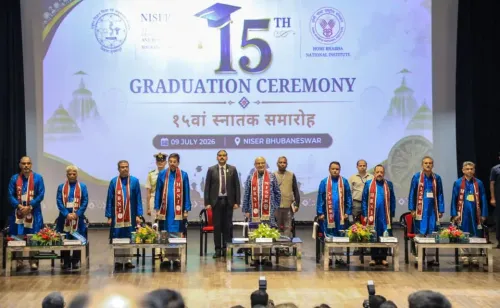
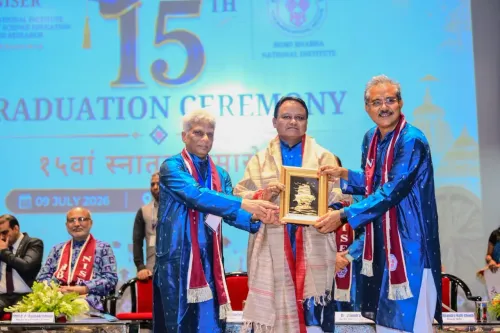
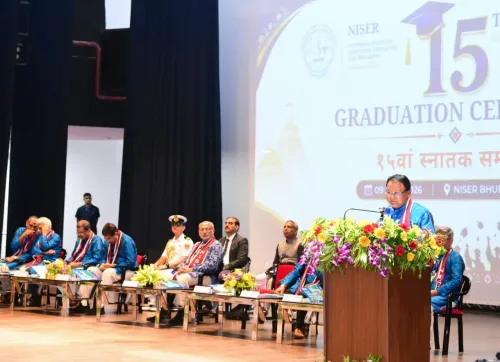
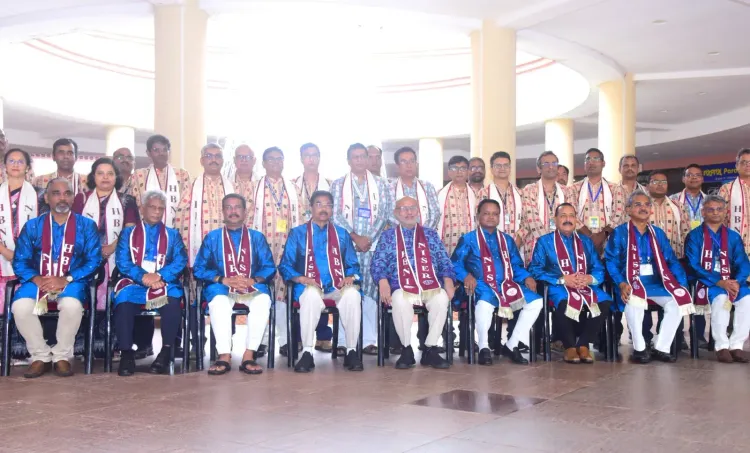
Union Minister Dr. Jitendra Singh attended the NISER Bhubaneswar Convocation on 9 July 2026 alongside Vice President Thiru C.P. Radhakrishnan. NISER, India's only institute of its kind under the Department of Atomic Energy, offers integrated MSc-PhD programmes in basic sciences and has been a cornerstone of India's science education push since 2007.
Key Takeaways
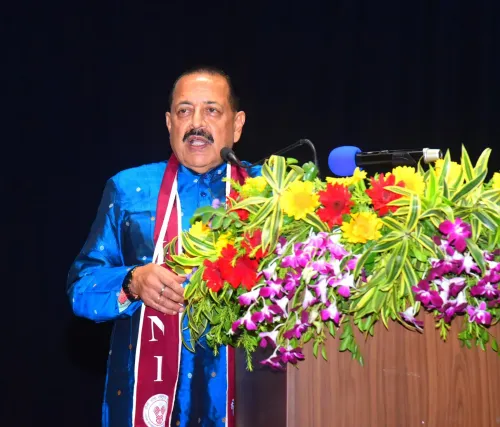
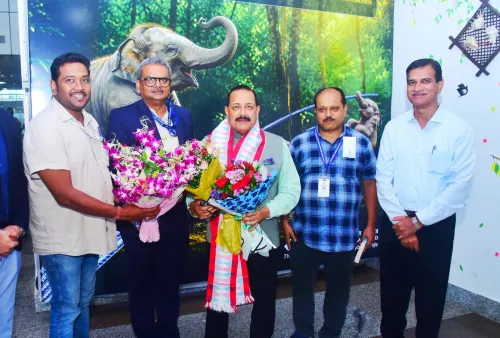
Jitendra Singh attended the Convocation at NISER, Bhubaneswar on 9 July 2026 .
Vice President of India Thiru C.P.
Radhakrishnan was present at the ceremony.
NISER was established in 2007 under the Department of Atomic Energy as an institute of national importance.
The institute is described as the 'only one of its kind in India,' offering integrated MSc-PhD programmes in basic sciences.
NISER is part of a broader national network of dedicated science institutes, including the IISERs , built since the mid-2000s.
The event highlights the government's emphasis on basic science education as a strategic national priority.
Union Science and Technology Minister Dr. Jitendra Singh attended the Convocation ceremony at the National Institute of Science, Education and Research (NISER) in Bhubaneswar on 9 July 2026, alongside Vice President of India Thiru C.P. Radhakrishnan. NISER, established under the Department of Atomic Energy, is described by the Minister as the 'only one of its kind in India.'
Context
NISER was founded in 2007 by the Department of Atomic Energy as an institute of national importance, located in Bhubaneswar, the capital of Odisha. It offers integrated MSc-PhD programmes in basic sciences, setting it apart from conventional universities by embedding research exposure from the very first year of study. Dr. Jitendra Singh's presence at the convocation underscores the Ministry's continued engagement with premier science education institutions under its administrative ambit.
Policy Backdrop
NISER operates outside the standard university framework, functioning as an autonomous body under the Department of Atomic Energy — a portfolio that falls within the broader science and technology governance landscape. India has, since the mid-2000s, built a network of dedicated science institutes — including NISER and the Indian Institutes of Science Education and Research (IISERs) — to strengthen undergraduate and doctoral training in basic sciences. These institutions were conceived to address a perceived gap between conventional degree programmes and the rigorous, curiosity-driven training required for frontier research.
Dr. Jitendra Singh, who holds independent charge of the Ministry of Science and Technology and the Ministry of Earth Sciences, in addition to responsibilities in the Prime Minister's Office, has been a consistent advocate for elevating India's science education ecosystem. Convocation ceremonies at institutions such as NISER serve as key moments for the Ministry to signal policy priorities and encourage young researchers.
Stakeholders and Impact
The graduating cohort of science students and research scholars at NISER are the immediate beneficiaries of the institute's integrated curriculum, which is designed to produce researchers capable of contributing to India's broader scientific and technological ambitions. The presence of both the Vice President and a senior Union Minister at the convocation lends institutional weight to the occasion and highlights the government's recognition of basic sciences as a strategic priority. For Odisha, hosting an institute of this national stature reinforces Bhubaneswar's standing as an emerging hub for science and higher education.
What's Next
Observers will watch for Ministry announcements on funding allocations or expansion plans for DAE-affiliated institutes in the coming months. The annual convocation cycle at NISER also typically prompts broader conversations about placement outcomes, research output, and the pipeline of talent entering India's scientific institutions. Any policy directions signalled by the Vice President or the Minister during the ceremony could shape the near-term agenda for basic science education in India.
Point of View
A space that has received growing attention as India seeks to build a domestic research talent pipeline. Dr. Jitendra Singh's public post framing NISER as 'the only one of its kind' is also a subtle branding exercise, reinforcing the institute's unique identity amid competition from the expanding IISER network. The broader arc here is India's two-decade effort to move beyond rote-learning universities toward research-integrated science education — and convocations like this are the government's most visible opportunity to narrate that progress.
NationPress
8 Oct 2026
Frequently Asked Questions
What is NISER Bhubaneswar?
NISER, or the National Institute of Science Education and Research, is an autonomous institute in Bhubaneswar, Odisha, established in 2007 under the Department of Atomic Energy. It offers integrated MSc-PhD programmes in basic sciences and is considered the only institution of its kind in India.
Who attended the NISER convocation in 2026?
Union Science and Technology Minister Dr. Jitendra Singh and Vice President of India Thiru C.P. Radhakrishnan attended the NISER Bhubaneswar Convocation on 9 July 2026.
Which ministry oversees NISER?
NISER functions under the Department of Atomic Energy, which falls within the broader science and technology governance framework overseen by the Union Ministry of Science and Technology.
How is NISER different from IISERs?
While both NISER and the IISERs offer integrated science programmes outside the conventional university framework, NISER is the only such institute established directly under the Department of Atomic Energy, giving it a distinct institutional identity and funding structure.
Why is basic science education important for India?
India has been expanding dedicated science institutes since the mid-2000s to build a strong domestic research talent pipeline, reduce dependence on foreign institutions for advanced training, and support the country's broader scientific and technological ambitions.