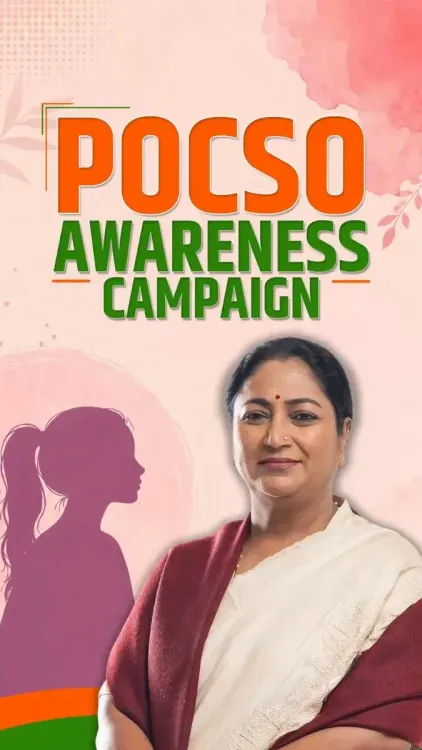
CM Rekha Gupta Launches Delhi POCSO Awareness Month
Synopsis
Delhi Chief Minister Rekha Gupta has declared July 2026 as POCSO Awareness Month, directing every school in the capital to hold child safety sessions, enforce mandatory protocols, and submit compliance reports within 15 days, backed by police, district officials, and Anganwadi workers.
Key Takeaways
Delhi CM Rekha Gupta declared July 2026 as POCSO Awareness Month across the capital.
Every school in Delhi must conduct Good Touch and Bad Touch awareness sessions this month.
Schools are required to implement mandatory child safety protocols and submit compliance reports within 15 days .
The initiative involves Delhi Police , District Magistrates , parents, teachers, and Anganwadi workers.
The drive is grounded in the POCSO Act, 2012 , strengthened by 2019 amendments introducing stricter punishments.
The campaign is positioned as a structural city-wide movement, not a one-time awareness event.
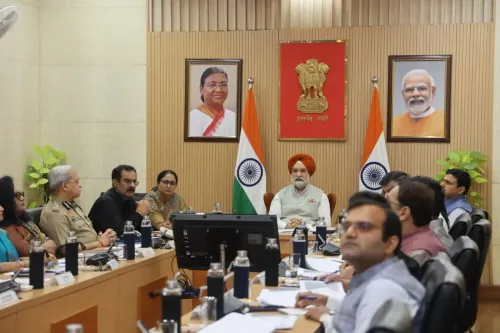
Delhi Chief Minister Rekha Gupta on Thursday, 9 July 2026, announced that July has been designated POCSO Awareness Month across the capital, mandating every school in Delhi to conduct Good Touch and Bad Touch awareness sessions, enforce child safety protocols, and submit compliance reports within 15 days.
Context
Posting on X, Chief Minister Gupta described the initiative as 'more than an awareness drive,' framing it as a 'city-wide movement for child protection.' The drive enlists parents, teachers, Delhi Police, District Magistrates, and Anganwadi workers as active participants, signalling a multi-agency operational structure rather than a standalone campaign.
The announcement carries the hashtag #ViksitDelhi (Developed Delhi), linking child safety to the broader governance agenda of the BJP-led Delhi government.
Policy Backdrop
The initiative is anchored in the Protection of Children from Sexual Offences (POCSO) Act, 2012, a central legislation that criminalises sexual offences against children under the age of 18. The Act was significantly strengthened through 2019 amendments that introduced stricter punishments, including the death penalty for aggravated penetrative sexual assault.
Since the early 2010s, Indian states have increasingly embedded Good Touch and Bad Touch education into school curricula as a practical extension of POCSO's prevention mandate. The involvement of Anganwadi centres — part of the nationwide Integrated Child Development Services network — extends the reach of the campaign to pre-school children and their families at the community level.
Stakeholders and Impact
The programme directly affects Delhi's entire government and aided school ecosystem, along with the children, parents, and teachers within it. By requiring compliance reports within 15 days, the administration has built in an accountability mechanism that moves the initiative beyond voluntary participation.
Delhi Police and District Magistrates are positioned as enforcement and coordination anchors, a model consistent with multi-stakeholder child protection frameworks adopted by several Indian states following high-profile cases that exposed gaps in prevention. Anganwadi workers bring the campaign into low-income and underserved communities where awareness gaps tend to be most acute.
For school children — the primary beneficiaries — the sessions are designed to equip them with the language and understanding to identify and report inappropriate contact, a foundational element of abuse prevention programmes globally.
What's Next
The immediate milestone is the collection and review of school compliance reports due within 15 days of the sessions being conducted. The Delhi government is expected to assess participation rates across districts, which will indicate both the administrative reach of the campaign and potential gaps requiring follow-up.
Sustained impact will depend on whether the July 2026 drive translates into institutionalised, recurring safety protocols in schools rather than a one-time observance — a distinction CM Gupta herself drew by calling it 'more than an awareness drive.'
Point of View
District Magistrates, and Anganwadi workers as co-implementers, the government is borrowing from a multi-stakeholder framework that has gained traction across Indian states since high-profile child abuse cases intensified public scrutiny. For CM Rekha Gupta, the initiative serves dual purposes: advancing a genuine child welfare agenda and reinforcing the BJP-led government's governance credentials in the capital. The 15-day compliance deadline will be the first real test of whether this movement has the institutional muscle to match its ambition.
NationPress
9 Jul 2026
Frequently Asked Questions
What is Delhi POCSO Awareness Month?
Delhi POCSO Awareness Month is a July 2026 initiative announced by Chief Minister Rekha Gupta under which every school in Delhi must conduct Good Touch and Bad Touch awareness sessions, implement child safety protocols, and submit compliance reports within 15 days.
What is the POCSO Act and why does it matter for schools?
The Protection of Children from Sexual Offences (POCSO) Act, 2012 is a central law that criminalises sexual offences against children under 18. Schools are key sites for its prevention mandate, and Good Touch and Bad Touch sessions help children identify and report inappropriate contact.
Who is involved in Delhi's child safety awareness drive?
The initiative involves parents, teachers, Delhi Police, District Magistrates, and Anganwadi workers, creating a multi-agency structure that spans schools and community-level outreach.
What are schools required to do under Delhi's POCSO Awareness Month?
Schools must conduct Good Touch and Bad Touch awareness sessions, implement mandatory child safety protocols, and submit compliance reports to the authorities within 15 days.
What happens after the 15-day compliance deadline?
The Delhi government is expected to review the compliance reports submitted by schools to assess participation rates across districts and identify any gaps requiring further action.