Delhi CM Rekha Gupta launches menstrual health drive in govt schools
Synopsis
On World Menstrual Hygiene Day, Delhi CM Rekha Gupta moved beyond symbolic gestures — centralising pad distribution, mandating vending machine upkeep, expanding health education to Classes 6–9, and ordering immediate toilet repairs. The sweep of the announcement signals a shift from awareness-only campaigns to institutional accountability for girls' health in Delhi's public schools.
Key Takeaways
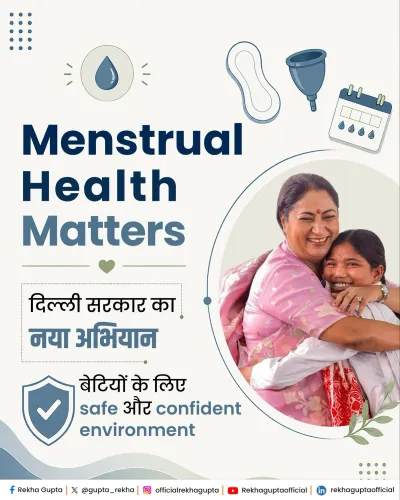
Delhi CM Rekha Gupta announced the 'Menstrual Health Matters' campaign on 28 May 2025 , World Menstrual Hygiene Day.
A special advisory will mandate regular maintenance and refilling of sanitary pad vending machines in schools, offices, public toilets, and Arogya Mandirs.
Distribution of biodegradable sanitary pads is being centralised to ensure quality access for every girl in Delhi.
Menstrual health education for Classes 6 to 9 will be strengthened in the school curriculum.
Girls will also receive education on PCOS, anaemia, cervical cancer, menopause , and HPV vaccination through regular Arogya Mandir sessions.
Gupta directed immediate repair of damaged school toilet infrastructure and directed use of school funds to resolve sanitation issues without delay.
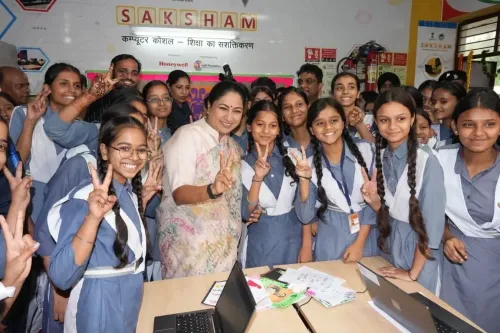
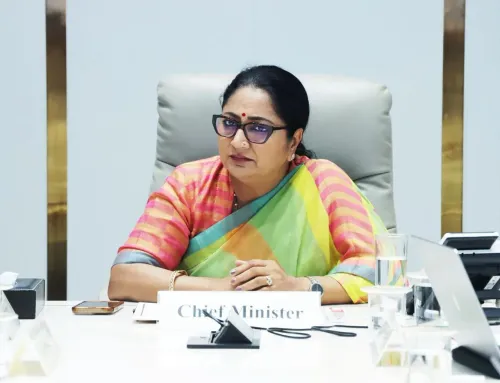
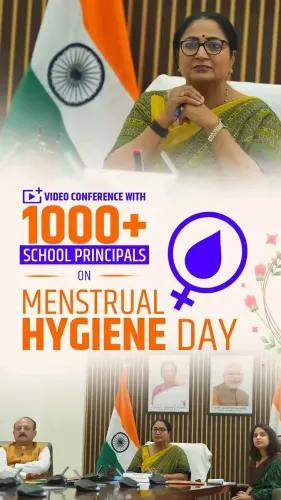
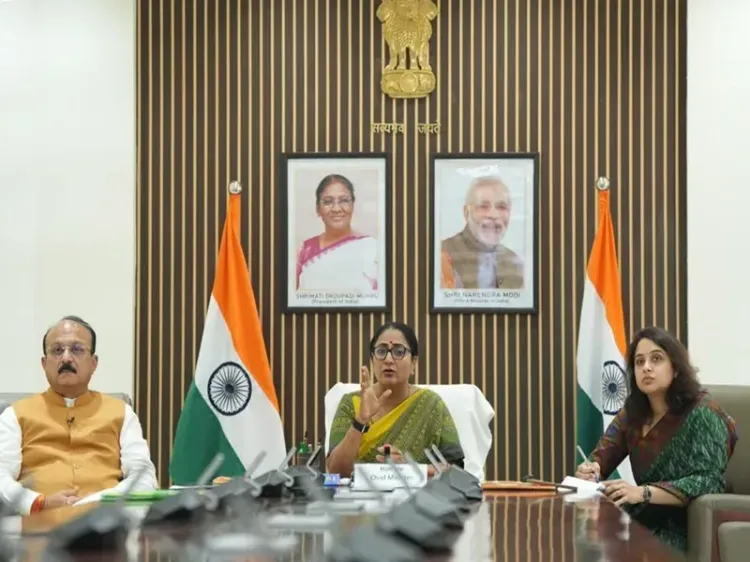
Delhi Chief Minister Rekha Gupta on Thursday, 28 May held a virtual interaction with government school principals and Education Department officials on the occasion of World Menstrual Hygiene Day, announcing a slate of policy measures under the 'Menstrual Health Matters' campaign aimed at making Delhi's public institutions safer and more supportive for girls.
Key Policy Decisions Announced
Chief Minister Gupta announced that a special advisory will be issued to ensure the regular maintenance and timely refilling of sanitary pad vending machines installed across government schools, government offices, public toilets, and Arogya Mandirs. The distribution system is being centralised to guarantee that every girl in Delhi has access to high-quality biodegradable sanitary pads.
Menstrual health education for Classes 6 to 9 will be strengthened within the school curriculum, while large-scale awareness programmes will be conducted across the capital through ASHA and Anganwadi workers to ensure accurate health information reaches every household.
Wider Health Agenda for Girls
Beyond menstruation, Gupta said girl students will be educated on conditions including PCOS, anaemia, cervical cancer, menopause, and HPV vaccination. Regular health sessions will be organised at Arogya Mandirs, where doctors and trained staff will engage directly with women and girl students.
The Chief Minister also stressed the importance of creating a school environment where girls can openly discuss their concerns and receive support for mental stress — a dimension of menstrual health that is often overlooked in policy discourse.
Sanitation Infrastructure Under Scrutiny
Gupta expressed concern over the state of toilet blocks in some schools, noting that complaints had been received regarding poor sanitation and damaged facilities. She directed that all school toilets be kept clean, that broken doors and other damaged infrastructure be repaired promptly, and that school funds or coordination with concerned officials be used to resolve such issues without delay.
What the Education Minister Said
Education Minister Ashish Sood said menstrual health is not merely a medical issue but one directly linked to dignity, awareness, and self-confidence. He underscored that it is the Education Department's responsibility to sustain awareness campaigns in schools on a subject that has historically received limited public discussion. Sood also noted that Prime Minister Narendra Modi had raised the issue during his Independence Day address from the Red Fort, signalling sustained political attention at the highest level.
What Comes Next
With the advisory on vending machines, curriculum strengthening, and community outreach through frontline health workers all set in motion, the initiative marks one of Delhi's most comprehensive institutional responses to menstrual health to date. Implementation timelines and monitoring mechanisms are expected to be detailed in the forthcoming advisory.
Point of View
Centralised pad procurement, toilet repair directives — rather than the vague awareness pledges that typically mark such occasions. The harder question is enforcement: Delhi's government schools have a long record of infrastructure announcements that stall at implementation. Whether the forthcoming advisory carries binding timelines and a public audit trail will determine if this becomes policy or pageantry. The inclusion of PCOS, cervical cancer, and HPV vaccination in the school health agenda is a meaningful expansion, but it also raises the question of teacher training and parental consent frameworks, neither of which was addressed in Thursday's interaction.
NationPress
25 Sept 2026
Frequently Asked Questions
What is Delhi's 'Menstrual Health Matters' campaign?
It is a policy initiative announced by Chief Minister Rekha Gupta on World Menstrual Hygiene Day, 28 May 2025, covering centralised distribution of biodegradable sanitary pads, mandatory maintenance of vending machines in schools and public spaces, strengthened menstrual health education for Classes 6 to 9, and community outreach through ASHA and Anganwadi workers.
Which schools and institutions will be covered by the sanitary pad vending machine advisory?
The advisory will cover Delhi government schools, government offices, public toilets, and Arogya Mandirs. The system is being centralised to ensure regular maintenance and timely refilling across all these locations.
What health topics beyond menstruation will be covered for girl students?
Girls will be educated on PCOS, anaemia, cervical cancer, menopause, and HPV vaccination through regular health sessions at Arogya Mandirs, where doctors and trained staff will interact directly with women and students.
What action did CM Gupta take on school toilet conditions?
Gupta directed that all school toilets be kept clean, broken doors and damaged infrastructure be repaired promptly, and school funds or coordination with concerned officials be used to resolve sanitation issues without delay, after complaints were received about poor conditions in some schools.
Why did Education Minister Ashish Sood invoke PM Modi in the context of menstrual health?
Minister Sood noted that Prime Minister Narendra Modi had raised the issue of menstrual health during his Independence Day address from the Red Fort, using it to underscore that the subject carries political attention at the national level and that the Education Department has a responsibility to sustain related awareness campaigns in schools.