CM Rekha Gupta pledges safe, equal future for Delhi's girls
Synopsis
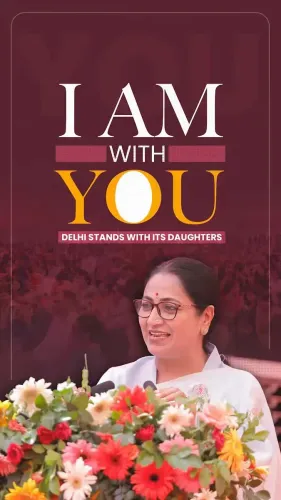
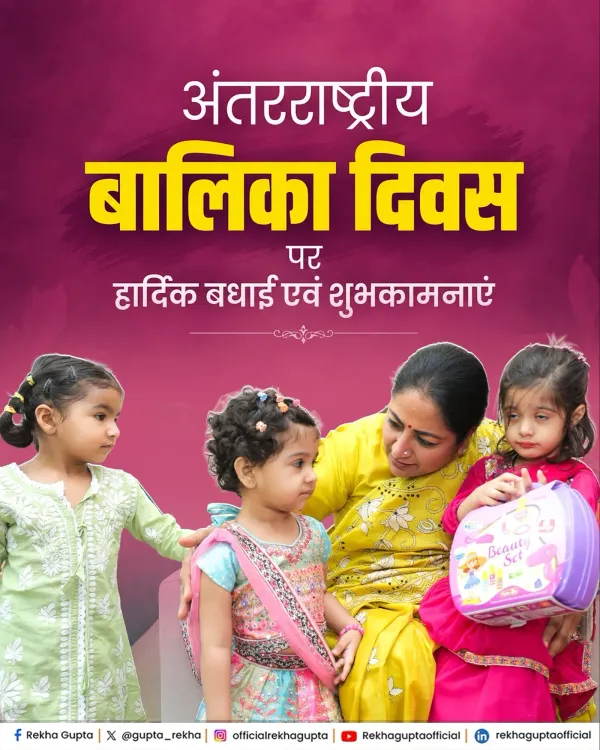
Delhi Chief Minister Rekha Gupta marked International Day of the Girl Child on 11 October 2026 by committing to safe environments, quality education, healthcare, and equal opportunity for every girl in Delhi — tying the pledge to the Viksit Bharat development vision.
Key Takeaways
Delhi CM Rekha Gupta posted on 11 October 2026 — International Day of the Girl Child — reaffirming the Delhi government's commitment to girl-child welfare.
The pledge covers four pillars: safe environment, quality education, better healthcare, and equal opportunities .
The statement invokes aatmnirbhar (self-reliance) as the end goal — framing girl empowerment as economic nation-building, not just protection.
The message explicitly connects girl-child empowerment to Viksit Bharat , the BJP's overarching developed-India vision.
No specific scheme name or budget figure was cited; the post is a policy commitment statement rather than a scheme announcement.
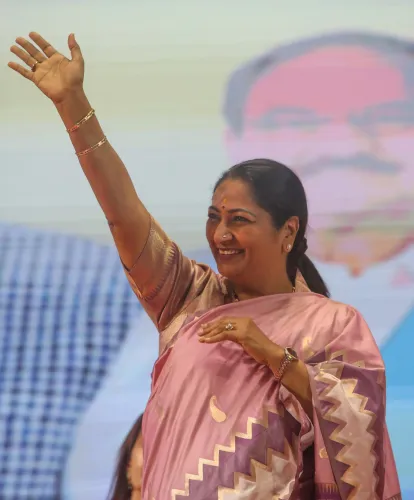
On International Day of the Girl Child, Sunday, 11 October 2026, Delhi Chief Minister Rekha Gupta used the occasion not just to offer wishes but to renew a public commitment — that every girl in the capital will have access to a safe environment, quality education, healthcare, and equal opportunity to build a self-reliant life.
In her post on X, CM Gupta wrote: 'दिल्ली सरकार हर बेटी को सुरक्षित वातावरण, गुणवत्तापूर्ण शिक्षा, बेहतर स्वास्थ्य सुविधाएँ और समान अवसर प्रदान करने के लिए संकल्पित है' — 'The Delhi government is committed to providing every daughter a safe environment, quality education, better healthcare facilities, and equal opportunities.' The message closed with a vision of each girl moving forward with confidence, realising her dreams, and contributing meaningfully to a Viksit Bharat — a developed India.
Girl-child rights at the centre of Delhi's governance pitch
The United Nations observes International Day of the Girl Child on 11 October every year, with a focus on dismantling barriers that hold girls back — from gender-based discrimination to gaps in schooling and healthcare. For a dense, fast-growing urban centre like Delhi, those challenges are acute: access to safe public spaces, school retention rates, and equitable health outcomes remain live policy questions.
CM Gupta's pledge — covering security, education, health, and economic self-reliance — maps directly onto those four pressure points. The explicit invocation of aatmnirbhar (self-reliant) girls contributing to Viksit Bharat also ties the statement into the BJP's broader national development narrative, framing girl-child welfare not as charity but as economic nation-building.
Why 'aatmnirbhar beti' is more than a slogan
The phrase aatmnirbhar beti — self-reliant daughter — echoes the Aatmanirbhar Bharat framework that has underpinned central government policy since 2020. Applying that language to girl-child empowerment signals an intent to move welfare schemes beyond protection and toward productive participation: girls as agents of India's growth story, not just beneficiaries of it.
Whether that intent translates into concrete Delhi Budget allocations for girls' schooling infrastructure, women's safety corridors, or adolescent health programmes will be the metric observers watch. The commitment is on record — 11 October 2026 is the benchmark date.
Point of View
Education, health, opportunity) mirrors the UN's own framework for girl-child rights, giving the statement broad resonance while committing the Delhi government to measurable outcomes. Observers will track whether upcoming Delhi Budget allocations for girls' schooling, safety infrastructure, and adolescent health back up the rhetoric. In a city-state where gender safety indices remain contested, the public record now exists.
NationPress
11 Oct 2026
Frequently Asked Questions
What did Delhi CM Rekha Gupta say on International Day of the Girl Child 2026?
CM Rekha Gupta pledged that the Delhi government is committed to providing every girl a safe environment, quality education, better healthcare, and equal opportunities — with the goal of making each daughter self-reliant and a contributor to Viksit Bharat.
When is International Day of the Girl Child observed?
International Day of the Girl Child is observed every year on 11 October , as designated by the United Nations, to highlight and address the challenges faced by girls worldwide.
What does 'aatmnirbhar beti' mean in the context of Delhi's policy?
'Aatmnirbhar beti' means 'self-reliant daughter.' CM Gupta used the term to signal that Delhi's girl-child welfare goals go beyond protection — aiming to make girls economically independent contributors to India's development.
What is Viksit Bharat and how does it relate to girl-child welfare?
Viksit Bharat, meaning 'Developed India,' is the BJP government's vision for making India a fully developed nation. CM Gupta linked girl-child empowerment to this goal, arguing that self-reliant girls will drive national growth.
Who is Rekha Gupta and what is her role in Delhi?
Rekha Gupta is the Chief Minister of Delhi and a senior BJP leader. She leads the Delhi state government and is responsible for policy and administration in the capital.