Mysuru Dasara 2026: 417th Nada Habba inaugurated at Chamundi Hills
Synopsis
The 417th Mysuru Dasara — Karnataka's grandest cultural festival — got under way at Chamundi Hills on 11 October 2026 with a seer's blessing and a Chief Minister's speech linking a thousand-year-old royal tradition to modern democracy, welfare politics, and water conservation. Eleven days of art, processions, and armed forces pageantry now follow.
Key Takeaways
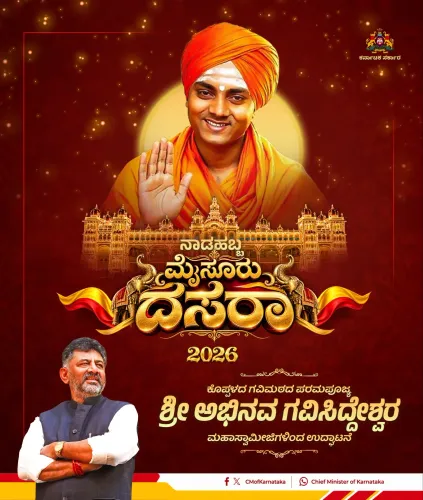
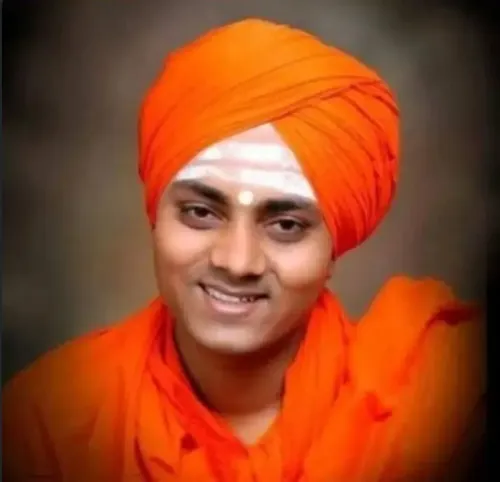
Abhinava Gavisiddeshwara Swamiji of the Gavisiddeshwara Math, Koppal , inaugurated the 417th Mysuru Dasara at Chamundi Hills on 11 October 2026 .
Shivakumar described the festival as Karnataka's cultural identity, tracing its roots to the Vijayanagara Empire and the Mysuru Wadiyars .
The Kambala traditional buffalo race revives a Vijayanagara-era Dasara tradition this year, amid some public criticism.
Shivakumar cited 1,139 days of the state's Gruha Lakshmi scheme (₹2,000 to eligible women) being linked symbolically to Goddess Chamundeshwari.
Contingents from India's three armed services will participate after Defence Minister Rajnath Singh approved Shivakumar's request.
The 11-day celebrations will showcase art forms including Dollu Kunitha , Yakshagana , and Veeragase , culminating in the Vijayadashami grand procession.
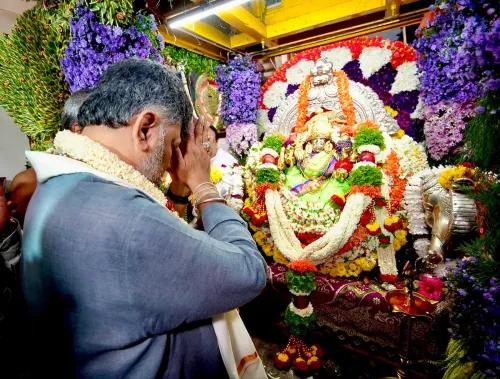
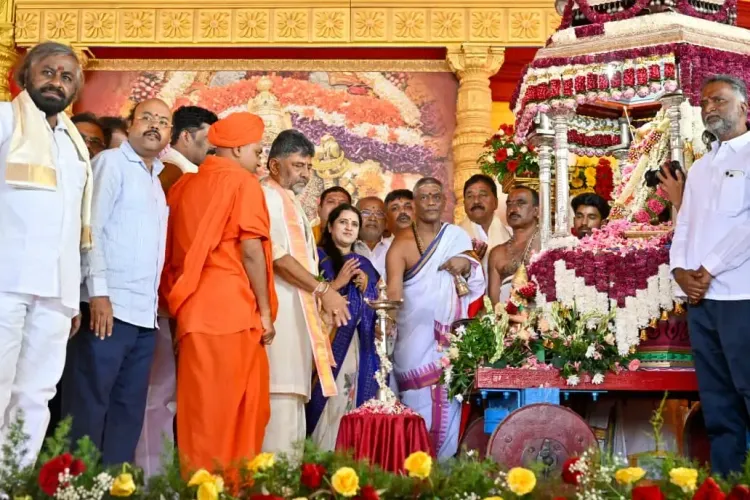
The 417th edition of Mysuru Dasara, Karnataka's celebrated 11-day Nada Habba, was formally inaugurated at Chamundi Hills on Sunday, 11 October 2026, by Abhinava Gavisiddeshwara Swamiji of the Gavisiddeshwara Math, Koppal. The seer offered flowers to the idol of Goddess Chamundeshwari during the auspicious Dhanur Lagna, accompanied by the chanting of Vedic hymns, marking the commencement of the state's grandest annual cultural celebration.
Opening Ceremony and Key Attendees
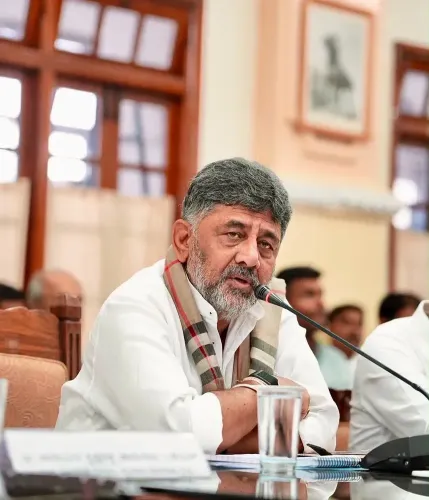
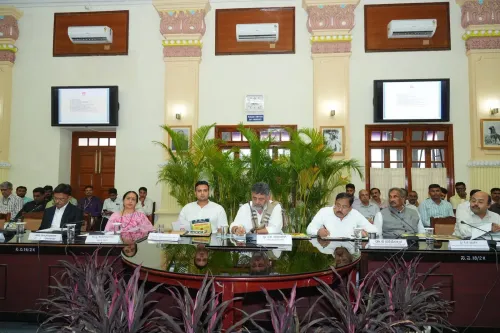
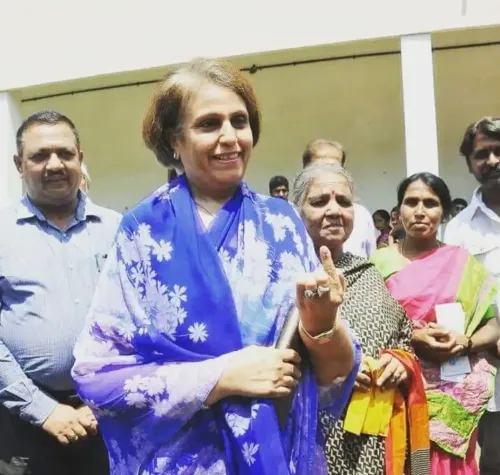
Karnataka Chief Minister D.K. Shivakumar, accompanied by his wife Usha, along with ministers, legislators, elected representatives, and senior officials, attended the inauguration at Chamundi Hills. Earlier in the day, Shivakumar also inaugurated the Dasara fruit and flower exhibition at the Glass House in Kuppanna Park, offering floral tributes to a replica of the Constitution and viewing a floral installation of Vidhana Soudha.
Ministers Ramalinga Reddy, Eshwar Khandre, Yathindra Siddaramaiah, and Puttaranga Shetty, MP Sunil Bose, Members of the Legislative Council, and representatives of various boards were also present.
Chief Minister's Address: Culture, Equality, and Democracy
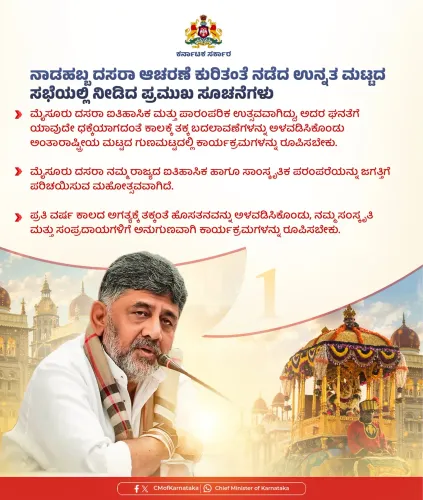
Addressing the gathering, Shivakumar described Mysuru Dasara as a confluence of strength, knowledge, culture, and equality. 'Dasara is not merely a religious celebration. It represents Karnataka's cultural identity, harmony and self-respect,' he said, adding that the festival offered people across the country an opportunity to experience India's traditions and heritage through Mysuru over the next 11 days.
The Chief Minister noted that Dasara had evolved from a royal celebration into a festival of the people, reflecting the historic transition from monarchy to democracy. He traced the festival's roots to the Vijayanagara Empire, whose rulers initiated the tradition, later carried forward and enriched by the Mysuru Wadiyars.
Shivakumar quoted poet Kuvempu's philosophy of universal humanism, saying humanity must transcend religious and social divisions to become the foundation of world peace. 'Removing the thorn of ignorance with the thorn of knowledge is education, while removing the thorn of unrighteousness with the thorn of righteousness is Dasara,' he said.
Cultural Heritage, Kambala, and Brand Mysuru
The Chief Minister highlighted Dasara as a major platform for Karnataka's traditional art forms — including Dollu Kunitha, Tamate, Nagari, Veeragase, Kolata, and Yakshagana — providing thousands of theatre artists, singers, and musicians an opportunity to preserve the state's cultural legacy.
Noting the historical practice of Vijayanagara rulers bringing buffaloes to Dasara, Shivakumar said the tradition was being carried forward this year through Kambala, the traditional buffalo race, despite criticism surrounding the practice.
Shivakumar also highlighted the contribution of Nalwadi Krishnaraja Wadiyar to building Brand Mysuru, citing Mysuru silk, Mysore Sandal Soap, Mysuru paintings, Mysore Pak, and the Kannambadi dam as landmarks that established the city's reputation beyond Karnataka.
Welfare Schemes, Water Conservation, and Armed Forces
Shivakumar referred to the state's Gruha Lakshmi scheme, which provides ₹2,000 to eligible women beneficiaries, saying 1,139 days had passed since the amount was first offered at the feet of Goddess Chamundeshwari. He reaffirmed the government's commitment to implementing welfare schemes without interruption.
Praising Abhinava Gavisiddeshwara Swamiji, the Chief Minister described the seer's social service as a model for the country and commended his Jaladeekshe water conservation campaign as particularly relevant given the state's need to protect its water resources. 'Wasting water is like draining the lifeblood of future generations,' he said.
Shivakumar also thanked Defence Minister Rajnath Singh for accepting his request to facilitate the participation of contingents from India's three armed services in this year's Dasara celebrations, adding a national dimension to the festivities.
What the Next 11 Days Hold
The inauguration sets the stage for 11 days of cultural performances, processions, and public events culminating in the iconic Vijayadashami grand procession. The Dasara celebrations are expected to draw tourists from across India and abroad, reinforcing Mysuru's position as a premier cultural destination. The inclusion of armed forces contingents and traditional art showcases signals a year that bridges Karnataka's royal past with its democratic present.
Point of View
Weaving the Gruha Lakshmi welfare scheme and water conservation advocacy into a ceremony that is ostensibly cultural. The decision to revive the Kambala buffalo race as a Dasara tradition — despite criticism — signals the government's willingness to use heritage politics as a shield against animal-welfare objections. More notable is the Defence Minister's green-light for armed forces participation: in an era of competitive nationalism, getting the tricolour into a state festival is a soft diplomatic win for a Congress chief minister navigating a BJP-led Centre. Whether the festival's cultural depth outlasts its political optics is the question Mysuru's artists and craftsmen will answer over the next 11 days.
NationPress
11 Oct 2026
Frequently Asked Questions
What is Mysuru Dasara and why is it called Nada Habba?
Mysuru Dasara is Karnataka's most celebrated 11-day cultural festival, known as the Nada Habba or 'state festival.' The 2026 edition is the 417th, inaugurated on 11 October at Chamundi Hills, and it showcases the state's royal legacy, traditional art forms, and cultural heritage culminating in the Vijayadashami grand procession.
Who inaugurated Mysuru Dasara 2026?
Abhinava Gavisiddeshwara Swamiji of the Gavisiddeshwara Math in Koppal inaugurated the 2026 edition by offering flowers to the idol of Goddess Chamundeshwari during the auspicious Dhanur Lagna, accompanied by Vedic hymns, at Chamundi Hills on 11 October 2026.
What did Chief Minister Shivakumar say at the inauguration?
Shivakumar described Dasara as a confluence of strength, knowledge, culture, and equality, and said the festival represents Karnataka's cultural identity, harmony, and self-respect. He also linked the Gruha Lakshmi welfare scheme to the ceremony, praised the seer's water conservation campaign, and thanked Defence Minister Rajnath Singh for enabling armed forces participation.
Will the Indian armed forces participate in Mysuru Dasara 2026?
Yes. Defence Minister Rajnath Singh accepted Chief Minister Shivakumar's request to facilitate contingents from India's three armed services — Army, Navy, and Air Force — to participate in this year's Dasara celebrations.
What is the historical origin of Mysuru Dasara?
The Dasara tradition was initiated by the rulers of the Vijayanagara Empire and later continued and developed by the Mysuru Wadiyars, who preserved its cultural significance and made it a platform for art and culture. Over centuries it has evolved from a royal celebration to a public festival, reflecting India's transition from monarchy to democracy.