Rahul Gandhi calls march to Supreme Court on Oct 12
Synopsis
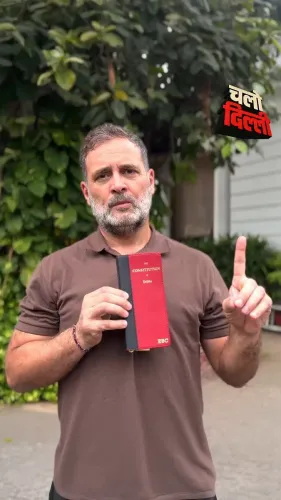
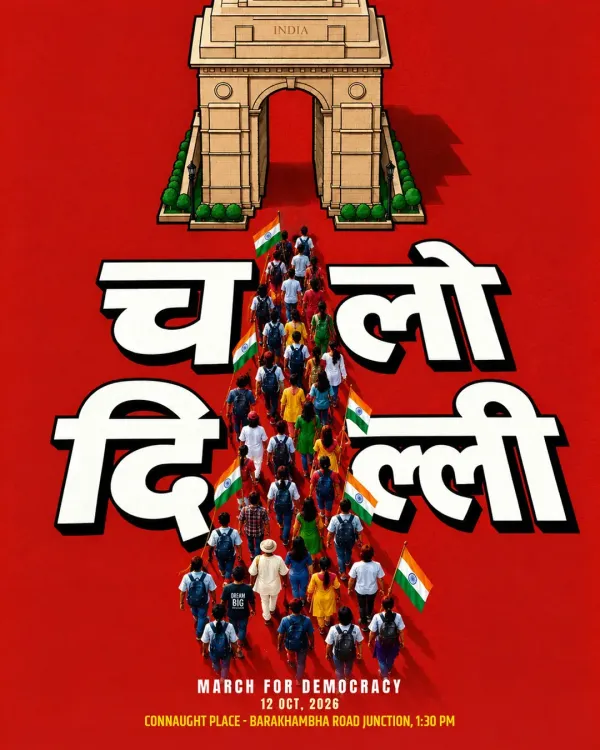
Congress leader Rahul Gandhi has called students, civil society bodies, and Opposition parties to march peacefully to the Supreme Court on 12th October 2026 under the banner #ChaloDilli, framing the mobilisation as a collective stand to defend Indian democracy.
Key Takeaways
Rahul Gandhi posted the call late on Sunday, 11th October 2026 , inviting students, civil society, and Opposition parties to join.
The destination is the Supreme Court of India — a deliberate constitutional framing rather than a political venue.
The march is billed as peaceful and cross-partisan under the hashtag #ChaloDilli .
No specific demands or legal submissions were outlined in the post, keeping the coalition broad.
Turnout on 12th October will be the first real test of the Opposition's street-level coordination ahead of any future electoral cycle.
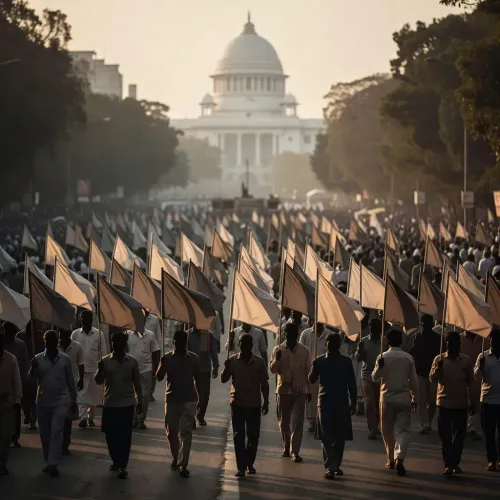
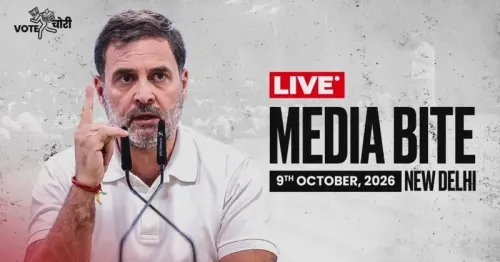
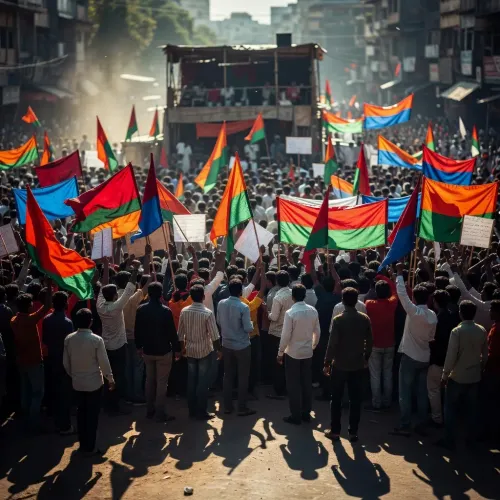
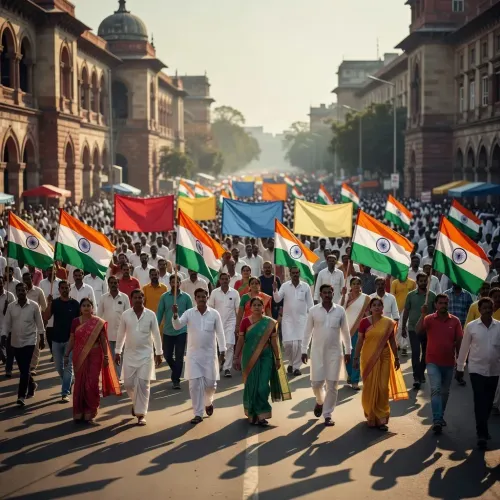
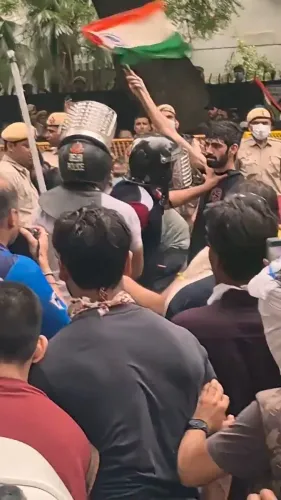
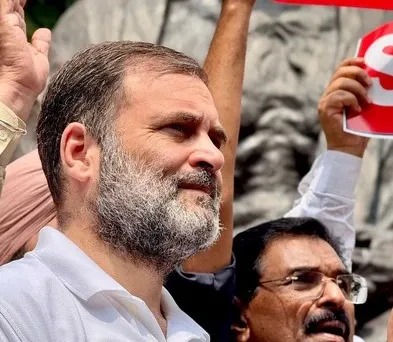
With a single hashtag — #ChaloDilli — Congress leader Rahul Gandhi has called on students, civil society organisations, and Opposition parties to converge on the Supreme Court of India on Monday, 12th October 2026, framing the march as a peaceful, unified stand to 'defend our democracy.'
The call: who Gandhi is asking to march, and why
Gandhi's post, published late on Sunday night, is addressed to three distinct constituencies: students, civil society, and Opposition parties. The breadth of the appeal signals an attempt to build a coalition that extends well beyond partisan lines. The choice of the Supreme Court as the destination — rather than Parliament or Jantar Mantar — is deliberate and pointed, invoking the apex court as the symbolic seat of constitutional protection.
The phrase 'India marches peacefully as one' sets an explicitly non-violent, unifying register, while the urgency of 'defend our democracy' makes the stakes unmistakable. Gandhi, as Leader of the Opposition in the Lok Sabha and MP from Rae Bareli, has constitutional standing to articulate such a call, and the framing puts pressure on other opposition leaders and student bodies to publicly align — or publicly abstain.
#ChaloDilli and the politics of symbolic destination
The hashtag #ChaloDilli — literally 'Let's go to Delhi' — carries the grammar of a mass-mobilisation summons. It echoes a long tradition in Indian protest politics of marching on the capital as a demonstration of national will, from the Salt March's spirit to more recent farmer and student agitations that funnelled demonstrators toward Delhi's borders and institutions.
Routing the march specifically to the Supreme Court rather than a political venue is a strategic choice: it frames the grievance as constitutional rather than electoral, and dares the government to characterise opposition to it as opposition to the judiciary itself. Whether the march draws the cross-partisan turnout Gandhi is calling for will be the first real test of the Opposition's ability to coordinate in the streets as well as in Parliament.
What happens when the marchers arrive
No specific demands, petitions, or planned submissions to the court were outlined in Gandhi's post, leaving the precise legal or institutional objective of the march unstated. The absence of a concrete ask is either a strategic ambiguity — keeping the coalition broad — or a signal that the march's purpose is declaratory rather than petitionary. Either way, 12th October will test not just turnout numbers but the organisational machinery of India's opposition ecosystem.
Security arrangements around the Supreme Court precinct and potential Section 144 orders in central Delhi will be among the immediate logistical variables to watch as Monday morning approaches.
Point of View
Making it harder for the ruling dispensation to dismiss it as routine electoral posturing. The breadth of the appeal — students, civil society, and parties together — mirrors the coalition-building grammar that has defined successful mass movements in India's democratic history. Whether the march translates into durable political momentum will depend entirely on the turnout and the organisational coherence it reveals. The stakes on 12th October are therefore as much about the Opposition's internal coordination capacity as they are about any single constitutional grievance.
NationPress
11 Oct 2026
Frequently Asked Questions
What is the #ChaloDilli march called by Rahul Gandhi?
#ChaloDilli is a mass-mobilisation call issued by Congress leader Rahul Gandhi on 11th October 2026, inviting students, civil society organisations, and Opposition parties to march peacefully to the Supreme Court of India on 12th October 2026 to 'defend democracy.'
Where is the Rahul Gandhi march on 12th October going?
The march is headed to the Supreme Court of India in New Delhi, a destination Gandhi chose deliberately to frame the protest in constitutional rather than purely political terms.
Who is invited to join the #ChaloDilli march?
Gandhi specifically invited students, civil society organisations, and Opposition parties — a deliberately broad coalition intended to present the march as a cross-partisan, national gathering.
What are the demands of the Supreme Court march on 12th October 2026?
No specific legal demands or petitions were outlined in Gandhi's post. The march's stated purpose is to make a collective public declaration in defence of Indian democracy.
What does ChaloDilli mean?
'ChaloDilli' is Hindi for 'Let's go to Delhi' — a phrase with deep roots in Indian protest politics, used historically to summon mass movements toward the capital as a show of national will.