White House Credits Trump for Blue-Collar Job Revival

Synopsis
The White House declared on October 11, 2026 that President Trump is reversing Biden-era offshoring and restoring critical blue-collar jobs to America — a sharp economic-nationalist message with no specific figures attached, aimed at working-class voters.
Key Takeaways
The White House posted on October 11, 2026 claiming President Trump is bringing 'critical blue-collar jobs' back to the United States.
The post directly blames the Biden administration for 'sending American jobs overseas' over multiple years.
The messaging centres on economic nationalism and the reshoring of manufacturing — a consistent Trump-era political theme.
No specific job numbers, company names, or states are cited in the post itself; the claim remains broadly framed.
For India, large-scale US reshoring driven by tariffs can affect Indian exporters in textiles, pharmaceuticals, and electronics sectors.
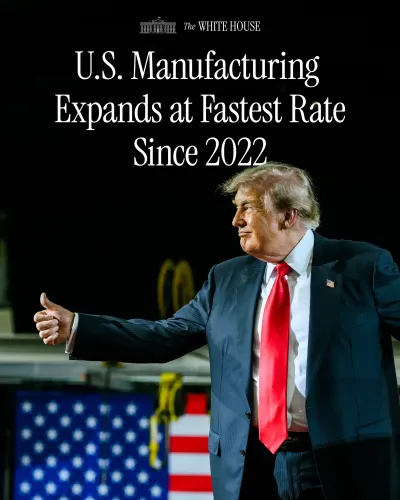
The White House fired a pointed political salvo on Sunday, October 11, 2026, claiming that President Donald Trump is reversing years of offshoring and delivering what it called 'HUGE wins for American workers' — a direct broadside at the record of the previous Biden administration.
The Offshoring Accusation and What It Targets
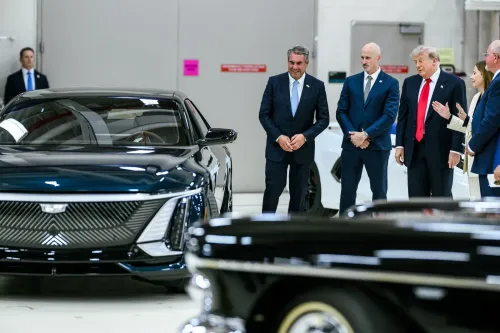
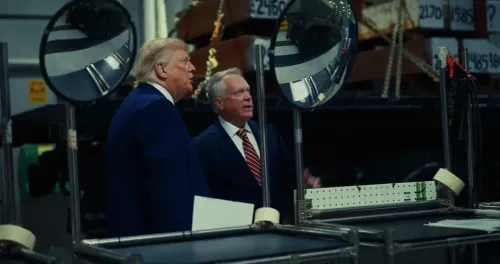
The official White House post on X frames the contrast in stark terms: the Biden administration, it argues, spent years 'sending American jobs overseas,' while Trump is now pulling them back. The specific focus is on blue-collar and critical manufacturing roles — the kind of work in steel mills, auto plants, and industrial facilities that defines economic identity in the American Midwest and Rust Belt.
The language of 'critical' jobs signals a national-security framing as much as an economic one — an argument that certain industries are too strategically important to be left to global supply chains. This has been a recurring theme in Trump-era economic messaging, connecting factory floors to geopolitical resilience.
Why This Message Lands in 2026
With midterm-cycle pressures building, the White House is planting its flag squarely on economic nationalism. Blue-collar employment figures and reshoring announcements have become the administration's preferred scorecard, and this post is a condensed version of that argument — punchy, flag-forward, and aimed squarely at working-class voters in swing states.
The Biden administration had its own reshoring record — citing the CHIPS and Science Act and the Inflation Reduction Act as catalysts for domestic manufacturing investment — making this a genuine and contested empirical argument, not merely rhetorical posturing. The White House post, however, makes no reference to specific numbers, companies, or regions to substantiate the claim.
What the Post Does Not Say
Notably absent are concrete figures: no jobs count, no named company, no facility, no state. The post links to external content for that detail, but the message itself is a political frame, not a policy brief. That framing — 'years of' harm versus current 'wins' — is a campaign-style contrast, deployed from an official government account.
For Indian observers watching US trade policy, any large-scale American manufacturing revival carries downstream implications: reshoring incentivised by tariffs can reshape global supply chains, affect Indian exporters in sectors like textiles, pharmaceuticals, and electronics, and alter the calculus of US-India trade negotiations.
The White House has thrown down its economic-nationalist marker. The receipts — the actual job numbers, the plant openings, the wage data — will determine whether the claim holds up when the scorecards are tallied.
Point of View
Without anchoring either assertion to verifiable data. This fits a broader pattern where the Trump administration has used official government channels to make campaign-style arguments, particularly on manufacturing and trade, as political pressure mounts ahead of electoral cycles. For global audiences, including India, the significance lies less in the rhetoric and more in the policy machinery behind it: if reshoring is real and tariff-driven, the ripple effects on Asian supply chains and US-India trade flows could be substantial. The absence of specifics in the post suggests this is a mood-setting message, not a policy announcement.
NationPress
11 Oct 2026
Frequently Asked Questions
What did the White House say about Trump and American jobs in October 2026?
The White House posted on October 11, 2026 that President Trump is bringing 'critical blue-collar jobs' back to the US after what it described as years of the Biden administration sending American jobs overseas.
What is reshoring and why does Trump promote it?
Reshoring means bringing manufacturing and production jobs back to the United States from overseas. Trump has promoted it as a way to strengthen the American economy, protect blue-collar workers, and reduce dependence on foreign supply chains.
How does US job reshoring affect India?
Large-scale US reshoring, especially when driven by tariffs, can impact Indian exporters in sectors like pharmaceuticals, textiles, and electronics, potentially altering demand patterns and the terms of US-India trade negotiations.
Did the Biden administration also claim to reshore manufacturing jobs?
Yes. The Biden administration pointed to legislation such as the CHIPS and Science Act and the Inflation Reduction Act as drivers of domestic manufacturing investment, making the debate over which administration did more for US jobs a contested empirical question.
Are there specific numbers behind the White House's jobs claim?
The White House post itself cites no specific job counts, company names, or states. It links to external content for detail but the post is broadly framed as a political contrast message rather than a data-driven policy statement.