CM Vishnu Deo Sai champions women's role in Chhattisgarh's rise
Synopsis
On Navratri Day 1, Chhattisgarh Chief Minister Vishnu Deo Sai addressed the 'Shakti Swarupa' programme in Raipur, invoking a Vedic verse to argue that empowered women are the strongest pillar of the state's development.
Key Takeaways
CM Vishnu Deo Sai spoke at the 'Shining Chhattisgarh — Shakti Swarupa' programme in Raipur on 11 October 2026 , the first day of Shardiya Navratri.
He opened with the Sanskrit shloka Yatra naryastu pujyante ramante tatra devataah — 'Where women are worshipped, the gods rejoice.' His central message: empowered women ( sashakt matrishakti ) are the strongest foundation of a prosperous and developed Chhattisgarh.
The event was timed to coincide with Navratri, the nine-night festival celebrating feminine divine power.
The programme framed women as active architects of the state's future, not merely beneficiaries of welfare schemes.
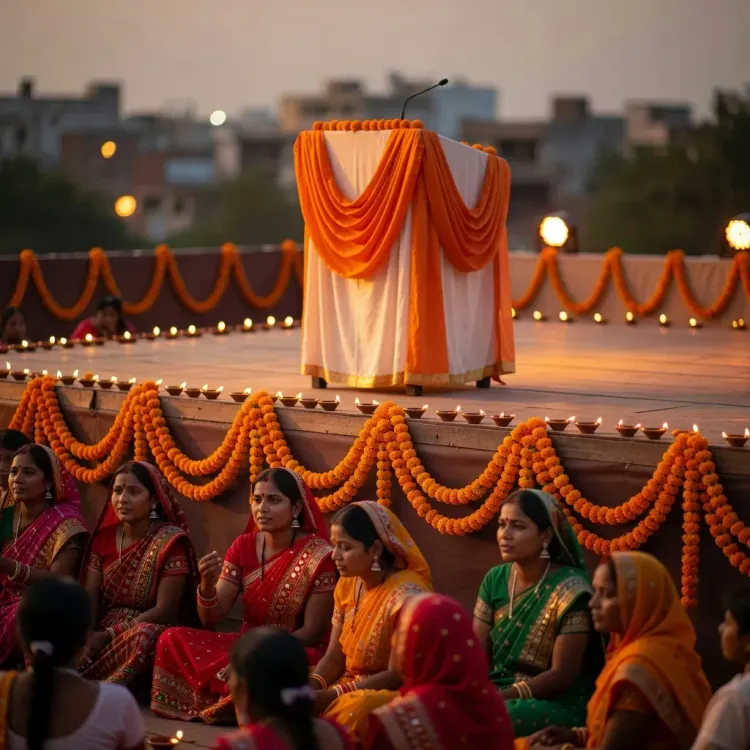
On the first evening of Shardiya Navratri, Chhattisgarh Chief Minister Vishnu Deo Sai stood before an audience in Raipur and made a declaration as old as the Vedas and as urgent as today's development agenda: that empowered women are the strongest foundation of a prosperous society.
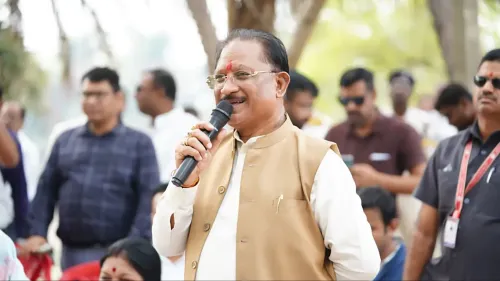
Speaking at the 'Shining Chhattisgarh — Shakti Swarupa' programme organised in Raipur on Sunday, 11 October 2026, CM Sai shared his thoughts on the pivotal role women have played — and must continue to play — in the state's progress. The event was held on the occasion of the first day of Navratri, a nine-night Hindu festival that celebrates the many forms of the goddess Durga and, by cultural extension, feminine strength itself.
Sanskrit verse as political statement
CM Sai opened with a Sanskrit shloka — Yatra naryastu pujyante ramante tatra devataah — which translates to: 'Where women are worshipped, the gods rejoice.' The choice of verse was deliberate. Anchoring a policy conversation in classical scripture on a day of religious observance signals that the government views women's empowerment not merely as a welfare line-item, but as a civilisational commitment.
His core message, delivered plainly: 'Sashakt matrishakti hi samridh samaj aur viksit Chhattisgarh ki sabse mazboot neenv hai' — 'Empowered maternal strength is the strongest foundation of a prosperous society and a developed Chhattisgarh.'
Navratri as backdrop, Raipur as stage
Timing an event like this on the first day of Navratri is a studied political and cultural choice. The festival, observed with particular fervour across central India, provides both the moral vocabulary — Shakti, the divine feminine — and the mass civic moment to press a message home. Raipur, as the state capital, amplifies the reach.
The programme's title, 'Shakti Swarupa' (meaning 'the embodiment of power'), frames women not as beneficiaries of state schemes but as active architects of Chhattisgarh's future — a framing that carries distinct political weight ahead of any governance narrative the BJP-led state government seeks to build.
In a state where women constitute a decisive electoral and social force, the Chief Minister's public articulation of their centrality to development is both a statement of values and a signal of priorities. Whether that sentiment translates into measurable policy outcomes will be the question Chhattisgarh's women will hold the government to.
Point of View
Making a policy argument feel like a civilisational one. For CM Sai, foregrounding 'matrishakti' at a high-profile state event signals that women-centric messaging will be central to the Chhattisgarh BJP government's identity narrative going forward. The 'Shakti Swarupa' framing notably repositions women from passive welfare recipients to agents of development — a rhetorical shift that matters when the government seeks to build a longer-term political coalition. The durability of the message, however, will depend on whether specific policy outcomes follow the soaring language.
NationPress
12 Oct 2026
Frequently Asked Questions
What is the 'Shining Chhattisgarh — Shakti Swarupa' programme?
It is an event held in Raipur on 11 October 2026, the first day of Shardiya Navratri, focused on the role of women in Chhattisgarh's development. Chief Minister Vishnu Deo Sai addressed the gathering and spoke about women being the foundation of a prosperous state.
What did CM Vishnu Deo Sai say about women at the Navratri event?
CM Sai said that empowered women — 'sashakt matrishakti' — are the strongest foundation of a prosperous society and a developed Chhattisgarh. He also opened his address with the Sanskrit shloka meaning 'Where women are worshipped, the gods rejoice.'
What is the Sanskrit shloka CM Sai quoted at the event?
He quoted 'Yatra naryastu pujyante ramante tatra devataah,' a verse from classical Sanskrit scripture that translates as: 'Where women are worshipped, the gods rejoice.'
Why was the Chhattisgarh women's empowerment event held on Navratri?
Navratri is a nine-night Hindu festival celebrating the goddess Durga and, by extension, feminine power (Shakti). Holding the event on its first day was a deliberate cultural and political choice, aligning the government's women-empowerment message with a widely observed and resonant occasion.
Who is Vishnu Deo Sai?
Vishnu Deo Sai is the Chief Minister of Chhattisgarh and a senior BJP leader. He has been at the helm of the state's BJP-led government.