White House Touts Factory Job Gains After Biden-Era Losses

Synopsis
The White House has cited a Council of Economic Advisers report claiming manufacturing job gains, framing them against a loss of 200,000 factory jobs in the final two years of Biden's presidency — a politically charged contrast that signals the administration's industrial messaging strategy.
Key Takeaways
The White House posted on 11 October 2026 citing a Council of Economic Advisers report on manufacturing job gains.
The report attributes a loss of 200,000 factory jobs to the final two years of Joe Biden's presidency .
The current administration frames its own record as a rebound from that decline.
The CEA is an in-house presidential advisory body, meaning the report reflects the administration's own analytical framing.
Manufacturing employment figures carry significant political and trade-policy implications, including for US partners such as India.
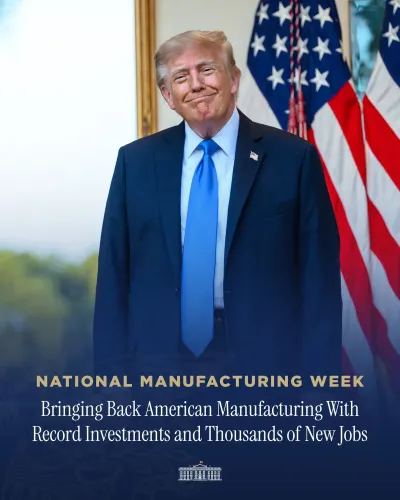
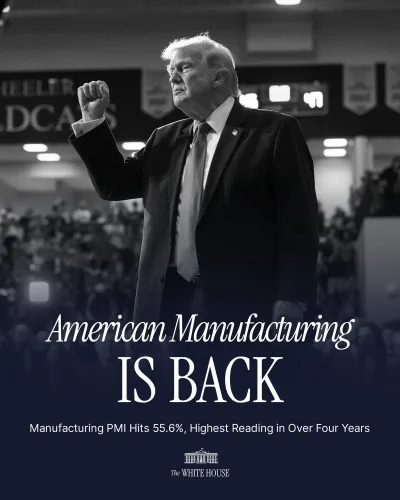
The White House is pointing to a Council of Economic Advisers report to argue that American manufacturing employment is rebounding — but the claim lands with a pointed political edge, framing the recovery explicitly against a loss of 200,000 factory jobs in the final two years of Joe Biden's presidency.
What the CEA Report Actually Claims
The Council of Economic Advisers (CEA), a body within the Executive Office of the President that provides economic analysis to the White House, is cited as the source for both the job-loss figure and the subsequent gains. The report attributes the manufacturing employment decline squarely to the closing period of the Biden administration, setting up the current administration's record as a contrast. The White House post on X on Sunday, 11 October 2026 linked to the full report without further elaboration.
The 200,000 Figure and Its Political Weight
Manufacturing employment has long been a proxy battle in American political discourse — a number that carries symbolic weight far beyond its share of the overall labour market. The claim of 200,000 jobs lost in Biden's final two years will be contested terrain: independent economists typically parse whether such figures reflect cyclical downturns, post-pandemic normalisation, or structural shifts in global supply chains, none of which a White House-commissioned report is designed to foreground. The current administration's decision to lead with this framing signals that industrial job creation will remain a central plank of its political messaging.
How the CEA Functions — and Why It Matters Here
The Council of Economic Advisers was established under the Employment Act of 1946 and is chaired by a presidential appointee confirmed by the Senate. Its reports carry institutional credibility, but they are produced within the executive branch and reflect the administration's analytical priorities. When the White House cites a CEA report to score a political point, it is using an in-house instrument — a distinction that independent analysts and opposition voices are likely to press.
For Indian observers tracking the US economy, manufacturing employment trends in America have downstream consequences: they shape trade policy, tariff decisions, and the broader posture Washington takes toward industrial rivals and partners alike. A US administration that campaigned on factory-floor revival and is now claiming vindication is one that may double down on the trade measures that most directly affect Indian export sectors.
The report's full findings remain behind the link; what the White House chose to surface — the Biden-era loss figure — tells its own story about where the political fight is headed.
Point of View
While credible in institutional terms, are produced within the executive branch and tend to foreground metrics that serve the sitting administration's narrative. For a global audience, the more consequential question is whether the claimed job gains reflect durable industrial policy or a cyclical upturn; the answer will shape US trade posture — including on tariffs and supply-chain policy — for years ahead.
NationPress
11 Oct 2026
Frequently Asked Questions
What did the White House say about manufacturing jobs?
The White House cited a Council of Economic Advisers report claiming that manufacturing job gains have followed a loss of 200,000 factory jobs in the final two years of Biden's presidency.
What is the Council of Economic Advisers?
The Council of Economic Advisers is a body within the Executive Office of the President, established in 1946, that provides economic research and analysis to the sitting administration.
How many factory jobs did the US lose under Biden?
According to the White House-cited CEA report, the United States lost 200,000 factory jobs in the final two years of Joe Biden's term as president.
Is the CEA report independent of the White House?
No. The Council of Economic Advisers operates within the Executive Office of the President and its chair is a presidential appointee, meaning its reports reflect the analytical priorities of the sitting administration.
Why does US manufacturing employment matter for India?
US manufacturing trends influence American trade policy, tariff decisions, and industrial strategy — all of which directly affect Indian export sectors and bilateral economic relations.