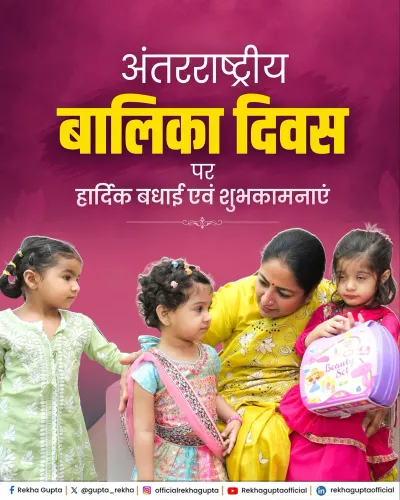
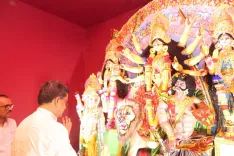
Delhi CM Rekha Gupta Marks International Children's Day
Synopsis
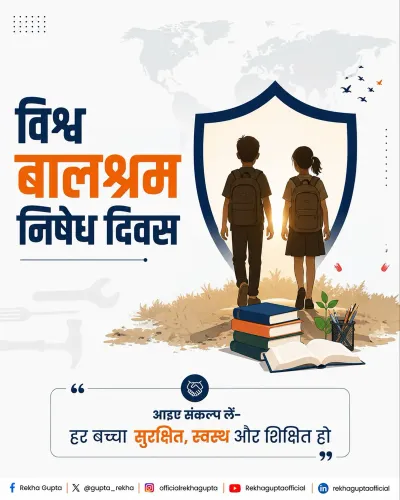
Delhi Chief Minister Rekha Gupta marked International Children's Day on 1 June 2026, reaffirming her government's commitment to child safety, health, quality education, and nutrition for all children in the capital, in line with India's national and international child-rights obligations.
Key Takeaways
Delhi CM Rekha Gupta extended greetings on International Children's Day, 1 June 2026 , to all Delhi residents.
She identified four government priorities for children: safe environment, good health, quality education, and adequate nutrition .
India ratified the UN Convention on the Rights of the Child in 1992 , forming the basis of national child-rights law.
The National Commission for Protection of Child Rights was established in 2007 under a 2005 Act to monitor child rights across states including Delhi .
Central scheme Beti Bachao Beti Padhao , launched in 2015 , remains a key pillar of child welfare policy at the national level.
Delhi's forthcoming budget allocations for nutrition and education will be the practical test of these stated commitments.
Delhi Chief Minister Rekha Gupta on Monday, 1 June 2026 extended greetings to all residents of the capital on the occasion of International Children's Day, reaffirming her government's commitment to child safety, health, education, and nutrition.
Context
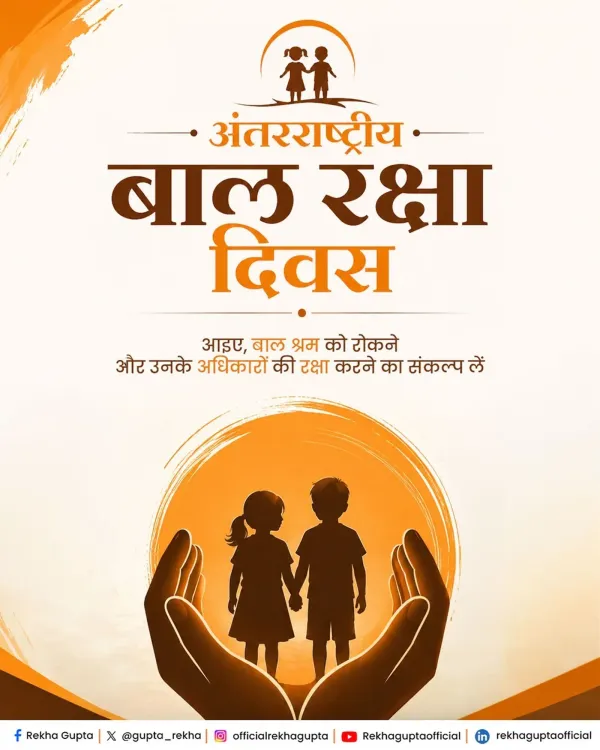
International Children's Day is observed on 1 June each year and is distinct from Universal Children's Day on 20 November. The occasion is used by governments worldwide to highlight child welfare commitments and assess progress on child rights frameworks. In her post, CM Gupta wrote: 'बच्चे देश का उज्ज्वल भविष्य हैं' ('Children are the bright future of the nation'), outlining four priority areas — a safe environment, good health, quality education, and adequate nutrition.
She added that the occasion is a moment to 'reaffirm our commitment to the protection of children's rights and their holistic development.' The statement signals alignment with both national child-protection frameworks and broader international standards.
Policy Backdrop
India ratified the UN Convention on the Rights of the Child in 1992, committing to standards covering child survival, development, and protection. The Commissions for Protection of Child Rights Act, 2005 subsequently established the National Commission for Protection of Child Rights (NCPCR) in 2007 as a statutory watchdog, alongside state-level counterparts including the Delhi Commission for Protection of Child Rights.
At the central level, flagship programmes such as Beti Bachao Beti Padhao — launched in 2015 — have sought to improve child sex ratios and expand girls' access to education and safety nets. Successive Delhi governments have run parallel urban programmes spanning school mid-day meals, immunisation drives, and anti-trafficking measures, drawing from these central schemes.
Stakeholders and Impact
Delhi, as a densely populated urban centre, presents specific child welfare challenges including school dropout rates, child labour in informal sectors, and nutritional gaps among low-income families. The four pillars cited by CM Gupta — safety, health, education, and nutrition — map directly onto the monitoring indicators used by the NCPCR and state commissions in their annual assessments.
Urban families and civil society organisations working on child rights in the capital are the primary stakeholders. Statements such as this one from senior elected officials are typically followed by budget-level decisions on scheme allocations, making the Delhi government's forthcoming budget a key indicator of how these commitments translate into policy action.
What's Next
Observers and child-rights advocates will watch Delhi's budget allocations for nutrition and education programmes in the coming months as a measure of how the government's stated priorities are reflected in public spending. The next annual report of the Delhi Commission for Protection of Child Rights will also provide a data-driven assessment of outcomes across the four areas highlighted by the Chief Minister. Sustained political attention to child welfare frameworks at the state level remains critical to bridging gaps between national policy intent and on-ground delivery.
Point of View
Positioning the BJP-led Delhi government as aligned with both international child-rights norms and the Centre's flagship welfare agenda. By explicitly naming safety, health, education, and nutrition as priorities, the statement maps onto the four core pillars of the UN Convention on the Rights of the Child — a framing that gives the message a policy-level weight beyond ceremonial greetings. For a government still consolidating its administrative identity in Delhi, such public commitments create a benchmark against which future budget decisions will be measured. The real test will come when the Delhi government translates this rhetoric into allocations for the Delhi Commission for Protection of Child Rights and urban nutrition and schooling programmes.
NationPress
16 Oct 2026
Frequently Asked Questions
What is International Children's Day and when is it observed?
International Children's Day is observed on 1 June each year to promote child welfare and rights. It is distinct from Universal Children's Day, which falls on 20 November and is backed by the United Nations.
What did Delhi CM Rekha Gupta say on Children's Day 2026?
CM Rekha Gupta extended greetings to all Delhi residents and reaffirmed her government's commitment to providing children a safe environment, good health, quality education, and adequate nutrition, calling children 'the bright future of the nation.'
What is the National Commission for Protection of Child Rights?
The National Commission for Protection of Child Rights (NCPCR) is a statutory body established in 2007 under the Commissions for Protection of Child Rights Act, 2005. It monitors the implementation of child rights laws and policies across India, with state-level commissions including one for Delhi.
What is the Beti Bachao Beti Padhao scheme?
Beti Bachao Beti Padhao is a central government scheme launched in 2015 aimed at improving the child sex ratio and promoting the education and safety of girls across India.
Has India signed the UN Convention on the Rights of the Child?
Yes. India ratified the UN Convention on the Rights of the Child in 1992 , committing to international standards on child survival, development, protection, and participation.