CM Rekha Gupta Reaffirms Delhi's Push on Menstrual Health
Synopsis
Delhi Chief Minister Rekha Gupta on 29 May 2026 reaffirmed her government's commitment to menstrual health awareness and hygiene infrastructure for young girls, linking the issue to the Viksit Delhi development vision and broader human capital goals.
Key Takeaways
CM Rekha Gupta on 29 May 2026 publicly reaffirmed the Delhi Government's commitment to menstrual health awareness and hygiene facilities for girls.
The statement frames girls' health as foundational to Viksit Delhi , the state-level articulation of the national Viksit Bharat 2047 vision.
India's national-level menstrual health policy lineage includes the Menstrual Hygiene Scheme (2011) and the Rashtriya Kishor Swasthya Karyakram (2014) .
Key areas flagged by the Chief Minister include awareness, hygiene infrastructure and a safe environment for adolescent girls.
Upcoming Delhi education and health budget allocations will be watched for concrete follow-through on the stated commitment.
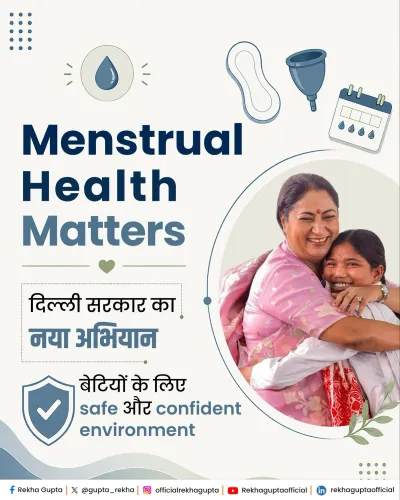
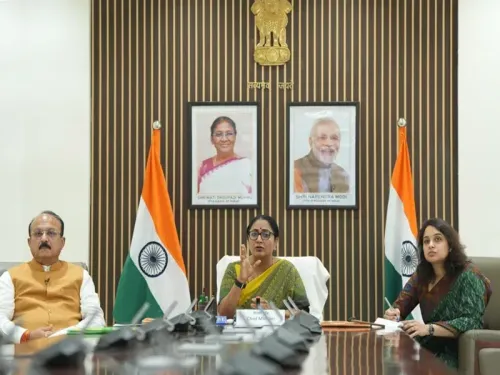
Delhi Chief Minister Rekha Gupta on Friday, 29 May 2026, reaffirmed the Delhi Government's commitment to menstrual health awareness, hygiene infrastructure and a supportive environment for young girls, framing the issue as central to the state's development vision.
Context
In her post, CM Gupta stated that menstrual hygiene is 'closely linked to the health, dignity and confidence of every girl,' and that a 'healthy, confident and empowered daughter is the foundation of a Viksit Delhi.' The statement connects girls' health outcomes directly to the state's larger development ambitions, echoing the national Viksit Bharat 2047 framework at the city level.
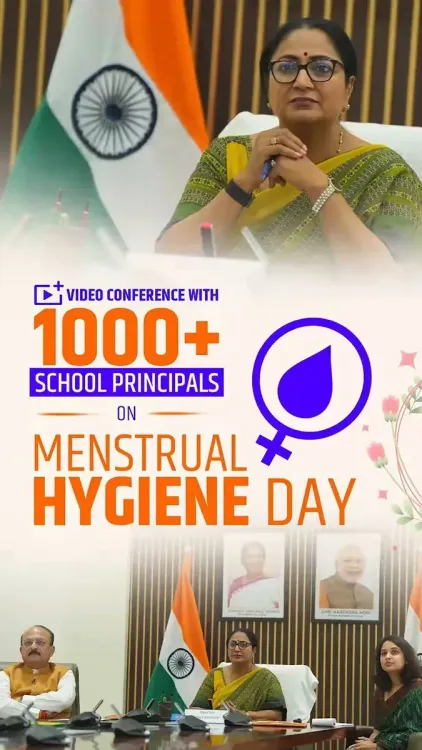
The post, accompanied by a video, was shared publicly on X and signals a policy emphasis on adolescent girls' welfare as a governance priority under Rekha Gupta's administration.
Policy Backdrop
India's engagement with menstrual health as a public policy issue dates to 2011, when the Ministry of Health and Family Welfare launched the Menstrual Hygiene Scheme under the National Health Mission, targeting subsidised sanitary napkin distribution to adolescent girls in rural areas. In 2014, the Rashtriya Kishor Swasthya Karyakram (RKSK) broadened the scope by integrating menstrual health education and counselling into adolescent health services across states.
Delhi, as an urban administration, has historically focused on school-level WASH (water, sanitation and hygiene) infrastructure alongside awareness campaigns. The invocation of improved 'hygiene facilities' by CM Gupta points toward continued investment in school toilets and sanitation access for girl students in the capital.
Stakeholders and Impact
The primary beneficiaries are Delhi's adolescent girls and school students, for whom menstrual hygiene access has a direct bearing on school attendance and retention rates. Research consistently links poor menstrual hygiene management to absenteeism, school dropout and long-term impacts on girls' educational and economic outcomes — a concern that sits at the intersection of SDG targets 3 (good health) and 5 (gender equality).
Parents, school administrators and frontline health workers are secondary stakeholders, as effective implementation depends on awareness at the household and institutional level. Civil society organisations working on adolescent health in Delhi are also likely to track how the government's stated commitment translates into budget allocations and programme delivery.
What's Next
Observers will watch the Delhi Government's forthcoming education and health budget allocations for concrete signals — specifically, provisions for sanitary napkin procurement, school toilet upgrades and adolescent health counselling under schemes aligned with the RKSK framework. Any executive or legislative follow-up in the Delhi Assembly on menstrual health infrastructure or product accessibility will be a key indicator of how this stated commitment is operationalised.
As Viksit Delhi continues to serve as the overarching policy narrative for the current administration, female health and education metrics are likely to remain prominent benchmarks — making today's statement an early marker of a broader accountability trail.
Point of View
The BJP-led state administration signals that female health outcomes will be a measurable pillar of its development scorecard, not merely a symbolic gesture. The reference to 'dignity and confidence' alongside physical health broadens the policy lens toward psychosocial outcomes, which aligns with the RKSK framework's holistic approach. Whether the statement is followed by budgetary action will determine its political weight ahead of the next Delhi Assembly session.
NationPress
29 Jul 2026
Frequently Asked Questions
What did Delhi CM Rekha Gupta say about menstrual hygiene?
On 29 May 2026, CM Rekha Gupta stated that menstrual hygiene is closely linked to the health, dignity and confidence of every girl, and reaffirmed the Delhi Government's commitment to strengthening menstrual health awareness and improving hygiene facilities for young girls.
What is Viksit Delhi and how does it relate to girls' health?
Viksit Delhi is the Delhi Government's state-level articulation of the national Viksit Bharat 2047 vision, which targets comprehensive development indicators. CM Gupta has framed girls' health and empowerment as foundational to achieving this vision.
What is India's national policy on menstrual hygiene?
The Ministry of Health and Family Welfare launched the Menstrual Hygiene Scheme in 2011 under the National Health Mission to distribute subsidised sanitary napkins to adolescent girls. In 2014, the Rashtriya Kishor Swasthya Karyakram (RKSK) further integrated menstrual health education into adolescent health services across states.
How does menstrual hygiene affect girls' education in India?
Poor menstrual hygiene management is linked to school absenteeism and dropout among adolescent girls. Access to sanitary products and proper WASH infrastructure in schools is considered a key factor in improving girls' attendance and long-term educational outcomes.
What should we watch for next from the Delhi Government on this issue?
Key indicators to watch include the Delhi Government's next education and health budget allocations for sanitary napkin procurement and school toilet upgrades, as well as any legislative or executive announcements in the Delhi Assembly on menstrual health infrastructure.