Odisha's Disaster Model Gets Global Stage at BRICS Meet in Puri
Synopsis
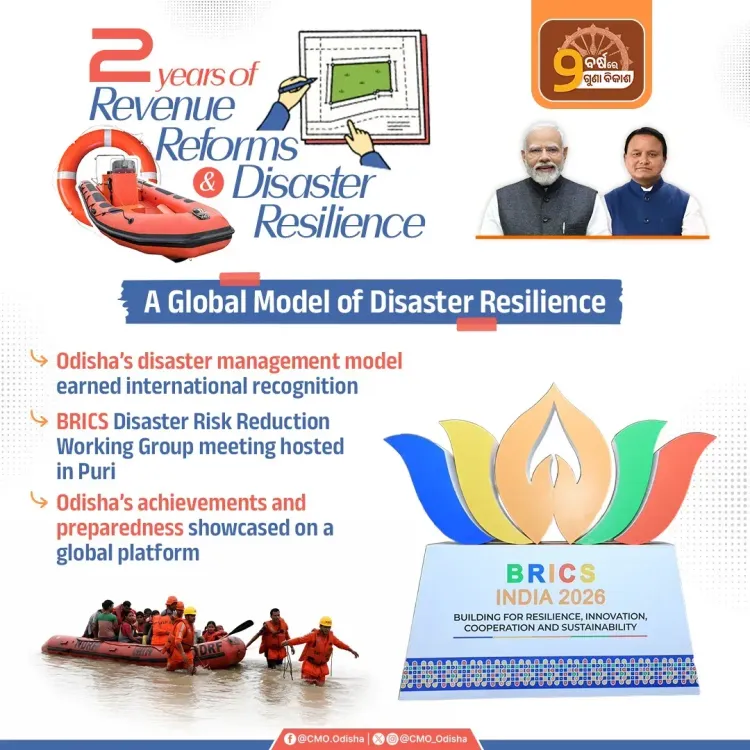
Odisha's Chief Minister's Office announced on 9 July 2026 that Puri hosted a BRICS Disaster Risk Reduction Working Group meeting, showcasing the state's evacuation-tested disaster management model — built since the 1999 super cyclone and globally cited after Cyclone Fani — to an international audience.
Key Takeaways
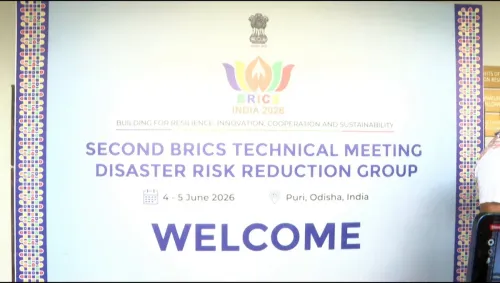
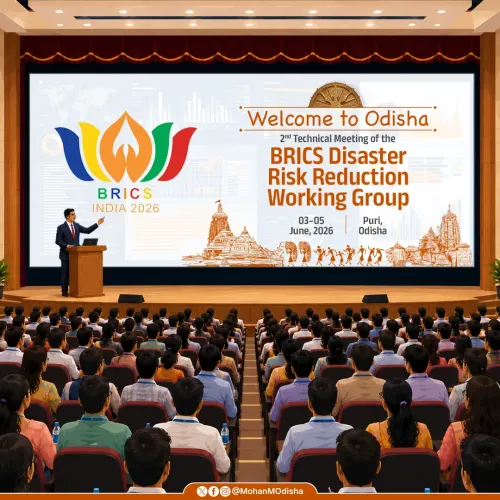
Puri, Odisha hosted a meeting of the BRICS Disaster Risk Reduction Working Group , as announced by the Chief Minister's Office on 9 July 2026 .
The event was described as giving Odisha's disaster preparedness model 'global recognition' before an international audience.
Odisha's disaster management framework was institutionalised after the 1999 super cyclone through the Odisha State Disaster Management Authority .
The state's evacuation of approximately 1.2 million people during Cyclone Fani in 2019 was cited by the UN and World Bank as a global benchmark.
The announcement was made under the #2YearsofLokankaSarakar campaign, framing international engagement as part of the government's two-year record.
Follow-up BRICS DRR recommendations from the Puri meeting could influence India's national disaster management planning.
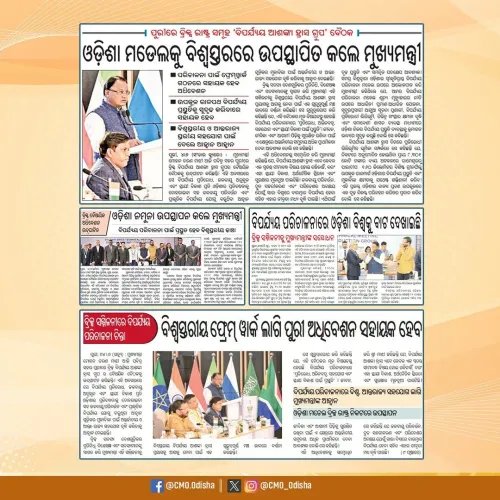
The Chief Minister's Office of Odisha on 9 July 2026 highlighted the state's growing international stature in disaster risk reduction, noting that Puri successfully hosted a meeting of the BRICS Disaster Risk Reduction Working Group — an occasion that placed Odisha's preparedness model before a global audience.
Context
The CMO's post stated that 'Odisha's proven leadership in disaster management is earning global recognition,' pointing to the BRICS DRR Working Group meeting in Puri as evidence of that recognition. The coastal town, situated in a district long exposed to Bay of Bengal weather systems, served as the venue where the state's experience in evacuation, shelter management and inter-departmental coordination was presented to member-nation delegates.
The announcement was made under the campaign hashtags #2YearsofLokankaSarakar and #BikasharaDharaOdishaSara, framing the international engagement as part of the current government's two-year record in office.
Policy Backdrop
Odisha's reputation in disaster management traces back to the catastrophic 1999 super cyclone, which prompted the state to establish the Odisha State Disaster Management Authority and build a network of multi-purpose cyclone shelters along its coastline. The institutional framework developed over the following two decades became the operational backbone for large-scale evacuations.
The most internationally cited demonstration of that model came during Cyclone Fani in May 2019, when authorities evacuated approximately 1.2 million people in under 48 hours, keeping the death toll to under 90 — a figure that drew commendation from the United Nations and the World Bank as a benchmark for cyclone-prone regions globally. That record has since made Odisha a reference point in multilateral discussions on climate-resilient disaster governance.
BRICS — the grouping of major emerging economies — maintains thematic working groups on disaster risk reduction as part of its broader cooperation architecture, providing a platform for member states to exchange operational lessons and align preparedness standards.
Stakeholders and Impact
For Odisha's coastal communities, who face recurring threats from Bay of Bengal cyclones and seasonal flooding, international validation of the state's systems can translate into greater resource flows, technical partnerships and best-practice adoption. The state's model — combining early-warning dissemination, community-level drills and coordinated shelter logistics — is increasingly being studied by other Indian states and developing nations.
At the national level, India has consistently used platforms such as BRICS and the Coalition for Disaster Resilient Infrastructure to project its disaster management capabilities as a form of development diplomacy. Odisha's hosting of the BRICS DRR Working Group meeting aligns with that broader strategic posture, positioning a state-level institution as a credible interlocutor in multilateral risk-reduction dialogues.
What's Next
Attention will now turn to any working-group recommendations or joint statements emerging from the Puri meeting and whether they feed into India's national disaster management plan or influence BRICS-level protocols on early warning and evacuation. Odisha is also expected to continue leveraging its track record to attract technical cooperation and funding from multilateral bodies focused on climate adaptation. The government's framing of this event within its two-year governance milestone suggests the international engagement will remain a prominent plank of its public communication going forward.
Point of View
The current administration is linking international recognition directly to its own stewardship, a framing that serves both domestic and external audiences. The move also fits a broader Indian pattern of using sub-national success stories — particularly in climate resilience — to reinforce the country's positioning in global development forums. Whether the Puri meeting produces substantive BRICS-level protocols or remains largely symbolic will determine how durable this diplomatic dividend proves to be.
NationPress
9 Jul 2026
Frequently Asked Questions
What is the BRICS Disaster Risk Reduction Working Group?
The BRICS Disaster Risk Reduction Working Group is a thematic body within the BRICS grouping of major emerging economies that facilitates cooperation, knowledge-sharing and alignment of preparedness standards among member nations on disaster risk reduction.
Why is Odisha considered a model in disaster management?
Odisha is regarded as a global model primarily because of its large-scale evacuation of approximately 1.2 million people ahead of Cyclone Fani in 2019 with minimal casualties — an operation commended by the UN and World Bank — built on institutional reforms initiated after the devastating 1999 super cyclone.
What happened at the BRICS DRR meeting in Puri in 2026?
According to the Chief Minister's Office of Odisha, the BRICS Disaster Risk Reduction Working Group meeting held in Puri showcased the state's disaster management experience, preparedness systems and resilient model to a global audience of member-nation delegates.
What is the Odisha State Disaster Management Authority?
The Odisha State Disaster Management Authority is the apex body established by the state government after the 1999 super cyclone to institutionalise disaster preparedness, coordinate response agencies and manage the network of cyclone shelters along Odisha's coastline.
What is the significance of Puri hosting an international disaster management meeting?
Puri, a coastal district headquarters in Odisha that has experienced recurring cyclone threats, hosting a BRICS-level working group meeting signals the state's emergence as a credible international reference point for disaster risk reduction, potentially attracting further technical partnerships and multilateral cooperation.