CM Odisha Highlights Disaster Resilience at BRICS DRRG Meet in Puri

Synopsis
Odisha presented its internationally acclaimed disaster resilience framework at the BRICS Disaster Risk Reduction Group Technical Meeting in Puri on June 5, 2026. Built on lessons from the 1999 Super Cyclone and the 2019 Cyclone Fani evacuation of over one million people, the state's model is now a reference point for BRICS nations.
Key Takeaways
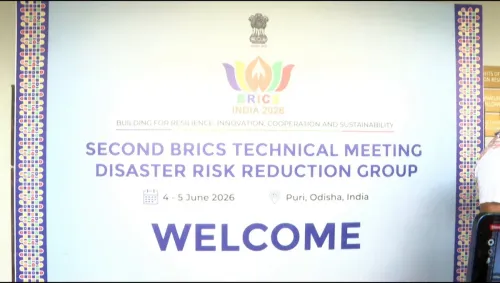
The Chief Minister's Office of Odisha announced the state's participation in the BRICS DRRG Technical Meeting held in Puri on June 5, 2026 .
Odisha highlighted its globally recognised disaster resilience practices, developed after the 1999 Super Cyclone that killed over 10,000 people .
During Cyclone Fani in 2019 , Odisha evacuated more than one million people within 48 hours, a feat cited as a global benchmark.
The Odisha State Disaster Management Authority (OSDMA) is the nodal body coordinating the state's disaster preparedness and its multilateral engagements.
Puri , a coastal district repeatedly affected by cyclones, was selected as the host venue, lending operational context to the discussions.
Outcomes such as joint technical recommendations or follow-on BRICS pilot projects on disaster technologies are expected to follow the meeting.
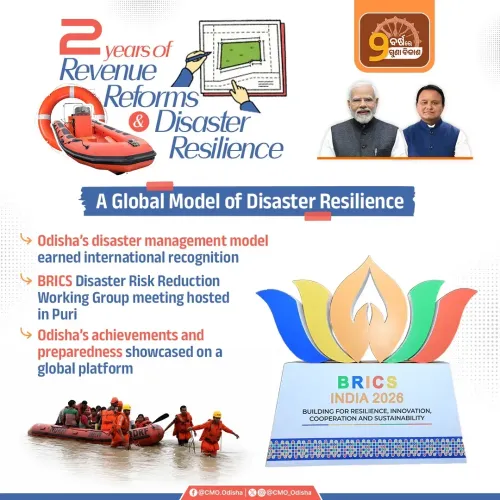
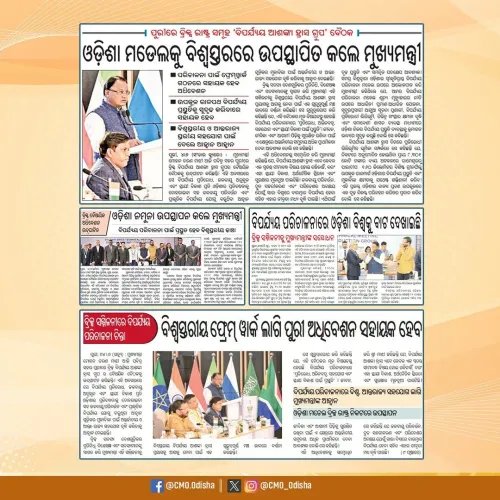
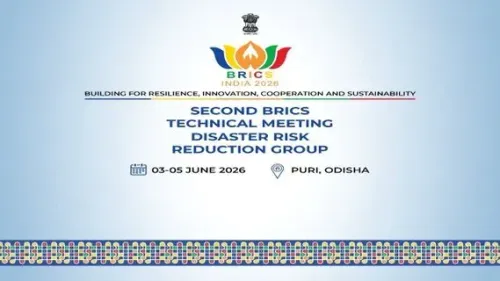
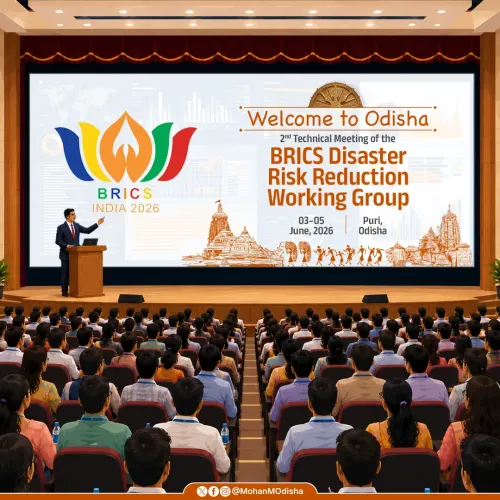
The Chief Minister's Office of Odisha announced on Friday, June 5, 2026, that Odisha presented its globally recognised disaster resilience practices at the BRICS Disaster Risk Reduction Group (DRRG) Technical Meeting held in Puri, underscoring the state's emergence as a leading sub-national voice in international disaster management forums.
Context
The BRICS DRRG Technical Meeting brought together representatives from BRICS member nations to exchange operational knowledge on disaster preparedness, early warning systems, and resilient infrastructure. Puri, a coastal district in Odisha that has faced repeated cyclonic events, was chosen as the venue — a choice that itself underscores the state's credibility on the subject. Odisha used the platform to highlight its institutional frameworks and community-level practices that have drawn international attention over the past two decades.
Policy Backdrop
Odisha's disaster management architecture was forged in the aftermath of the catastrophic 1999 Super Cyclone, which killed over 10,000 people and prompted the creation of the Odisha State Disaster Management Authority (OSDMA). The state refined those systems over successive cyclone seasons, culminating in the landmark Cyclone Fani response in May 2019, when authorities evacuated more than one million people within 48 hours — a feat recognised globally as a model for zero-casualty preparedness. These achievements align closely with the targets set by the Sendai Framework for Disaster Risk Reduction 2015–2030, the global blueprint that BRICS nations have committed to advancing.
India has engaged with BRICS on disaster risk reduction since at least 2015, and sub-national governments like Odisha increasingly participate in such technical forums to share granular, operational lessons that national delegations alone cannot convey. The DRRG mechanism allows member economies to exchange practices on hydro-meteorological hazards without requiring formal treaty obligations, making it an efficient channel for technical cooperation.
Stakeholders and Impact
Coastal communities across BRICS nations — from Brazil's flood-prone regions to China's typhoon belts and South Africa's cyclone corridors — stand to benefit from the early-warning and mass-evacuation protocols that Odisha has refined over years of real-world deployment. State disaster management agencies in other Indian states also look to Odisha's model when designing their own preparedness frameworks. The meeting in Puri provides a live demonstration context: delegates can observe the coastal geography and community infrastructure that the resilience systems are built around.
The Odisha State Disaster Management Authority is the nodal body coordinating the state's participation in such multilateral engagements, working alongside the National Disaster Management Authority (NDMA) to ensure that sub-national expertise feeds into India's broader international positions on disaster risk.
What's Next
Attention will now turn to the publication of meeting outcomes, joint technical recommendations, or any follow-on bilateral pilots on disaster technologies that emerge from the Puri discussions. If the BRICS DRRG formalises Odisha's practices as reference models, it could accelerate the adoption of similar early-warning and evacuation architectures in other member nations. For Odisha, the meeting reinforces its positioning not merely as a disaster-vulnerable state, but as an active exporter of resilience knowledge — a reputational asset with implications for future international funding and technical partnerships in climate adaptation.
Frequently Asked Questions
Why was Puri chosen to host the BRICS DRRG Technical Meeting?
Puri was chosen because of Odisha's established credibility in disaster management — the coastal district has faced repeated cyclonic events and the state has developed globally recognised preparedness systems, making it a fitting live-context venue for disaster risk reduction discussions.
What is the BRICS DRRG and what does it do?
The BRICS Disaster Risk Reduction Group (DRRG) is a technical working group under the BRICS multilateral framework that facilitates the exchange of operational knowledge on disaster preparedness, early warning systems, and resilient infrastructure among BRICS member nations.
What disaster management achievements did Odisha highlight at the meeting?
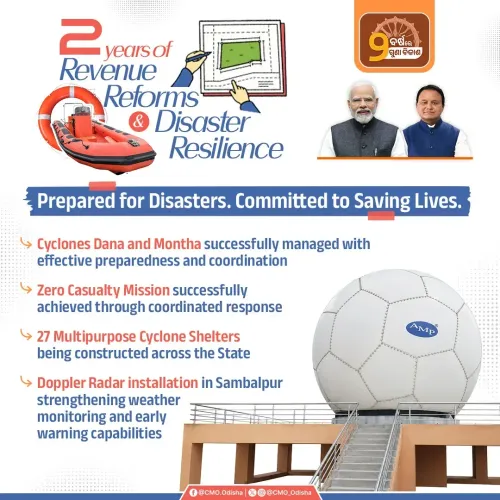
Odisha highlighted its institutional disaster management framework built after the 1999 Super Cyclone, including the evacuation of over one million people during Cyclone Fani in 2019, which is recognised globally as a model for zero-casualty preparedness.
What is the Odisha State Disaster Management Authority?
The Odisha State Disaster Management Authority (OSDMA) is a state-level body established in 1999, immediately after the Super Cyclone, to coordinate disaster preparedness, early warning, evacuation, and mitigation across Odisha.
How does Odisha's disaster model relate to the Sendai Framework?
Odisha's practices — including early warning systems, mass evacuations, and community shelters — align closely with the Sendai Framework for Disaster Risk Reduction 2015–2030, the global blueprint that India and BRICS nations have committed to advancing.