Gujarat CMO extends Vijayadashami greetings to citizens
Synopsis
The Chief Minister's Office of Gujarat wished all citizens on Vijayadashami on 20 October 2026, sharing a Gujarati-language greeting celebrating the festival's central theme — the eternal victory of truth over falsehood and dharma over adharma.
Key Takeaways
The Chief Minister's Office of Gujarat posted Vijayadashami greetings on 20 October 2026 .
The message was shared in Gujarati , addressing all citizens of the state.
The greeting invoked Vijayadashami's core symbolism: the triumph of truth ( satya ) over untruth and dharma over adharma.
Vijayadashami follows the nine-night Navratri festival, which holds special cultural significance in Gujarat through its Garba tradition.
No policy announcement or government programme was associated with the post.
On the auspicious occasion of Vijayadashami, the Chief Minister's Office of Gujarat extended warm wishes to all citizens of the state on Tuesday, 20 October 2026, invoking the festival's timeless message of the triumph of truth over falsehood and righteousness over injustice.
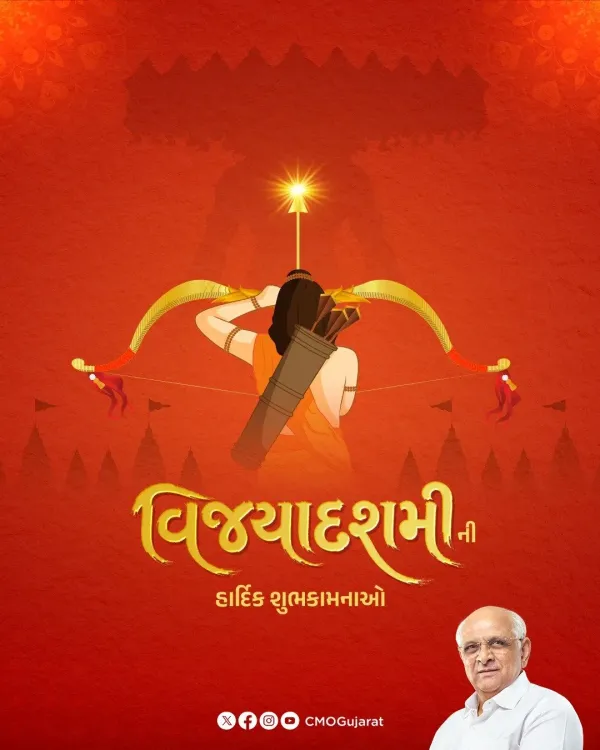
The post, shared in Gujarati, reads: 'અસત્ય પર સત્ય, અધર્મ પર ધર્મના વિજયના પર્વ વિજયાદશમીની સૌ નાગરિકોને શુભકામનાઓ' — ('Best wishes to all citizens on the festival of Vijayadashami, the celebration of the victory of truth over untruth and of dharma over adharma.')
The spirit behind Vijayadashami
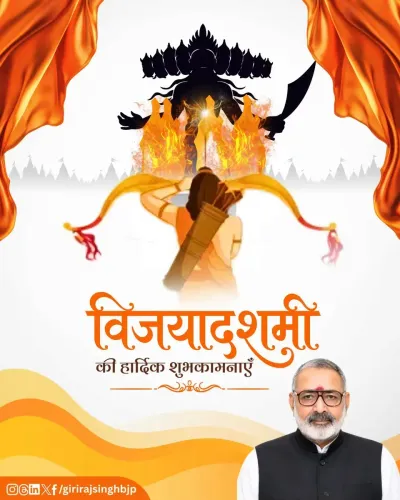
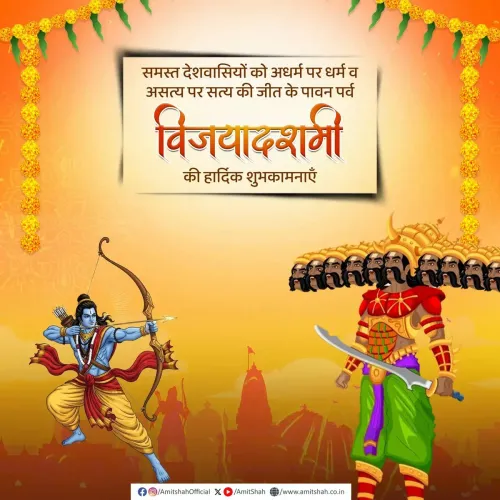
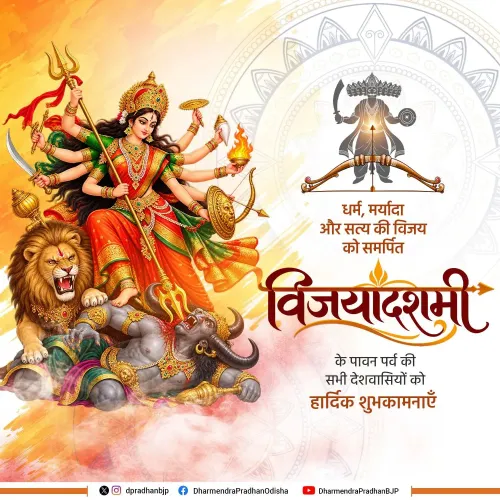
Vijayadashami, also widely known as Dussehra, marks the culmination of the Navratri festival and commemorates the victory of Lord Ram over the demon king Ravana, as narrated in the Ramayana. The day is observed across India with the burning of effigies of Ravana, Kumbhakarna, and Meghanada, symbolising the destruction of evil. In many parts of the country, it also marks the day Goddess Durga is believed to have slain the buffalo demon Mahishasura.
In Gujarat, the festival carries particular cultural resonance, coming immediately after nine nights of Garba — the state's signature devotional dance form — during Navratri. The transition from communal celebration to Vijayadashami is deeply embedded in the social fabric of Gujarati life.
A routine of cultural connect from the state government
Indian state government accounts routinely mark major Hindu observances with greetings in regional languages, a practice that reinforces both cultural identity and the government's outreach to its constituents. The CMO Gujarat's post follows this established pattern, with the message delivered directly in Gujarati to resonate with the state's citizens in their mother tongue.
No policy announcement or programmatic follow-up was indicated alongside the greeting. The post stands as a moment of shared cultural acknowledgement — a reminder that Vijayadashami is not merely a religious occasion but a civic one, where the state and its people pause together to affirm a universal value: that truth, ultimately, prevails.
Point of View
Blending digital outreach with identity politics. For Gujarat — a state where Navratri and Vijayadashami carry deep social weight — such greetings from the CMO reinforce a sense of cultural continuity between the government and the governed. While the post carries no policy substance, it reflects a deliberate choice to engage constituents in Gujarati, signalling linguistic and cultural pride. The ritual of official festival greetings also keeps government accounts relevant and visible during moments of high public engagement.
NationPress
20 Oct 2026
Frequently Asked Questions
What is Vijayadashami and why is it celebrated?
Vijayadashami, also called Dussehra, is a major Hindu festival marking the victory of Lord Ram over the demon king Ravana and the triumph of good over evil. It falls on the tenth day after Navratri.
What did the Gujarat CMO post for Vijayadashami 2026?
The Chief Minister's Office of Gujarat posted a Gujarati-language greeting on 20 October 2026, wishing all citizens on the occasion of Vijayadashami and invoking the festival's message of truth and dharma triumphing over adharma.
How is Vijayadashami celebrated in Gujarat?
In Gujarat, Vijayadashami immediately follows the nine-night Navratri festival, which is renowned for its vibrant Garba dance traditions. The transition marks both a devotional and communal high point in the state's cultural calendar.
What does Vijayadashami mean in Gujarati culture?
Vijayadashami holds deep cultural resonance in Gujarat as it concludes Navratri — the state's most celebrated festival. It symbolises the victory of righteousness and is observed with community gatherings, traditions, and effigies of Ravana being burnt across the state.
Is there any new government scheme or policy announced alongside the Vijayadashami wishes?
No. The Chief Minister's Office of Gujarat's post was a cultural greeting with no associated policy announcement or government programme.