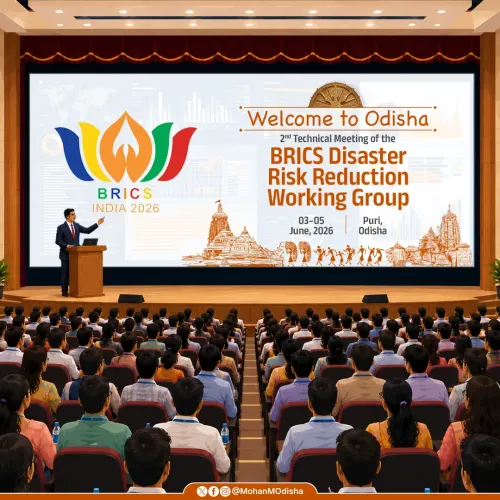
CM Majhi Opens BRICS Disaster Risk Reduction Meet
Synopsis
Odisha Chief Minister Mohan Majhi inaugurated the second technical meeting of the BRICS Disaster Risk Reduction Working Group on June 5, 2026, spotlighting the state's disaster preparedness record and calling for stronger global cooperation on climate resilience and risk reduction.
Key Takeaways
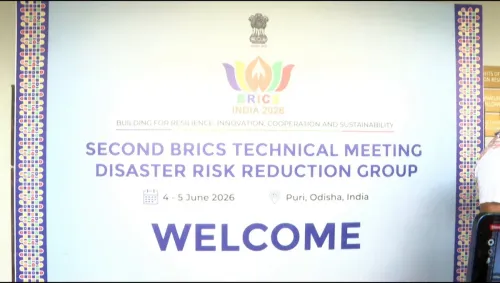
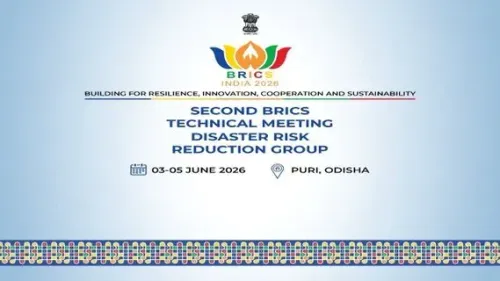
CM Mohan Majhi inaugurated the second technical meeting of the BRICS Disaster Risk Reduction Working Group (DRRG) on June 5, 2026 .
Odisha reaffirmed its commitment to disaster resilience, climate adaptation, and sustainable development at the multilateral forum.
The 1999 Super Cyclone , which killed over 10,000 people , was the catalyst for Odisha building one of India's strongest disaster management systems.
The Odisha State Disaster Management Authority was established in 2000 following the Super Cyclone, anchoring decades of investment in early-warning systems and shelters.
The meeting is expected to shape future policy and cooperation frameworks for global disaster risk reduction among BRICS member states .
Outcomes may be referenced at the next BRICS summit , potentially elevating Odisha's model in multilateral climate policy.
Chief Minister Mohan Charan Majhi of Odisha inaugurated the second technical meeting of the BRICS Disaster Risk Reduction Working Group (DRRG) on Friday, June 5, 2026, reaffirming the state's commitment to disaster resilience, climate adaptation, and sustainable development on a global platform.
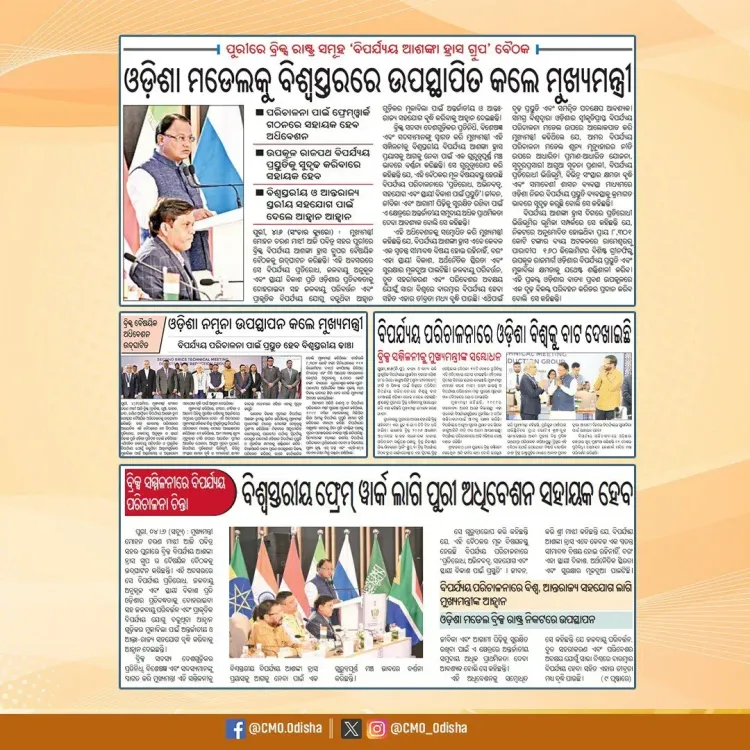
Speaking at the inauguration, CM Majhi highlighted Odisha's long-standing commitment to disaster preparedness and expressed hope that the meeting would shape future policy and cooperation frameworks for global disaster risk reduction and resilience-building. The Chief Minister's Office described the deliberations as 'historic', saying they would 'provide direction for future policies and collaboration on global disaster risk reduction and resilience enhancement.'
Context
Odisha's engagement with disaster risk reduction is rooted in hard experience. The devastating 1999 Super Cyclone killed over 10,000 people and reshaped the state's entire approach to emergency preparedness. In its aftermath, Odisha established the Odisha State Disaster Management Authority in 2000, investing systematically in early-warning infrastructure, cyclone shelters, and community-level response systems.
Decades of sustained investment have turned the state into one of India's most cited examples of disaster mortality reduction — a track record that has drawn attention from national and international policymakers alike. The state's coastal geography makes it acutely vulnerable to cyclones and floods, giving its disaster management model both urgency and credibility.
Policy Backdrop
India has participated in BRICS discussions on climate and disaster issues since the grouping's formalisation in 2009. These efforts align with the Sendai Framework for Disaster Risk Reduction, adopted in 2015, which set global targets for reducing disaster risk and losses through 2030.
The BRICS DRRG serves as a technical forum where member states share data, early-warning technologies, and policy innovations. The second technical meeting marks a continuation of efforts to build joint platforms for disaster preparedness across BRICS economies, all of which face rising climate-induced extreme weather events.
Stakeholders and Impact
The meeting brings together disaster management authorities, climate policy officials, and technical experts from BRICS member states. For Odisha's coastal communities — among the most exposed to cyclonic risk in South Asia — the outcomes of such multilateral discussions can translate into shared technologies, funding mechanisms, and standardised early-warning protocols.
India's broader diplomatic approach increasingly involves projecting sub-national innovations in global sustainability forums. Odisha's model, built over two decades, is precisely the kind of ground-level case study that multilateral working groups seek to incorporate into their frameworks and recommendations.
What's Next
Observers will watch for the publication of the meeting's outcome document and any follow-up action plans at the state or national level. Recommendations from the DRRG's second technical meeting could also feed into the agenda of the next BRICS summit, potentially elevating Odisha's disaster resilience model to a formal reference point in multilateral climate and disaster policy discussions.
Point of View
Incorporating a sub-national model as granular as Odisha's offers the working group practical credibility beyond ministerial declarations. The real test will be whether the meeting's outcome document translates into concrete, replicable frameworks that other vulnerable BRICS regions can adopt.
NationPress
20 Oct 2026
Frequently Asked Questions
What is the BRICS Disaster Risk Reduction Working Group?
The BRICS Disaster Risk Reduction Working Group (DRRG) is a technical forum within the BRICS multilateral grouping that advances cooperation on disaster preparedness, risk reduction, and climate resilience among member states.
Why is Odisha significant in disaster management?
Odisha is considered one of India's strongest models for disaster management, having rebuilt its entire emergency preparedness system after the 1999 Super Cyclone killed over 10,000 people, leading to the creation of the Odisha State Disaster Management Authority in 2000.
Who is Mohan Charan Majhi?
Mohan Charan Majhi is the Chief Minister of Odisha, in office since June 2024, representing the BJP. He inaugurated the second BRICS DRRG technical meeting on June 5, 2026.
What is the Sendai Framework and how does it relate to this meeting?
The Sendai Framework for Disaster Risk Reduction, adopted in 2015, sets global targets for reducing disaster risk and losses through 2030. India's participation in BRICS disaster discussions aligns with these commitments, and the DRRG meeting contributes to advancing those goals.
What outcomes are expected from the second BRICS DRRG technical meeting?
The meeting is expected to produce an outcome document shaping future policies and cooperation frameworks on global disaster risk reduction. Its recommendations may also be taken up at the next BRICS summit.